

Bulk Healthcare Wristband Kiosk Terminals Transform Patient Identification Workflows
2026-06-29
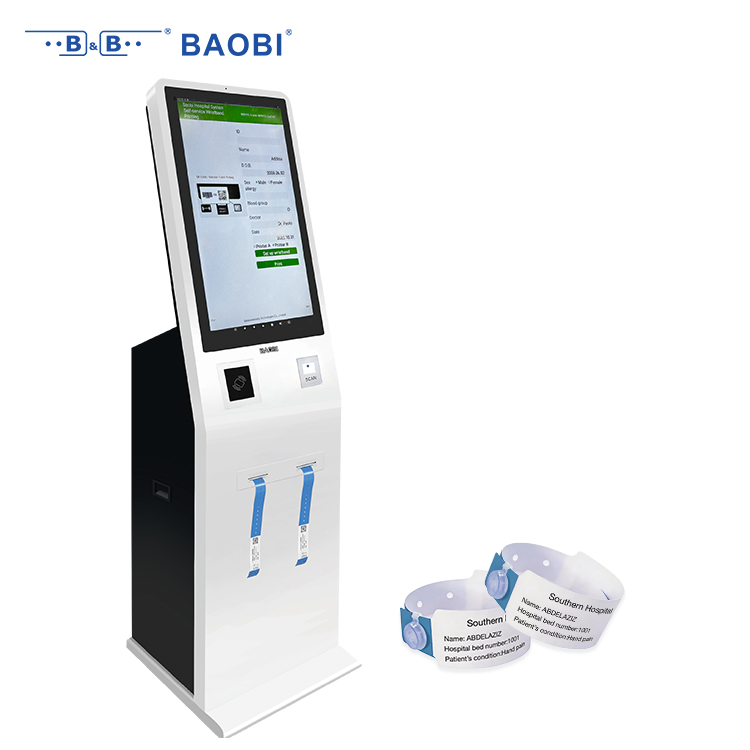
In today’s fast‑paced hospitals, patient misidentification remains a critical yet preventable risk. Imagine a busy emergency department where wristband issuance is instantaneous, accurate, and seamlessly integrated into clinical workflows. That’s exactly what bulk healthcare wristband kiosk terminals deliver—transforming chaotic manual processes into streamlined, error‑proof identification. At the heart of this innovation is BAOBI technology, which redefines how care teams verify identities at scale. In this post, we’ll explore the hidden pitfalls of legacy methods and show why these kiosks are becoming indispensable for modern patient safety.
Rapid Wristband Printing at Bulk Kiosk Terminals
When large events need thousands of wristbands printed quickly, bulk kiosk terminals step in to save the day. Instead of manual distribution bottlenecks, these self-service stations let attendees print their own wristbands on-demand. From music festivals to conferences, the kiosks handle high volumes without breaking a sweat, cutting down queues and freeing up staff for more pressing tasks.
Each terminal packs industrial-grade printers that churn out durable, full-color wristbands in seconds. The process is dead simple: scan a ticket, confirm details, and the kiosk spits out a personalized wristband that’s ready to wear. Behind the scenes, smart software manages inventory and syncs attendee data in real time, so no one gets a duplicate or wrong access tier. It’s the kind of friction-free setup that makes registration feel effortless.
Beyond speed, the design of these kiosks has evolved to match the vibe of modern events. Sleek, compact units can be branded and placed strategically around the venue, blending into the aesthetic rather than looking like a clunky afterthought. For organizers, it’s a no-brainer: faster entry, happier crowds, and a printing solution that scales on the spot without needing an army of volunteers.”
Automated Verification Prevents Identification Errors
Mistakes in identity checks often stem from manual processes where fatigue or oversight can slip through the cracks. Automated verification systems eliminate these vulnerabilities by cross-referencing data points with machine precision, flagging discrepancies that human eyes might overlook. This shift not only catches mismatches in real time but also reduces the likelihood of false positives that bog down workflows and frustrate legitimate users.
Beyond catching errors, automation introduces consistency across every verification attempt. Unlike manual reviews that can vary from one operator to the next, software-driven checks apply the same rigorous standards uniformly, ensuring that no identification is incorrectly accepted or rejected due to subjective judgment. The result is a reliable barrier against identity fraud, built on algorithmic accuracy rather than human variability.
Integrating Self-Service Kiosks into Hospital Workflows
Weaving self-service kiosks into a hospital isn’t just about dropping machines in a lobby. It demands a thoughtful look at how patients flow through registration, how data reaches clinical teams, and where subtle human touches still matter. When done well, kiosks can quietly shoulder the repetitive parts of check-in—verifying identity, collecting copays, updating demographics—while freeing staff to attend to the moments that require empathy and judgment.
The real work happens under the hood: linking kiosk software with the hospital’s existing electronic health records and practice management systems. This integration has to be nearly invisible to the patient but ironclad in reliability, because a sync delay or a mismatch in patient identifiers can ripple into exam rooms. We’ve found that iterating closely with clinical staff early on surfaces edge cases—like patients with identical names or guardians checking in minors—that would otherwise fracture the experience.
Beyond the technical side, adoption hinges on guiding both patients and staff through the change. Some hospitals use floating concierges during the first months, not to do the work for patients, but to teach them the rhythm of scanning, tapping, confirming. The goal is to let the kiosk become a familiar, almost overlooked part of the hospital’s rhythm, much like the hand sanitizer dispenser that nobody thinks twice about using.
Handling High Patient Volumes with Bulk Dispensing
When patient counts climb, efficiency isn't just a goal—it's a necessity. Bulk dispensing shifts the workflow from one-at-a-time fills to preparing larger quantities of frequently prescribed medications in advance, cutting down on repetitive steps that eat into staff time. The approach relies on a clean, organized setup: pre‑packaged units, clearly labeled bins, and a staging area that keeps fast‑movers within arm's reach. By batching the most common prescriptions early in the day, the pharmacy team can absorb sudden surges without sacrificing accuracy or doubling back to restock mid‑rush.
Technology plays a quiet but critical role here. Automated counting and verification tools do the heavy lifting, flagging discrepancies before they reach the patient while still keeping the pace up. Pairing these tools with a color‑coded queue system lets staff see at a glance which orders are next, preventing bottlenecks at the pickup window. The real difference, though, shows in patient interactions: less time spent on mechanical filling means more time for counseling and catching potential issues, which is exactly where clinical value belongs.
The foundation of sustainable bulk dispensing is a team that trusts the process. Daily huddles to review the forecasted volume, rotation of staff through different stations to prevent fatigue, and a culture where flagging a near‑miss is encouraged all contribute to a smooth operation. When everyone knows which medications move off the shelf fastest and how to replenish without disrupting the line, high patient volumes become a manageable rhythm rather than a source of chaos.
Instant Wristband Access Cuts Registration Delays
Long queues at event check-ins are a familiar frustration, often stretching into hours as staff manually search for names and hand out badges. Instant wristband access flips this script entirely—instead of tedious lookups, guests receive a pre-printed or on-the-spot personalized wristband in one swift motion. No paperwork, no scrolling through spreadsheets, just a quick scan of a confirmation code and the band is on their wrist.
This approach directly attacks the slowest part of registration: the handover and verification process. By equipping entrance teams with mobile printers that spit out durable, event-branded wristbands in under two seconds, the bottleneck vanishes. The wristbands double as both entry credential and an all-access pass, eliminating the need for separate tickets or re-checks later. Staff simply tap a tablet, confirm identity, and the band is secured—keeping the line moving at a brisk walking pace.
Guests walk in with zero wait, instantly shifting their mood from annoyance to excitement. Organizers notice the difference too: fewer complaints about delays, a smoother flow into opening sessions, and the kind of seamless first impression that sets the tone for the entire event. It’s a simple switch with outsized impact, turning a traditional pain point into a moment of effortless efficiency.
Improving Registration Efficiency with Kiosk Terminals
Kiosk terminals are reshaping the way organizations handle high-volume check-ins by removing the bottlenecks that come with manual data entry. Instead of waiting for staff to type in information or verify documents, visitors can quickly scan a QR code, tap an ID card, or simply enter a confirmation number. This self-directed process slashes the time each person spends at the registration desk, letting the queue move remarkably faster even during peak hours.
Beyond speed, these terminals reduce errors that often creep in when staff juggle multiple tasks. Pre-filled data from appointments or pre-registration forms populates fields automatically, minimizing typos and mismatched records. The system can also validate essential details in real time—like insurance coverage or visitor clearance—and flag issues before they cause delays. This kind of smart assistance means fewer manual checks and a more consistent flow from arrival to final check-in.
Facilities using kiosk terminals also gain the flexibility to adjust registration touchpoints on the fly. Some locations report being able to set up temporary check-in stations in overflow areas or lobbies without needing extra personnel. The technology adapts to different event types, from patient intake in clinics to guest registration at conferences, making the entire process feel effortless for both visitors and administrators.
FAQ
They're self-service stations placed in medical facilities that print patient identification wristbands on demand, often in high volumes, integrating directly with registration and EHR systems to pull accurate data instantly.
By automating data retrieval from secure digital records, they eliminate manual entry errors, ensuring every wristband matches the correct patient and reducing the risk of misidentification during care.
They cut out repetitive clerical steps—patients or staff can generate wristbands in seconds at the point of registration, freeing up nurses and administrators to focus on clinical tasks rather than paperwork.
These terminals handle wristband creation, verification, and record linking without human intervention, slashing the time staff spend on double-checking IDs and manually entering information.
Most kiosks guide users through a touchscreen interface with clear prompts—patients simply scan a code, confirm their identity, and the wristband prints immediately, making the process intuitive even for those less tech-savvy.
They employ encryption, role-based access, and audit trails; data is pulled securely from hospital servers, never stored locally, and the wristbands themselves often use coded information rather than plain-text sensitive details.
Yes, they're built to connect with common EHR platforms via HL7 or API standards, allowing seamless syncing of demographics, allergy alerts, and visit details without disrupting current infrastructure.
Conclusion
The adoption of bulk healthcare wristband kiosk terminals is reshaping how hospitals manage patient identification. These self-service units print durable wristbands in seconds, directly at check-in, which drastically cuts the registration delays that often bottleneck admission. Automating the verification step ensures that each wristband is linked to the correct electronic health record, virtually eliminating the risk of mismatches that can lead to serious medical errors. By giving patients instant access to their IDs, the kiosks remove a tedious manual step for staff, allowing them to focus on care rather than clerical tasks.
Beyond the front desk, these kiosks are being woven into broader hospital workflows, proving especially valuable during surges in patient volume. Bulk dispensing capability means multiple units can operate simultaneously, maintaining throughput without sacrificing accuracy. The integration with existing hospital information systems supports seamless data flow, so updates to patient status or allergies are reflected on the wristband in real time. Ultimately, this transformation not only accelerates the registration process but also strengthens the entire chain of patient safety, from admission to discharge.
Contact Us
Contact Person: Bill Xu
Email: [email protected]
Tel/WhatsApp: 8618688898707
Website: https://www.baobitech.com/