

Motorized Roller Shades Manufacturer Insights for Choosing Smart Window Shades
2026-09-30
Ask any integrator about smart window shades and you’ll hear the same frustration: specs rarely match real-world performance. That gap is exactly why ROLLERGY, as a motorized roller shades manufacturer, decided to publish the selection criteria we normally reserve for OEM partners. From torque curves to radio protocol quirks, the following insights are not a generic buying guide—they’re the checks we run on our own production line, translated for anyone choosing smart window shades.
Fabric Selection Is Only Half the Story
Picking the right fabric often gets treated as the main event, but what happens after you leave the cutting table matters just as much. A beautiful wool tweed can end up stiff and shapeless if you ignore preshrinking or skip the test seam. The way you handle grainlines, interface choice, and pressing temperature quietly shapes the final garment more than the fiber content printed on the bolt.
Think of fabric as raw potential rather than a finished answer. Two sewists can start with identical linen and produce completely different results—one crisp and tailored, the other limp and wrinkled—based on underlining, seam finishes, and how they set the sleeves. Even thread weight and needle type shift the drape and durability. These decisions rarely show up in pretty flat lays, but they're what separate a piece that looks homemade from one that hangs like it came off a boutique rack.
The same logic applies beyond clothing. A sturdy canvas can become a saggy tote if the strap anchors aren't reinforced, and a soft quilting cotton can turn into a stiff pillow cover if you choose the wrong interfacing. Before blaming the fabric for a disappointing outcome, ask whether the construction choices gave it a fair chance. Usually, the material was never the weak link—the steps after selection were.
Motor Types That Actually Hold Up
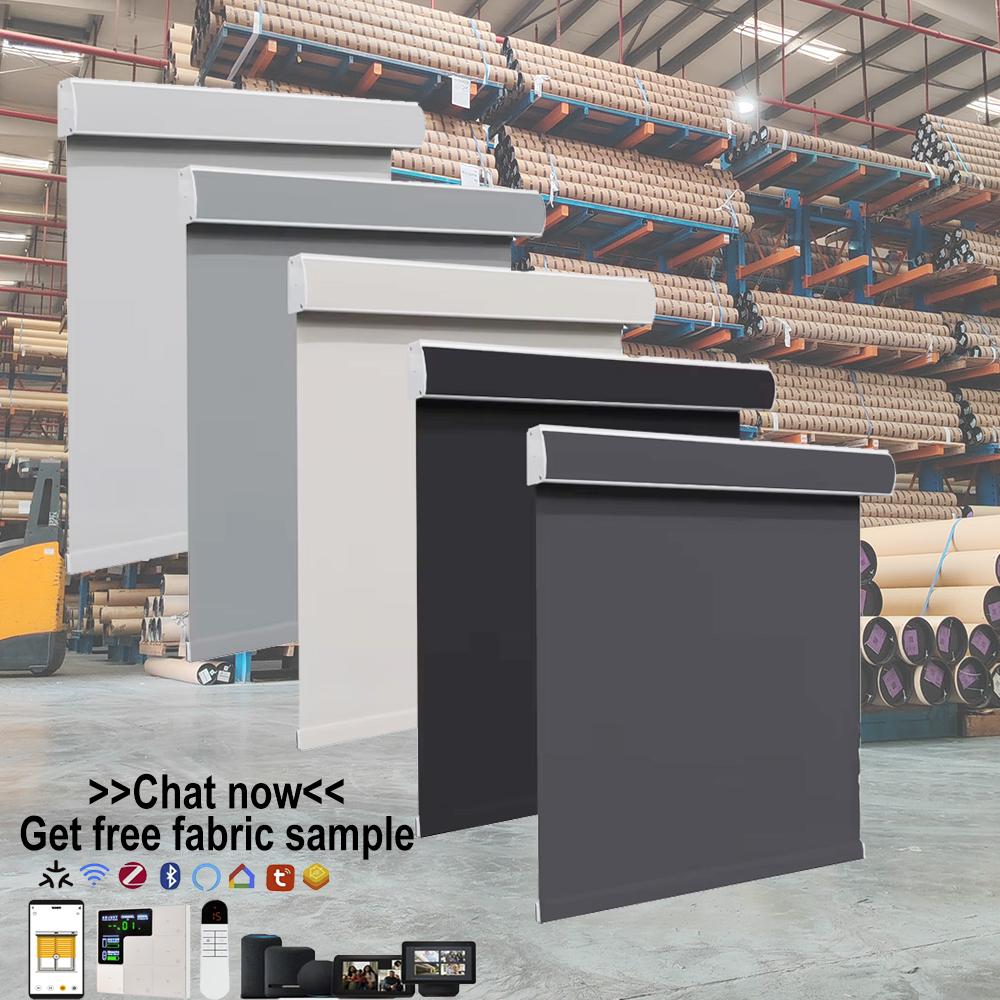
Not every motor survives long-term duty cycles, but a few designs keep proving themselves in the field. Brushed DC motors, for instance, remain common in older equipment not because they're efficient, but because they tolerate abuse and are cheap to rebuild. When commutators and brushes wear down, a quick service brings them back instead of sending the whole unit to scrap.
Three-phase induction motors are the real workhorses in industrial settings. No magnets to demagnetize, no brushes to burn out, and sealed bearings that rarely need attention. A well-built cast-iron frame induction motor can run for decades with little more than occasional greasing and alignment checks. That's why you still see them on pumps, fans, and conveyors that never stop.
Then there are brushless DC and permanent magnet synchronous motors, which show up in everything from e-bikes to HVAC systems. They hold up well when the drive electronics and thermal management are done right, but the motor itself is only half the story. A cheap controller or poor cooling will kill an otherwise solid motor faster than mechanical wear ever could.
Power Source Trade-Offs You'll Live With Daily
Every morning you make a silent bargain with your device's battery: fast top-ups during breakfast or a slower, kinder charge overnight. The 30-minute sprint to 80% feels like a win until you notice the heat building under the case and remember that heat is the quiet enemy of lithium-ion chemistry. Choose the rapid charger for emergencies, but accept that you're trading a few months of long-term capacity for today's convenience.
Portable power banks bring their own set of compromises. A pocket-sized 5,000 mAh unit disappears into a bag but barely rescues a modern phone from zero to full. The beefy 20,000 mAh brick guarantees weekend freedom, yet its weight tugs at your shoulder strap and makes you reconsider what 'minimalist carry' really means. Then there's the cable lottery: USB-C to Lightning, USB-C to USB-C, micro-USB for that one gadget you keep meaning to replace.
Wireless charging pads promise a tangle-free desk but deliver energy like a leaky faucet. Overnight placement works fine, but a quick 20-minute boost on a Qi mat yields only a few percentage points and often leaves the phone warmer than a wired trickle charge would. If you use a thick case, alignment becomes a ritual of nudging and checking, and you might find yourself reaching for the cable more often than you'd like to admit.
Smart Home Pairing Without the Friction
The typical smart home setup is a maze of app downloads, QR code scans, and Bluetooth retries. A better approach is pairing that mimics how we already connect to Wi-Fi: one tap, maybe a short confirmation, and the device is simply there. No more holding your phone in awkward angles to scan a tiny code that's printed on the bottom of a plug.
The trick is shifting the burden from the user to the device firmware. When a new gadget powers on, it can broadcast a temporary, encrypted handshake that your phone's OS recognizes natively. The phone shows a single prompt: "Add this light?" You tap yes, and the device is on the network, provisioned with your credentials. This isn't just convenience—it's fewer failure points, fewer support tickets, and a setup process that doesn't make you regret the purchase.
Companies that nail this pairing step see lower return rates and higher daily usage. Because when setup takes ten seconds instead of ten minutes, people actually use the smart features. Frictionless onboarding is the real gateway to a smarter home.
Noise Levels Most Spec Sheets Downplay
The printed decibel count on a box rarely matches what you hear after setup. Labs measure in semi-anechoic chambers, often picking the lowest fan speed or a cycle that keeps the loudest component from kicking in. In a real room, reflections off tile, drywall, and glass can push that number up by half again, especially once the motor settles into its steady-state hum rather than its brief startup burst.
Pay more attention to the spread between modes than to the headline figure. A device that claims 42 dB but jumps to 58 dB on high is more likely to annoy than one rated 48 dB with only a three-decibel swing. If the sheet does not state distance, weighting, or the specific task being performed during the test, treat the figure as a floor rather than a ceiling.
Installation Details That Save a Return Visit
Taking an extra minute to check the mounting surface before you start drilling can prevent a lot of frustration later. If the wall isn't perfectly flat or has hidden studs, the bracket will sit uneven and the unit will rattle. Use a level on the bracket itself, not just the template, and mark the hole positions with a pencil while someone holds the bracket in place. A small shift here means you won't have to come back and re-drill after the device is already hanging.
Wiring mistakes are the most common reason installers get called back. Don't rely on wire colors alone—older homes often have inconsistent or faded insulation. Snap a photo of the existing connections before you disconnect anything, and if there's any doubt, test each wire with a multimeter. Then make the new connections one at a time, keeping the exposed copper short so it doesn't touch neighboring terminals. This simple habit takes two minutes and eliminates the no-power or intermittent fault calls.
Finally, set the device into its final position before securing every screw. Many install guides tell you to tighten everything in sequence, but leaving the backplate slightly loose allows you to adjust for slight off-level mounting or to tuck excess cable behind the unit. Once it sits flush and the cover snaps on without force, then tighten the rest. This "test fit before final torque" step is what separates a clean one-visit job from a return trip to fix a crooked or strained panel.
FAQ
Look at whether the company actually builds the motors and fabrics in-house or just assembles parts from elsewhere. In-house control usually means better consistency and faster support when something goes wrong.
Ask about the control protocols they support—Z-Wave, Zigbee, Matter, or plain Wi-Fi. A good manufacturer will provide a compatibility list or even a test unit so you can confirm it works with your hub before committing.
It depends on your window layout and renovation stage. Hardwired shades make sense if walls are open or you want zero maintenance. Battery packs or rechargeable motors are simpler for retrofits, but you'll need to plan for charging access.
Beyond basic blackout and light-filtering, look for dual-layer fabrics, solar-reflective coatings, and acoustic materials. Also check whether they can match custom colors or patterns with a reasonable minimum order.
Very important if the shade runs frequently or in bedrooms. Quality manufacturers specify decibel ratings and use brushless motors. Ask for a sound sample or video at normal speed rather than relying on a written "quiet" claim.
Look beyond the number of years. Check whether the warranty covers the motor, fabric, and labor, and how repairs are handled. Some manufacturers ship replacement parts with clear guides, while others require sending the whole unit back.
Most capable manufacturers list minimum and maximum widths, but ask about deflection limits and extra support bars for wide spans. For skylights or angled windows, confirm if they provide specialized brackets and programming.
True smart shades have scheduling, scene control, and automation triggers based on sun position or temperature. Check if the system supports open APIs or local control—cloud-only apps can be a dealbreaker if the server goes down or the company stops supporting it.
Conclusion
When selecting smart motorized roller shades, the fabric you choose is only the beginning. Most buyers obsess over opacity or weave, but a manufacturer worth trusting will tell you that the hidden hardware determines daily satisfaction. Look for motors that have been cycle-tested beyond typical warranties, not just spec-sheet torque numbers. Power source decisions matter just as much: hardwired setups remove battery anxiety but demand upfront planning, while rechargeable options offer flexibility if you accept the chore of periodic charging. Noise is another overlooked detail—many spec sheets list decibel ratings under ideal conditions, yet real-world operation with heavier fabrics or older brackets can produce a whine that disrupts a quiet room. Ask for a live demo with your actual fabric weight before committing.
Smart home integration should feel invisible, not like a weekend project. The best manufacturers support multiple protocols without forcing you into a single ecosystem, and their apps handle firmware updates without bricking the shade. Installation details are equally telling: pre-drilled brackets, adjustable limit stops, and clear instructions can mean the difference between a one-hour job and a return visit. A shade that mounts cleanly and pairs on the first try saves both time and frustration. Ultimately, choosing a motorized roller shade is about predicting the years after installation, not just the moment of unboxing. Prioritize manufacturers who openly discuss motor longevity, power trade-offs, and real-world noise, and you will end up with shades that fade into the background of your daily routine.
Contact Us
Contact Person: Vivien Cheng
Email: [email protected]
Tel/WhatsApp: +86 13751758835
Website: https://www.rollergytech.com/