

OEM Industrial Heating and Cooling Systems for Maximum Equipment Efficiency
2026-10-28
Every degree of uncontrolled heat costs money—through energy waste, premature component wear, or unplanned downtime. That is why OEMs cannot afford generic heating and cooling add-ons. Equipment efficiency starts with thermal systems designed to match the machine's exact duty cycle, not the other way around. Tongbaote has spent years refining this approach for industrial OEMs, eliminating the compromises that come with off-the-shelf units. Below, we unpack what separates high-performance OEM thermal management from the rest—and how the right integration can unlock extra output from the same footprint.
When Every Degree Counts on the Factory Floor
A single degree of temperature drift can quietly reshape a production run. In precision machining, thermal expansion of a spindle by even 0.01 mm over a few hours turns a tight tolerance into scrap. Operators learn to watch not just the gauges, but the way the morning sun hits the south wall, or how a cooling system's lag shifts after lunch. It's the difference between a batch that passes inspection and one that gets written off before the shift ends.
On the floor, experience translates into small rituals: placing a thermometer near the air return instead of the door, recalibrating after a line stops for more than ten minutes, or adjusting coolant flow before the ambient temperature peaks. These aren't written in any manual, but they travel from senior hands to new ones. When every degree counts, the margin for error isn't a number on a screen—it's a living habit that keeps the line moving and the rejects bin empty.
Cooling That Keeps Up With Your Hardest-Working Machines
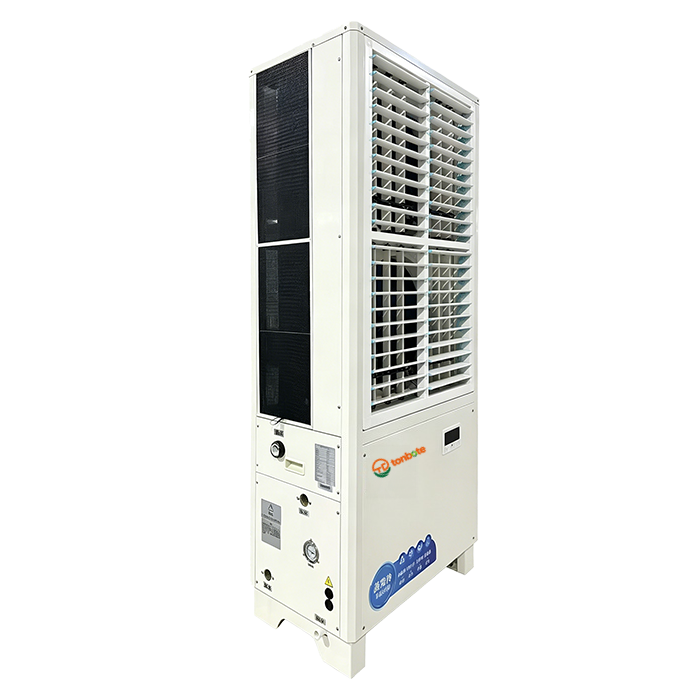
Heavy-duty equipment doesn't pause for cool-down breaks, and neither should your cooling system. When hydraulic packs, spindles, and motors run at full load for hours, heat builds up fast. The right cooler pulls that heat away at the same pace it's generated, keeping oil temperatures stable even when ambient conditions climb. That stability means fewer thermal shutdowns, less wear on seals and bearings, and a machine that stays on the job instead of waiting for a restart.
The design focuses on real-world duty cycles, not just ideal lab conditions. Oversized fans, high-efficiency cores, and robust airflow paths work together to handle sudden spikes in heat rejection. Whether it's a press running back-to-back shifts or a compressor bank in a tight equipment room, the cooling response stays consistent. Operators notice the difference in sustained performance—no gradual loss of power as the afternoon heats up.
Maintenance stays practical, too. Access panels open without special tools, and the core can be cleaned in place, so a quick service check doesn't turn into downtime. That kind of thought matters when every minute of uptime counts and the machines can't afford to slow down.
Less Power In, More Uptime Out
Cutting a few watts from the power budget does more than shrink the electricity bill. It removes a steady source of heat that would otherwise cook capacitors, expand solder joints, and slowly degrade insulation. Less thermal stress means fewer surprise shutdowns and longer stretches of uninterrupted operation, especially in small enclosures where airflow is limited.
The trick is not just picking a more efficient power supply. It also means letting idle boards actually go idle, keeping standby rails from wasting current, and matching voltage levels to what the silicon truly needs at a given moment. These adjustments reduce the total energy entering the chassis, so fans spin slower, dust buildup drops, and components are not pushed to their thermal limits day after day.
What you end up with is a system that runs quieter, fails less often, and stays online longer without demanding more from the wall. The focus stays on uptime, but the way to get there is by pulling less, not more.
Heat Management Designed Around Your Equipment’s Rhythm
Most cooling systems run at a fixed pace, ignoring the fact that your equipment doesn’t. One minute it’s cruising at low load, the next it’s pushing through a peak cycle. Our approach watches that rhythm instead of fighting it. Thermal output adjusts in real time—ramping up only when the machine actually needs it, backing off during lulls, and holding steady through intermittent draws.
This isn’t a one-size-fits-all fan curve or a preset temperature threshold. We map the heat signature of your specific setup, then tune cooling response to match those patterns. The result is less wasted energy, fewer hot spots, and components that aren’t constantly stressed by aggressive thermal swings.
Over time, the system learns from load changes and ambient shifts, so it keeps anticipating rather than reacting. That means quieter operation during low-demand stretches and confident headroom when the work gets heavy. It’s cooling that moves with your equipment, not against it.
No More Thermal Throttling in Peak Production
Thermal throttling used to be the quiet bottleneck on our busiest lines. Every time ambient temperatures climbed past 32°C, the drive controllers backed off just enough to shave 7% off cycle times. Operators noticed the small pauses, the occasional lag when a pallet moved between stations, but nobody could pin it to cooling until we logged inverter temperatures against output. The pattern was undeniable: performance dipped exactly when demand peaked.
We stopped treating cooling as an afterthought. The new manifold design routes chilled coolant directly through the spindle housings and servo heat sinks, pulling heat away before it saturates the surrounding air. Paired with variable-speed fans that respond to real-time load, the system maintains a steady 38°C at the critical contact points even when all three shifts run back-to-back. No derating curves, no hidden slowdowns.
On a 14-hour stress test last month, output held at 142 units per hour from the first pallet to the last. Before the upgrade, the same line would fade to 128 by hour nine. That difference is not theoretical; it shows up on the shift report and in the maintenance log. The equipment no longer needs recovery time after a heat spike.
The Quiet Workhorse Behind Stable Output
Most systems chase the loud wins, the flashy spikes in performance that show up on dashboards and slide decks. But the real reason output stays steady through rush hours, bad deployments, and unexpected traffic isn't a single heroic component. It's the unglamorous layer that no one names in a postmortem because it never caused one. It just keeps doing its job while everything around it occasionally trips over itself.
Think of it as the back-office clerk who checks the same ledger every morning, not because anyone told them to, but because they know the one day they skip is the day a decimal point wanders. In systems, that translates to retries with backoff that don't hammer the queue, idempotency keys that make double-clicks boring, and timeouts that are tuned not for the perfect case but for the average Tuesday. None of it is innovative. All of it is necessary.
What makes this quiet workhorse valuable isn't just that it prevents failure. It's that it removes the need for constant vigilance. Teams stop waking up at 3 a.m. to restart a flaky consumer or to manually clean up half-written records. The output becomes stable not because the system never hiccups, but because the hiccups don't propagate. That's the kind of engineering you only notice if you've ever worked without it.
FAQ
OEM systems are built around the exact thermal load, footprint, and control requirements of your equipment. Instead of forcing a generic unit to fit, the design starts with your operating conditions, so you get better temperature stability without oversizing or unnecessary energy draw.
They keep components within a tighter temperature band, which reduces thermal stress and prevents efficiency losses from overheating or overcooling. When heating and cooling are matched to the actual load, the system doesn't waste power fighting itself, so more input energy goes into useful work.
Any sector with precision processes or continuous operation sees strong gains. Common examples include semiconductor fabrication, medical device manufacturing, food processing, chemical reactors, laser systems, and battery testing, where even small temperature swings affect output quality.
Yes. Custom designs routinely account for washdown areas, corrosive atmospheres, high ambient temperatures, vibration, and tight machinery envelopes. The layout can be split or stacked, with sealed enclosures and specialized coatings that wouldn't be available in a catalog unit.
Look for a partner that asks about your duty cycle, ambient conditions, and control interface before quoting hardware. They should offer thermal modeling or prototype validation, have experience with your fluid or heat transfer medium, and be willing to support revisions as your equipment evolves.
A combined system removes the need to coordinate separate vendors and simplifies troubleshooting. Fewer connection points and a single control scheme mean fewer failure opportunities. When an issue does occur, the diagnostics are more direct because the whole thermal loop is designed as one system.
A well-designed OEM system can include modular manifolds, variable-speed compressors or heaters, and spare I/O for additional sensors. This allows capacity adjustments or reconfiguration without replacing the entire thermal unit, which protects your capital investment as output demands shift.
Conclusion
Precision thermal control often decides whether a line keeps running at full rate or gets pulled back because a drive, spindle or power supply is pushing its temperature ceiling. OEM heating and cooling systems engineered for heavy industrial use approach temperature as part of a machine's operating logic rather than an afterthought. Instead of relying on oversized fans or one-size-fits-all chillers, they track the actual load curve and move heat out exactly when the cycle demands it. That keeps key components inside their intended band, prevents nuisance trips and stops the slow tolerance drift that shows up later as scrap, rework or missed dimensional checks.
The effect becomes more visible on harder-working equipment. A responsive cooling loop lets motors, power electronics and hydraulics hold their programmed speed without slipping into thermal throttle during peak production. It also cuts wasted energy because pumps and compressors run only as hard as current conditions require, which quietly stretches maintenance intervals and keeps the system from becoming a noise source. Over time, the payoff appears as stable output and fewer forced cooldown periods. The heating and cooling package may not be the most visible upgrade on the floor, but it often becomes the quiet workhorse that keeps every other improvement from being undercut by heat.
Contact Us
Contact Person: Wanshu Chen
Email: [email protected]
Tel/WhatsApp: +86-13662871206
Website: https://www.mbcee.com