

Smart Blinds Wholesale: How to Choose the Best Supplier for Your Business
2026-09-14
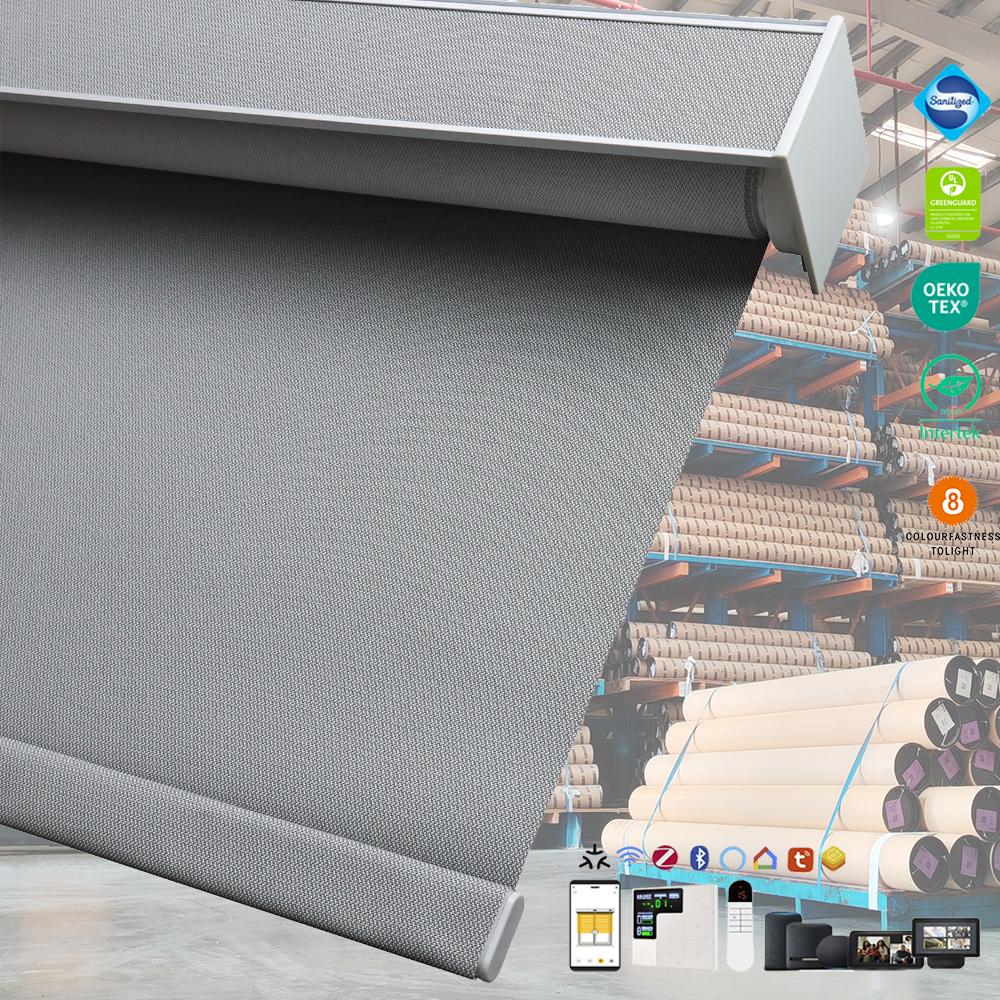
Sourcing smart blinds at wholesale prices isn't just about finding the lowest cost per unit—it's about locking in a supplier who can keep up with your customers' demand for seamless automation, reliable hardware, and designs that actually sell. Whether you're expanding a window coverings line or building a new smart home catalog, the right partner will shape your margins and your reputation. Here's how to cut through the noise and choose a wholesale smart blinds supplier that works as hard as you do. For businesses seeking proven motorized solutions, ROLLERGY has built a name around durable, integration-ready blinds that retailers and installers trust.
What Actually Breaks First in Cheap Smart Blinds?
In most budget smart blinds, the motor is the first component to give out. Manufacturers save money by using tiny DC motors with plastic gearboxes, and those gears strip or crack after a few thousand cycles. What makes it worse is that the motor often lacks thermal protection, so if the blinds encounter resistance from a warped track or tangled cord, the motor overheats and burns out before any other part fails.
The next weak point is typically the power system. Cheap models rely on rechargeable lithium-ion packs or a string of AA batteries, but the charging circuitry is underbuilt. You'll notice the blinds start dropping offline or moving slower than usual, and soon the battery won't hold a charge at all. Some units also use flimsy micro-USB or barrel connectors that loosen over time, causing intermittent power loss that looks like a motor problem but is actually just a bad connection.
Connectivity and control boards round out the list of early failures. Low-cost Wi-Fi or Bluetooth modules often have poor antenna design, so the blinds lose pairing or refuse to respond to app commands. The main control board may also suffer from bad solder joints or cheap capacitors that swell after a year. When that happens, the blinds either get stuck in one position or behave erratically, even though the motor and battery were replaced.
Why Some Suppliers Hide Their Motor Specs Until You Ask
It’s rarely about secrecy for its own sake. Many motor suppliers keep detailed spec sheets offline because their catalog covers hundreds of configurations, and the relevant torque curve, duty cycle, or mounting variant depends on what you’re actually building. Once you ask, they can pull the right datasheet instead of dumping a generic PDF that might not match.
Another angle is that printed specs can age quickly. A supplier might be mid-shift from one winding material to another, or waiting on updated test data from a sub-factory, so they’d rather confirm current numbers in a direct message than have customers rely on stale figures.
There’s also a quiet form of qualification. By making you ask, they can gauge whether you’re a serious buyer or just collecting data. It filters out tire-kickers and lets their engineers recommend a motor that won’t fail in your application.
The Integration Mistake That Leads to Angry Hotel Guests
When a hotel's booking system doesn't sync with the front desk software, the first casualty is usually the guest's patience. Someone reserves a room online, arrives at midnight, and is told there's no reservation on file. The clerk shrugs, blames the computer, and offers a room at a higher rate. What could have been a simple check-in becomes a standoff in the lobby.
The real problem isn't technology—it's siloed departments that never talk to each other. Marketing runs promotions that the reservation team doesn't know about. Housekeeping updates room status on a different schedule than the front desk. A guest gets a confirmation email for a king bed, but the actual room has two doubles because the systems don't share the same room-type codes.
The fix starts with mapping every touchpoint where guest data changes hands. Then pick one integration platform and force all vendors to connect through it. Test the flow monthly with fake reservations. Because every time a guest has to repeat their name, confirmation number, and special requests, the hotel is quietly burning the loyalty it spent years building.
Testing a Supplier's App Before You Order 500 Units
Testing a supplier's app before committing to 500 units isn't just a precaution; it's a way to uncover how the product behaves in real-world conditions. Order a single sample or a small batch, then spend at least a week using the app the way your customers would—navigating menus, pushing buttons, charging, and connecting to other devices. Pay attention to load times, battery drain, app crashes, and any quirks that only surface after repeated use. This hands-on phase often reveals mismatches between the spec sheet and actual performance.
Beyond the app itself, evaluate the supplier's responsiveness during this trial. Send questions about setup, compatibility, and troubleshooting, and note how quickly and clearly they reply. A supplier that struggles to support you during a small test will likely be harder to reach once 500 units are in your warehouse. Also check whether the app receives regular updates and whether the backend login or pairing process feels stable—these are early indicators of long-term reliability.
Finally, document every issue you encounter and request fixes or clarifications before scaling up. If the app requires a firmware update or a specific phone model to function smoothly, that's a red flag for your target audience. Use the trial period to negotiate quality guarantees or return terms based on what you observe. A few extra days of testing now can save you from a costly inventory of devices that frustrate users and generate returns.
What a Real Commercial Warranty Should Cover
A genuine commercial warranty isn't a marketing ribbon—it's a contract that names specific components. If the fine print only says "manufacturing defects" without listing the compressor, motor, heat exchanger, and controls, it's already too vague. Look for explicit coverage of sealed system parts against burnout, coil leaks, and electrical board failure, not just a generic promise to "repair or replace."
Labor is where many warranties quietly fall apart. Parts might be covered, but the hourly rate to diagnose a failing evaporator or install a new condenser fan can exceed the part cost. A real commercial warranty should state the included labor allowance, travel time, and emergency after-hours rates in writing. If it caps labor at $75 while local refrigeration techs charge $140, you're still paying for a warranty that doesn't protect your operating budget.
Beyond parts and labor, pay attention to exclusions, maintenance requirements, and transferability. Some warranties vanish if you skip one quarterly cleaning log or fail to use a licensed contractor. A warranty worth keeping will spell out exactly which maintenance tasks preserve coverage, allow transfer to a new owner within a set time, and define a realistic claim response window—typically 24–72 hours for critical equipment, not "best efforts." If these terms are missing, you're buying a promise, not protection.
Negotiating Bulk Pricing Without Getting Buried in Defects
Most suppliers will offer an aggressive per-unit price to lock in a large order, but that discount stops looking smart once you're sorting through cartons of unusable stock. Before committing to any bulk deal, pin down an acceptable quality limit (AQL) and write the inspection method into the contract. If the supplier won't agree to a defined sampling standard—like ANSI/ASQ Z1.4—walk away, because you're negotiating blind.
Run a paid pilot batch before the main production run and have a third-party inspector or your own team check it against the agreed tolerances. That gives you real defect data to bring back to the table, shifting the conversation from "trust us" to "here's what we measured." Negotiate bulk pricing only after the pilot passes, and build a sliding scale into the deal—price drops only when defect rates stay below an agreed threshold across multiple shipments.
Tie a portion of payment to quality outcomes. For example, hold back 10–15% until the goods are received and inspected at your warehouse. This isn't about punishing the supplier; it simply makes the cost of defects visible to both sides. You'll find that when suppliers have money at risk, their definition of "acceptable" gets a lot closer to yours.
FAQ
Ask for tear-downs or installation guides before you even discuss pricing. A supplier that hesitates to share technical documentation usually relies on marketing talk instead of engineering detail. Also, watch how fast they respond to questions about motor torque, radio frequency interference, and battery replacement—those answers tell you more than a polished catalog.
Request duty cycle data rather than just a 'long lifespan' claim. Motors rated for continuous operation at lower torque tend to outlast ones pushed near their limit. If possible, get a sample and run it through 20-30 open/close cycles a day for two weeks. Heat buildup and noise changes are early red flags.
It depends on your volume and how much hand-holding you need. Factories give better margins and more customization freedom, but you'll handle quality control, import paperwork, and firmware updates yourself. A local distributor costs more per unit but often absorbs those headaches and can replace faulty stock faster.
Look for a warranty that covers the motor and the control module separately, and confirm whether shipping costs for replacements are on the supplier. A five-year motor warranty means little if you pay return freight from another continent. Also ask about the claims process—some suppliers require video evidence, which is fine, but the turnaround should be under two weeks.
Ask the supplier for a list of certified integration IDs or Matter cluster support. Avoid brands that only work through a single proprietary app unless your customers are okay with that lock-in. A quick test: request a demo video showing the blind added to three different ecosystems, not just one.
No. A golden sample proves they can make one good unit. You need a random sample pulled from the actual production line after the first batch is assembled. Check stitch alignment, fabric tension, motor noise, and packaging. If the supplier refuses a random pull, treat that as a warning sign.
Watch for firmware update fees, app subscription charges for advanced scheduling, and packaging that isn't drop-ship ready. Also confirm whether the quoted price includes wall brackets, remote controls, and charging cables. A supplier that quotes bare units but later charges for accessories can erase your profit.
Ask for their monthly production capacity per motor size and request references from clients with similar order volumes. A tour of the facility—even a video tour—reveals whether they have dedicated testing stations or just a table in the corner. For custom fabrics or sizes, get written confirmation of minimum order quantities and lead time penalties.
Conclusion
Most wholesale smart blind failures don't show up in the fabric or the housing—they hide in the motor and control board. Cheap suppliers cut corners there, using unbranded steppers that burn out after a few thousand cycles, and they often avoid publishing torque or duty cycle specs unless you push for them. If a vendor can't tell you the motor's continuous runtime or its noise rating under load, you're likely buying a product that will fail in a hotel or office installation. Worse, many low-cost blinds have closed or poorly documented APIs, so when the integrator tries to link them with KNX, Lutron, or a custom BMS, the scenes break and guests end up calling the front desk because their blinds won't close at sunset. Before you place a large order, insist on a live demo of the supplier's app and a test unit with the exact firmware your installation will use—many apps look polished in a screenshot but crash when handling 500 devices simultaneously.
A real commercial warranty isn't just a one-year replacement promise; it should cover the motor's full expected lifespan, include on-site service for the first batch, and spell out what happens when a motor fails in year three or four. When negotiating bulk pricing, don't just push for the lowest per-unit cost—ask for a defect rate guarantee and a sample audit clause. A good supplier will agree to a penalty for batches exceeding a 2-3% failure rate, and they'll be transparent about which components are third-party versus in-house. If a vendor offers a rock-bottom price but won't let you open a blind to inspect the motor or runs away from a pilot order, you're not saving money; you're just prepaying for angry customers and expensive truck rolls.
Contact Us
Contact Person: Vivien Cheng
Email: [email protected]
Tel/WhatsApp: +86 13751758835
Website: https://www.rollergytech.com/