

Switchgear Tulip Contact Company – How to Choose a Reliable Supplier
2026-10-02
When your switchgear fails, the culprit is often a tiny component you rarely see: the tulip contact. Choosing the right supplier for this critical part isn't just about price—it's about preventing catastrophic downtime. Yet with so many manufacturers claiming excellence, how do you separate the dependable from the dubious? That's where MOLDVOLT enters the picture. In this guide, we'll cut through the noise and show you exactly what to look for in a switchgear tulip contact supplier, so you can make a decision with confidence.
Why Tulip Contact Design Matters More Than You Think
Most people glance at a tulip contact and see a simple springy metal finger. That assumption quietly undermines entire systems. The curvature, the surface plating, the exact angle of deflection—these aren't cosmetic details. They govern how consistently current flows, how much heat builds up at the mating point, and whether microscopic fretting corrosion will brick a connector six months after installation. A tulip contact isn't just a conductor; it's a mechanical promise that has to hold under vibration, thermal cycling, and thousands of insertion cycles.
Consider what happens in a high-voltage switchgear or an electric vehicle charging port. A contact that loses a fraction of a millimeter in spring force doesn't fail dramatically—it begins to intermittently drop voltage. That intermittent behavior is the real killer. It confuses control circuits, erodes plating faster, and turns what should be a thirty-year service life into an unpredictable maintenance nightmare. Engineers who treat the tulip design as an afterthought end up chasing phantom faults that could have been avoided by paying attention to contact normal force and wipe distance.
The difference between a good tulip contact and a great one often lives in the details nobody writes about in spec sheets: a slight radius on the edge to prevent micro-arcing, a selective gold flash only where it matters, or a split length tuned to avoid resonance at the operating frequency. These choices don't cost much at the design stage, but they transform how a product ages in the field. When you realize that a 2-cent stamping decision can determine whether a breaker trips reliably after twenty years of neglect, the importance of tulip contact design stops being abstract—it becomes the quiet backbone of every system that can't afford to blink.
The Hidden Costs of Cheap Switchgear Contacts
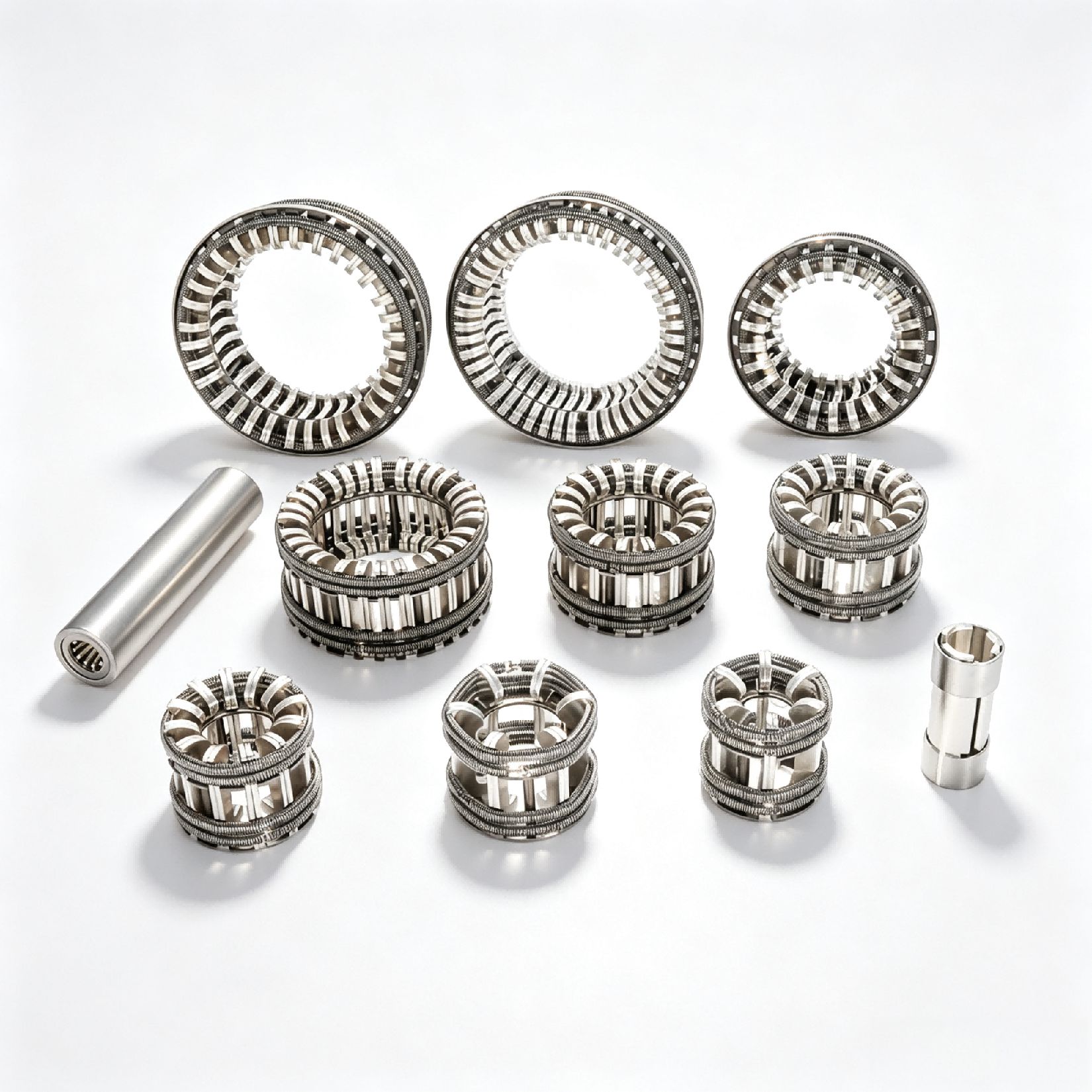
When procurement teams chase lower upfront prices on switchgear contacts, the real expense often surfaces months or years later in ways that never appear on the initial invoice. A contact made from thinner copper alloy or with a poorly bonded silver tip may pass a basic continuity test on day one, but under repeated thermal cycling it develops micro-arcing at the mating surface. That arcing accelerates pitting, increases contact resistance, and eventually leads to hot spots that warp the surrounding insulation. The result is a breaker that trips unpredictably or fails to clear a fault—turning a routine maintenance window into an emergency shutdown.
Hidden costs also accumulate in the form of shortened maintenance intervals and cascading component wear. Cheap contacts often lack the precise spring alignment or surface plating needed to maintain consistent wipe and pressure over thousands of operations. As the contact face degrades, the operator mechanism compensates by slamming harder, which stresses the entire pole assembly. Bearings wear faster, arc chutes accumulate more debris, and the lubricant burns off sooner. Over a five-year lifecycle, a facility may spend three times the original savings on extra inspections, replacement parts, and labor—without even counting the production losses from unplanned downtime.
Perhaps the most overlooked cost is the loss of selective coordination. Quality contacts are engineered with specific let-through energy characteristics that allow downstream breakers to clear a fault before the upstream device trips. A cheap contact that welds or erodes unevenly changes the dynamic impedance of the circuit, defeating that coordination. When a small motor fault takes down an entire feeder instead of just the local branch, the financial impact can dwarf any purchase-price advantage. In short, the "cheap" contact quietly transfers its cost from the parts bin to the operating budget, the safety record, and the plant's overall reliability.
What to Look for in a Supplier's Quality Control Process
A supplier's quality control process starts to reveal itself long before the first shipment leaves the dock. Ask to see how they handle a rejected batch, not just their certificate wall. The answer should include specific containment steps, root cause analysis, and who signs off on rework. If the reply is vague—'we always fix problems'—that's a red flag. Traceability matters too: can they tie a finished unit back to the raw material lot and the operator on shift?
Pay attention to where inspection happens. Mature suppliers don't rely on a final audit to catch everything. They check incoming materials against approved samples, pause production for critical measurements, and use control charts to spot drift before it becomes scrap. Ask for a recent nonconformance report and see if it reads like a blame memo or a learning document. The latter tells you the process is alive.
Finally, watch how line workers treat quality. In a healthy system, someone on the floor can stop the line without fear, and corrective actions get tracked to closure with deadlines. If the supplier's quality manager can't name a problem they found last month and what changed because of it, that's a warning. Real quality control is not a department; it's a habit that shows up in small decisions every day.
Questions to Ask Before Signing a Supply Agreement
Before you put pen to paper, nail down the exact scope of what's being supplied. Vague descriptions lead to disputes over quality, quantity, or delivery timelines. Ask whether the agreement covers raw materials, finished goods, or ongoing services—and whether volumes can fluctuate without penalty. If the supplier can't clearly define what constitutes an acceptable batch or a timely shipment, you're inheriting a problem, not a partnership.
Dig into the pricing structure and any hidden costs that might surface later. Is the quote fixed for the entire term, or does it adjust with market indices, currency swings, or fuel surcharges? Clarify who bears the cost of storage, insurance, and returns. A low headline price means little if you're hit with unexpected fees for rush orders, split deliveries, or quality rework. Make sure the agreement spells out payment terms, late penalties, and any volume discounts you're actually entitled to.
Finally, understand how the deal can end—or change. What happens if the supplier misses a deadline, delivers defective goods, or faces their own supply chain disruptions? Look for clear exit clauses, liability caps, and remedies that don't leave you stranded. Also ask about exclusivity: are you locked into this supplier, or can you source elsewhere if they fail? A well-drafted agreement should make the consequences of non-performance obvious, not buried in fine print.
How to Spot Red Flags in Supplier Claims
A supplier's promise can sound flawless, but the cracks usually show under pressure. Start by pushing for specifics: vague timelines, undefined quality metrics, or repeated references to “industry standard” without a clear benchmark often signal that the claim hasn't been tested in real conditions. Legitimate suppliers welcome detailed questions, while those leaning on hype tend to deflect or double down on generalities.
Watch how they handle proof. If a supplier claims a 99.9% on-time delivery rate or a zero-defect manufacturing line but hesitates to share audit reports, third-party certifications, or customer references that you can actually contact, treat the gap between talk and evidence as a warning. Red flags multiply when different team members give conflicting answers about the same capability or when past performance data only covers a conveniently short window.
Finally, compare the claim to the cost structure. Extraordinary guarantees at a bargain price rarely survive scrutiny—serious quality control, ethical sourcing, and reliable logistics carry real costs. If the numbers don't add up, ask for a breakdown. A supplier that becomes defensive rather than transparent is already telling you what a long-term partnership would feel like.
Building a Supply Chain That Survives Market Swings
Most supply chains are designed for steady demand, not the sudden spikes and drops that markets throw at them. The first step to surviving a swing is to map every critical component and raw material back to its source, including second- and third-tier suppliers. If you don't know which node will break first under stress, you're already behind when the disruption hits.
Deliberate redundancy is the next layer of protection. Instead of just holding more inventory, qualify backup suppliers in different regions before you need them and write contracts that let you shift order volumes without penalty. Add shock absorbers where volatility is highest: safety stock for items with long lead times, nearshored production for fast-turnaround products, or flexible lines that can switch between SKUs in a matter of hours.
The real edge comes from tying supply chain decisions to live market signals rather than an annual plan. Teams that run monthly what-if scenarios and monitor early indicators like port congestion, freight rates, or sudden commodity price shifts can pull levers before a swing turns into a full-blown crisis. That kind of responsiveness turns the supply chain from a cost center into a genuine buffer against uncertainty.
FAQ
A dependable manufacturer doesn't just claim precision; they prove it with documented tolerance checks, real material certifications, and a willingness to share test data before you place an order.
Look beyond generic copper. High-conductivity, oxygen-free copper or silver-plated copper is common, but the plating thickness and adhesion matter just as much. Ask for plating thickness measurements, not marketing descriptions.
Request first-article inspection reports, CMM data, or batch inspection records. A supplier comfortable sending these without hesitation is already a better bet.
Proper heat treatment reduces internal stress and prevents premature cracking under repeated insertion cycles. Suppliers should be able to explain their process and why it suits your specific contact geometry.
Specialists often have deeper tooling and in-house testing focused on this one component, which can shorten lead times and improve consistency. Generalists may offer convenience but rarely the same depth.
Ask how they handle out-of-spec parts, what their scrap rate is for tulip contacts, and whether they track field failure data. Vague answers are a warning sign.
It's critical. Too thin and it wears quickly, leading to hot spots. Typical durable plating might be 10-20 microns, but the right spec depends on your current load and insertion frequency.
Late responses after payment, no documented quality system, pricing that seems too good, and reluctance to provide references from switchgear assembly clients.
Conclusion
Choosing a reliable switchgear tulip contact supplier goes far beyond comparing price lists. The tulip contact's geometry directly affects grip force, heat dissipation, and long-term contact resistance; a slightly off-angle or thin-walled design can cause hot spots and premature failure even when materials look identical on paper. Cheap contacts often hide flaws in plating thickness, copper purity, or spring consistency, which translate into unplanned downtime and costly retrofits in the field. A trustworthy supplier will openly walk you through their quality control process—showing real test data for contact resistance, insertion force, and thermal cycling rather than just citing industry standards. Ask targeted questions before signing: What tolerances do you hold on the tulip fingers? Can you provide batch-level material certificates? How do you handle non-conformance reports?
Watch for red flags such as vague claims of 100% quality without measurable thresholds, reluctance to share failure data, or sudden changes in raw material sourcing without notification. A supplier that pressures you with short-term discounts but cannot explain how they maintain consistency across different production lots is likely hiding process instability. Finally, build a supply chain that can survive market swings by qualifying at least two independent sources, agreeing on safety stock for critical contact configurations, and scheduling regular joint audits. The best partners treat your switchgear reliability as their own performance metric, offering clear communication, traceable documentation, and a proven track record under real operating conditions. That combination—not a low unit price—is what keeps your switchgear running safely year after year.
Contact Us
Contact Person: Hellen
Email: [email protected]
Tel/WhatsApp: 86-13634205622
Website: https://www.voltcabinet.com