

Top 10 Centrifugal Air Compressors That Combine Power and Efficiency
2026-10-19
Centrifugal compressors rarely let you have it both ways—raw output usually comes with a hefty energy bill, while efficient units can feel underwhelming when demand spikes. The ten models below break that pattern. We looked at real-world performance, not just spec sheets, to find machines that deliver steady pressure without draining your budget. Whether you're running a high-volume plant or upgrading a single process line, there's something here worth your time. And if you want to compare these picks against a brand that consistently shows up in efficiency conversations, check out Seize Air before you make a shortlist.
What Makes These Centrifugal Compressors a Practical Choice for High-Demand Plants
High-demand plants need equipment that can handle continuous operation without creating constant maintenance headaches. These centrifugal compressors use oil-free rotors and robust bearing arrangements that tolerate sustained duty cycles while keeping vibration and wear low. The result is less unplanned downtime and service intervals that fit naturally into scheduled plant turnarounds, giving maintenance teams more predictable workloads.
Energy consumption is another practical concern for facilities running compressors around the clock. Refined impeller geometry and diffuser tuning help these units hold efficiency across a broad operating envelope, meaning power draw stays reasonable even when process conditions shift. That translates into lower electricity costs per unit of compressed gas — a significant advantage in plants where compressors are among the largest energy users.
Footprint and integration also matter in busy industrial settings. Compact, skid-mounted packages fit into crowded process areas without major structural changes, and the control interfaces connect to existing plant automation systems without custom code. For operations expecting capacity changes, the modular rotor and casing options allow incremental upgrades rather than a full replacement, which protects capital budgets over the long term.
Breaking Down the Efficiency Gains Without Losing Air Delivery
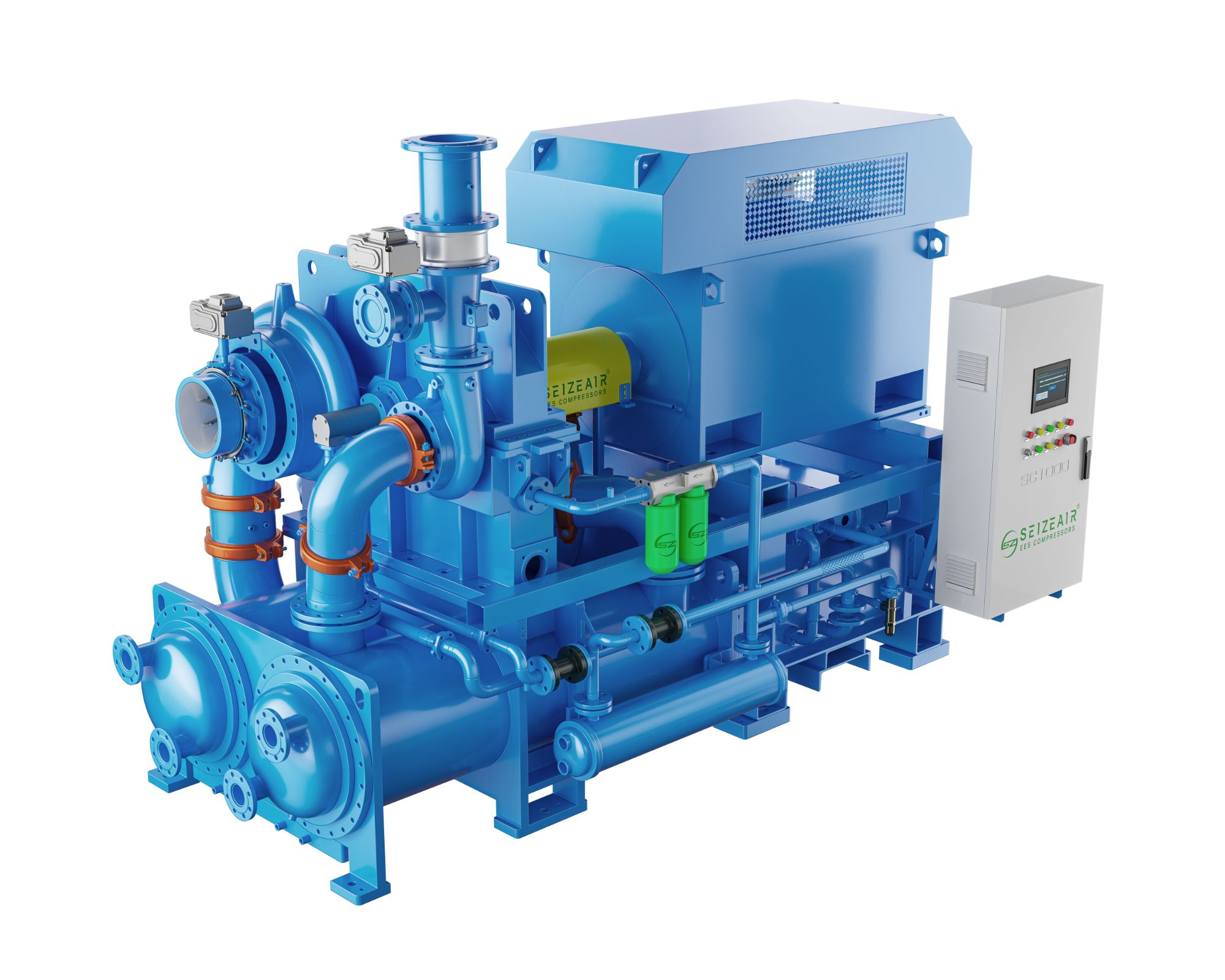
Efficiency in air delivery often gets framed as a trade-off: push harder for lower energy use and you risk starving the system of the airflow it needs. But the real gains come from rethinking how air moves, not just how much of it gets pushed. Small diameter shifts, smoother internal transitions, and smarter valve timing can recover meaningful percentages without ever touching the volume dial. The trick is to treat every bend, joint, and length of duct as a place where pressure quietly leaks away.
Another overlooked lever is the relationship between peak demand and average load. Systems sized for rare extreme conditions spend most of their life running at a fraction of capacity, wasting energy simply to overcome their own internal resistance. By staging compressors or blowers and letting storage buffer the spikes, you keep the same delivered air volume at the point of use while dropping the total energy drawn at the source. It feels counterintuitive, but the math holds: distribution losses scale with velocity squared, so shaving the peaks delivers outsized savings.
Finally, instrumentation makes the invisible visible. Pressure sensors at the far end of the line, not just at the machine, reveal how much air actually arrives versus how much left the fan. That differential is the true efficiency metric. Once teams see the drop across filters, dryers, and long runs, they stop guessing and start fixing the quiet culprits: oversized equipment, leaking couplings, and duct paths that fight themselves. Air delivery stays exactly where it needs to be, but the energy bill finally reflects the work that matters.
How Advanced Impeller Profiles Improve Pressure Stability
Conventional impeller designs often struggle with pressure pulsations caused by uneven flow separation and blade-passing frequency. Advanced profiles, however, use carefully sculpted blade curvature and variable lean angles to smooth the fluid path, reducing localized vortices that trigger instability. By shaping the leading edge to gradually accelerate the fluid rather than abruptly redirecting it, these profiles minimize the shock losses that commonly disrupt steady pressure delivery.
Another key factor is the optimization of the blade-to-blade channel area, which is tailored to avoid sudden expansions or contractions. This ensures that the pressure recovery occurs progressively along the impeller passage instead of in abrupt steps. As a result, the downstream flow enters the diffuser or volute with a more uniform velocity profile, preventing the low-frequency surging that plagues standard geometries. Even under varying flow rates, the advanced profile maintains a tighter pressure envelope because the incidence angle at the blade inlet stays within a forgiving range.
In practice, this translates to quieter operation and longer seal life, as the mechanical components are no longer subjected to harsh pressure spikes. Engineers can specify smaller accumulators or simpler control logic, knowing the pump or compressor itself delivers inherently steadier output. The cumulative effect is not just a marginal improvement but a fundamental shift in how the impeller interacts with the working fluid—turning what was once an unpredictable dynamic into a controlled, repeatable process.
Comparing Oil-Free and Oil-Flooded Designs for Different Work Environments
In food and beverage plants, pharmaceutical suites, or electronics assembly rooms, oil-free compressors are usually the only sensible choice. Even trace amounts of lubricant in the air can ruin batches, trigger failed quality audits, or damage sensitive circuit boards. Oil-flooded designs, by contrast, thrive in heavy manufacturing, foundries, and outdoor construction sites, where occasional oil vapor is not a dealbreaker and the robust cooling and sealing properties of oil actually extend component life under continuous load.
Maintenance patterns also split along work environment lines. Oil-flooded models demand consistent oil sampling, filter changes, and condensate disposal — manageable for a dedicated maintenance crew in a factory, but a real headache in a remote compressor station or a cleanroom where every service visit requires gowning and paperwork. Oil-free compressors cut out most of that routine, which matters more than a spec-sheet comparison might suggest when you are running multiple units across distant sites.
Upfront cost often favors oil-flooded machines, and if your operation already runs heavy pneumatic tools or grit-blasting equipment in a dirty yard, that lower capex plus proven durability makes sense. However, if air purity is non-negotiable, spending more on an oil-free unit can eliminate downstream filtration, reduce rejection rates, and keep inspectors off your back. The real question is not which design is better overall, but which one matches the dust, humidity, cleanliness standards, and maintenance labor of your specific worksite.
Why Variable-Speed Operation Cuts Energy Waste in Fluctuating Loads
Fixed-speed compressors, pumps, and fans are designed to meet peak demand, but actual operating conditions rarely stay at that level. When load requirements dip, a fixed-speed machine simply keeps running at full output and throttles or bypasses the excess—converting unused energy into heat, pressure drops, and unnecessary wear. Variable-speed operation removes this mismatch by adjusting motor speed in real time to match the exact load. Because power consumption in centrifugal and positive displacement equipment follows a cubic or square relationship with speed, even a modest reduction in speed can cut energy use by 20 to 50 percent without sacrificing process stability.
In systems with frequent partial-load periods, the waste from fixed-speed control accumulates hour after hour. A fan running at 80 percent speed, for instance, consumes nearly half the power of a throttled full-speed fan delivering the same airflow. Variable-speed drives also avoid the repeated start-stop cycles that stress mechanical components and create spikes in electrical demand. By keeping the motor within its optimal efficiency band and eliminating bypass losses, operators see lower electricity bills, quieter operation, and extended equipment life—especially in HVAC, water boosting, and compressed air networks where load swings are the norm rather than the exception.
The practical upside goes beyond simple energy arithmetic. Variable-speed control responds to pressure, temperature, or flow sensors within milliseconds, so the system never works harder than necessary. Instead of guessing at future demand or oversizing for rare peak events, engineers can let the drive follow the actual load curve. This turns fluctuating loads from a liability into an opportunity: every dip in demand becomes a direct reduction in kilowatt-hours consumed, without any operator intervention or loss of output quality.
Key Maintenance Practices That Extend the Useful Life of These Units
Most units don't wear out from a single dramatic event; they degrade through repeated small stresses that go unnoticed. A fixed inspection rhythm tied to actual operating hours works better than a calendar guess. During each pass, pay attention to seals, fasteners, filters, and any point where heat, dust, or vibration accumulates. Clearing debris from cooling fins, intake screens, and drain paths prevents the gradual temperature rise that quietly shortens component life.
Lubrication and calibration often get rushed, but incorrect handling causes more harm than neglect. Match the lubricant to the bearing specification and resist over-greasing, which can force seals out of place and trap excess heat. Recalibrate sensors and control loops whenever seasonal load patterns shift, because even a small drift in pressure or temperature readings makes the unit work harder and accelerates mechanical fatigue.
The space around the unit is part of its operating condition. Keep air inlets and exhaust areas clear of stored materials, listen for subtle changes in running sound, and log every adjustment instead of trusting memory. Those written notes make it easier to spot a filter clogging earlier in dusty weather or a bearing running a few degrees warmer, so you can correct the issue before it turns into an expensive failure.
FAQ
Centrifugal machines use dynamic compression, so they don't rely on tight clearances and lubricated rotors to trap air. That lets them move huge volumes with fewer internal losses once the flow demand stays above roughly 100-150 kW. The payback comes from lower specific power at full load, but it disappears quickly if the plant runs at partial load.
If a site needs a steady base load above about 500 CFM for long stretches, one centrifugal unit usually beats three smaller screws on both energy and floor space. The catch is turndown: below 60-70% load, efficiency drops, so you need to pair it with storage or a trim compressor.
Yes, dirty inlet filters and fouled intercoolers are the big ones. A 10% pressure drop across the intake can raise energy use by far more than people expect. Also, ignoring vibration trends or letting surge control drift can quickly destroy the impeller, not just the efficiency.
Centrifugal compressors love cool, dry, dense inlet air. High ambient temperature or high altitude reduces mass flow, so you'll see less output for the same power. Keeping the inlet duct short and the filter clean often gives a larger efficiency gain than switching brands.
Look for a controller that tracks the actual power curve and adjusts inlet guide vanes or variable diffusers based on demand, not just pressure setpoints. Some machines let you set an efficiency target and will warn you when surge margin or power draw moves outside the expected band.
Not always. They are great for pharma, food, and electronics, but if your plant has large intermittent demand, the lower turndown of an oil-free centrifugal can lead to blow-off and waste. Sometimes a dry screw with VSD is cheaper to run in that profile.
Automotive assembly, large-scale chemical plants, textile mills, and glass producers typically see the fastest return. These sites run 24/7 with base loads that match a centrifugal's sweet spot, so the lower kW per 100 CFM directly cuts the electric bill.
Don't stop at the spec sheet kW. Ask for the specific power curve at 70%, 80%, and 100% load, plus the expected service intervals for bearings, seals, and coolers. A machine that costs 5% more upfront but has longer bearing life and better part-load control can end up far cheaper over ten years.
Conclusion
Centrifugal air compressors built for demanding plants have moved well past the old trade-off between raw output and energy draw. The models in this roundup stand out because they sustain high air delivery while trimming power consumption, thanks largely to impeller geometries that keep discharge pressure steady even when system demand shifts. For operations that cannot tolerate pressure swings, that means fewer production hiccups and less wear on downstream tools. Choosing between oil-free and oil-flooded designs now comes down to the specific workspace: food, pharmaceutical, and electronics lines lean oil-free to protect product purity, while heavy industrial settings often accept oil-flooded units for their lower upfront cost and proven durability in dusty, high-temperature conditions.
A recurring theme across the top ten is variable-speed drive capability. Rather than running at a fixed speed and bleeding off excess air, these compressors adjust motor speed to match real-time load, which cuts wasted energy sharply during partial-demand periods. That flexibility matters most in plants with fluctuating production schedules. Long service life still hinges on routine care: keeping inlet filters clean, monitoring vibration levels, and following manufacturer intervals for bearing and seal inspections. Together, these practices help the units hold efficiency gains over years instead of months, which is what ultimately separates a smart purchase from a costly one.
Contact Us
Contact Person: Mia
Email: [email protected]
Tel/WhatsApp: +86 19821985894
Website: https://www.seize-air.com