

Top OLED Display Module Picks for Crisp, Vibrant Visuals
2026-10-01
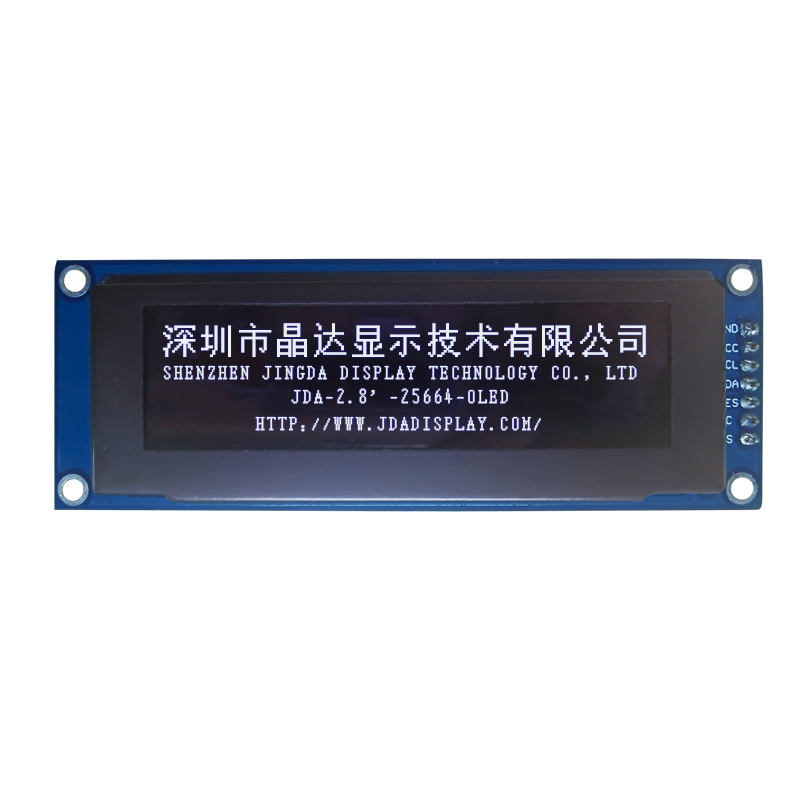
Ask any product designer what separates a good device from a great one, and the answer often comes down to the display. If those first few seconds of screen-on time don’t impress, the rest hardly matters. OLED display modules have become the go-to for that wow factor—deep blacks, explosive contrast, and colors that almost feel liquid. But with so many options flooding the market, finding the right module can quickly turn into a headache. That’s exactly why we’ve rounded up our top OLED display module picks for crisp, vibrant visuals. Whether you're prototyping a wearable, a smart home panel, or a handheld device, Jingda-Display has built a reputation for panels that consistently deliver that premium look. Here’s what made the cut.
What Actually Changes When You Switch to OLED
The first thing you notice isn't brightness, it's absence. On an OLED, black pixels simply switch off, so letterbox bars and night scenes lose the grey haze you've tolerated on LCD. That alone reshapes perceived contrast. Shadows gain depth without crushing detail, and specular highlights like streetlamps or stars seem to float against true darkness rather than sit on a backlit fog.
A more subtle shift comes with motion. OLED pixels flip almost instantly, so fast pans and cursor movement stop leaving smears. You also get perfect off-angle color; no more washed-out screen when you lean back or show a video to someone beside you. But not everything improves. Peak full-screen brightness often drops, so a sunlit room can feel dimmer than your old panel, and static elements like a game HUD can leave ghost-like retention if you're careless.
Day to day, the change is less about spec sheets and more about texture. Reflections matter more because the panel is thinner and often glossy. Dark mode stops being a compromise and starts looking intentional. And once your eyes adjust, going back to an LCD can feel like watching through a slightly dirty window, even if that LCD measures brighter on paper.
The Brightness Numbers You Can Ignore
Your eyes adapt to dim projection far quicker than a spec sheet suggests. A 2,500-lumen projector and a 1,200-lumen model often look nearly identical in a light-controlled room, because your pupils do the heavy lifting once the movie starts. The extra brightness mostly becomes heat and fan noise, not a better picture.
Even for TVs, peak nits get all the marketing love, but sustained brightness in a real scene tells you more. If a panel hits 1,500 nits for a two-second flash but settles at 400 nits during an actual film, that headline number is just noise. Unless you're fighting direct sunlight, mid-range brightness with good black levels beats a blinding spec every time.
Color That Holds Up After Dark
Most pigments surrender to the night, but certain formulations refuse to fade when the lights drop. A deep crimson or electric blue can stay true even under moonlight, thanks to lightfast particles that resist the usual graying of dim conditions.
The trick lies in how the hue interacts with low-wattage bulbs or candlelight. Instead of turning muddy, these colors seem to pull energy from the darkness itself. You notice it most on signage, athletic gear, or even a painted wall that keeps its character long after sunset.
Testing after dark reveals the real personality of a color. Some look flat by noon but come alive at midnight. The ones that hold up don’t just survive the night—they redefine it.
Gaming vs. Work: Refresh Priorities
When most people weigh display specs, refresh rate becomes the quickest dividing line between a gaming setup and a workstation. Gamers notice the jump from 60Hz to 144Hz almost immediately: motion feels less smeared, micro-movements of the mouse map more directly to on-screen response, and fast camera pans stop turning into a blurry mess. It’s not just about raw numbers either—frame pacing and variable refresh rate support often matter more than chasing the highest figure on the box.
Work use flips that logic. A 60Hz panel is perfectly fine for documents, spreadsheets, email, and code, where static text and slow scrolling dominate. What actually reduces fatigue over an eight-hour day tends to be resolution, panel type, and flicker-free brightness control, not refresh rate. If you split time between both, a 120Hz or 144Hz screen with good color coverage and adjustable height gives you the gaming smoothness without paying for a 360Hz esports panel that your workflow will never use.
The Burn-In Conversation Nobody Wants to Have
No one likes bringing up burn-in when a friend proudly shows off a new OLED, but it’s the quiet worry sitting in the back of every buyer’s mind. Manufacturers have gotten better at mitigation, yet the issue hasn’t disappeared; it’s just become less polite to mention.
The reality is uneven wear on organic pixels, often from static elements like channel logos or game HUDs. You won’t see it in a showroom, and most reviews gloss over it because long-term testing is expensive and inconvenient. So the conversation stays buried in forums and comment sections, usually after someone notices a ghostly afterimage.
Maybe the reason nobody wants to have this talk is that it forces a trade-off: perfect blacks and contrast versus a slow, uneven aging process. Until there’s a panel that doesn’t degrade with use, the burn-in conversation will remain the one we avoid at family gatherings and tech meetups alike.
Where OLED Modules Earn Their Price
The price of an OLED module starts to make sense the first time you see it render a night scene. Because each pixel generates its own light and can switch off completely, dark areas don't just look dim—they become true black. That removes the grey haze or backlight bleed common on LCDs, giving images a depth and contrast that feel almost three-dimensional. For anyone working with HDR content or designing interfaces that rely on sharp visual hierarchy, that difference is not a minor spec bump; it changes how the screen reads in a dark room.
Response speed is another area where the extra cost quietly pays for itself. An OLED pixel can shift from black to white in a fraction of a millisecond, so fast-moving graphics don't smear or leave ghost trails. This matters not just for gaming or video, but for any panel that shows rapidly updating data—automotive dashboards, medical monitors, industrial readouts. And because OLED modules don't need a separate backlight layer, they can be made thin and flexible enough to wrap around a wrist or follow the curve of a car's center console. That opens design options that rigid LCD stacks simply can't match.
There's also a less obvious benefit: power draw tracks the content on screen. When an OLED displays mostly dark or black UI elements, those pixels draw almost nothing. A device with a dark-mode interface can stretch battery life in ways a backlit LCD cannot, since the LCD's light source stays on regardless of what's displayed. For battery-powered instruments, wearables, or any product where every milliwatt counts, the premium for OLED modules becomes part of a larger engineering trade-off rather than just a display upgrade.
FAQ
Each pixel emits its own light, so unused pixels can be switched off completely. That removes backlight bleed and gives an almost infinite contrast ratio, which makes edges and text look noticeably sharper.
For wearable or handheld builds, 0.96-inch and 1.3-inch panels are still the most practical. They stay readable without forcing a bulky enclosure, and the 128x64 or 128x128 resolution is enough for clean icons and short labels.
Only if you need fast video-like updates or a larger panel. PMOLED is fine for static info and simple animations, but AMOLED handles higher refresh rates and larger color areas without the same ghosting or peak-current limits.
Look for a module with an anti-glare polarizer, a high-brightness mode, and preferably optical bonding. Even then, direct sunlight will wash out colors, so plan for a sun-readable peak brightness of at least 700-1000 nits or add a recessed bezel.
I2C and 4-wire SPI cover most small OLEDs. I2C uses only two pins but refreshes slowly, while SPI gives smoother animations for a couple more wires. If you are working with a Raspberry Pi or high-res panel, MIPI DSI is often the only practical option.
Stick to modules that already calibrate gamma and color temperature at the factory. Cheap panels often push blue too hard and crush shadow detail. A 16-bit or 18-bit color depth with proper gamma correction makes a bigger difference than raw resolution.
The 0.96-inch SSD1306 boards are the default for monochrome text. For color, the 1.5-inch 128x128 and 2.42-inch 128x64 SPI OLEDs are dependable, while the 4.3-inch AMOLED panels with MIPI DSI are a strong upgrade for richer interfaces.
Generally no, unless you step up to AMOLED with a fast interface. PMOLED panels have limited duty cycles and will show motion blur or ghosting. For smooth video, look for an AMOLED display with at least 60 Hz refresh and MIPI DSI or RGB parallel input.
Conclusion
Switching to an OLED display module changes more than just the contrast ratio on a spec sheet. Because every pixel generates its own light, black areas go completely dark instead of glowing gray, which redefines how depth and detail appear in movies, photos, and even dark-mode interfaces. That per-pixel control also means you can safely ignore a lot of the peak brightness numbers manufacturers promote. A 1,000-nit LCD can still look flatter than a 600-nit OLED panel when the scene has both bright highlights and deep shadows, since the OLED's true black anchors the entire image and makes the bright parts seem more intense. In a dim room, this advantage becomes even clearer: colors don't wash out or develop a hazy backlight bleed, so what you see at night matches what you saw during the day.
When deciding between modules, refresh rate priorities depend on how you use the screen. Gamers will notice the near-instant pixel response and high refresh rates that keep fast motion crisp, while someone doing long document work may benefit more from uniform brightness and comfortable text rendering than from 240Hz. Burn-in remains a topic nobody enjoys discussing, but modern OLED modules have shifted the risk with pixel shifting, panel refresh cycles, and more resilient organic materials, making typical mixed use far less concerning than early panels. Ultimately, OLED modules earn their higher price in the places where visual quality directly affects your experience—color-critical work, cinematic viewing, and immersive gaming—rather than in raw brightness specs or marketing bullet points.
Contact Us
Contact Person: Vincent
Email: [email protected]
Tel/WhatsApp: 86 135 5485 1379
Website: https://www.jda-display.com/