

Top Smart Circuit Breaker Companies Revolutionizing Electrical Safety
2026-09-27
Electrical safety has entered a new era, and smart circuit breakers are at the forefront of this transformation. Gone are the days when a simple trip was the only safeguard against electrical faults. Today’s intelligent devices monitor, analyze, and respond in real time, preventing hazards before they escalate. Among the companies driving this revolution, SINGI stands out with its commitment to combining advanced sensing technology with user-centric design. But what truly sets the leaders apart in this rapidly evolving market? In this post, we’ll explore the top smart circuit breaker companies that are not just meeting safety standards—they’re redefining them. From predictive maintenance to seamless integration with smart home ecosystems, these innovators are changing how we think about electrical protection. Whether you’re an electrician, a facility manager, or a homeowner, understanding their approaches could help you make smarter choices for your next project. Let’s dive in.
How Smart Circuit Breakers Are Quietly Rewiring Home Safety
Most people never think about the breaker panel in the basement until something goes wrong — a tripped circuit, a flickering light, that faint burning smell. But a new generation of circuit breakers is changing that passive relationship. Equipped with tiny sensors, wireless radios, and enough computing power to rival an old laptop, these devices monitor every amp flowing through your home in real time. They don't just cut power when a wire overloads; they learn the electrical fingerprint of your appliances and flag anomalies that would otherwise go unnoticed.
That extra awareness turns the humble breaker into a silent guardian. Traditional breakers react to heat and current spikes after damage may already be underway. Smart breakers, by contrast, can detect a loose connection behind a wall outlet, the early stages of an arc fault, or a refrigerator compressor drawing more power than it should — long before a fire starts or a device fails. Some models even send a gentle alert to your phone, suggesting you unplug that aging space heater or check the wiring in the laundry room. It's a shift from blunt force protection to nuanced, predictive care.
Perhaps the most surprising part is how unobtrusively this change is happening. No dramatic rewiring, no giant control panels cluttering the hallway. The smart breaker slips into the same slot as the old one, speaking quietly to your home network. Contractors and homeowners are slowly adopting them not because of flashy marketing, but because the benefits become obvious after the first near miss — the breaker that caught a failing dishwasher pump, or noticed a rodent-chewed wire in the attic. In that quiet way, home safety is being rewritten from the inside out.
Beyond Tripping: The Rise of Predictive Fault Detection
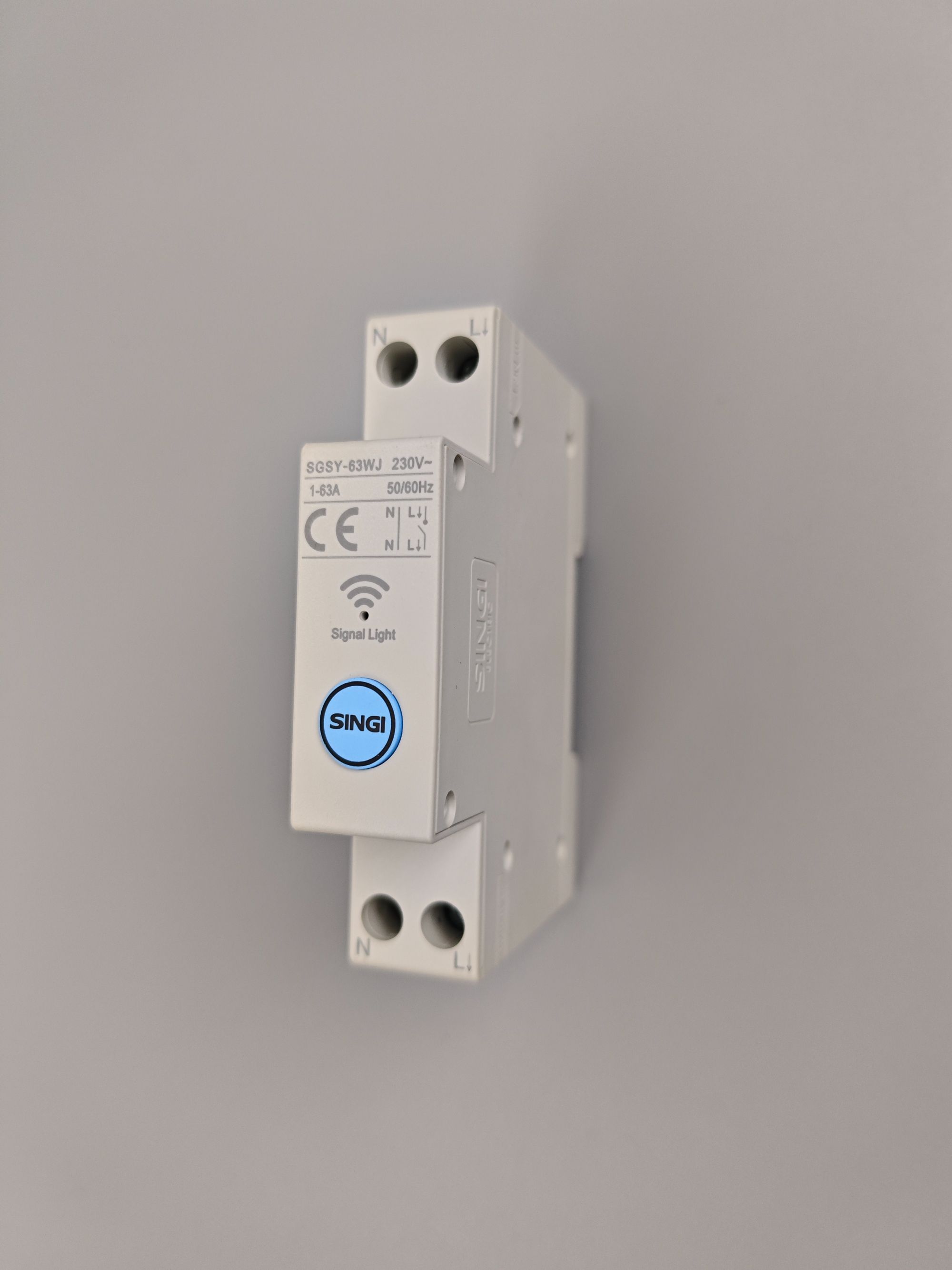
For decades, electrical protection meant waiting for a short circuit or overload to slam a breaker shut. The system reacted after damage had already begun, treating every fault like a sudden, unpredictable event. Predictive fault detection flips that logic. Instead of waiting for current to spike, it watches for subtle patterns—harmonic distortion, tiny insulation leaks, temperature drift—that show up days or weeks before a hard trip. Maintenance teams can swap a failing contactor or re-torque a busbar while the load is still running, not after a production line goes dark.
This shift matters because downtime has changed shape. A modern plant rarely loses hours to a single dramatic explosion; it bleeds minutes across dozens of nuisance trips, reboots, and re-inspections. Predictive detection attacks that hidden waste. Sensors already installed for energy metering double as fault-prediction ears, feeding data to algorithms that learn what normal looks like for each feeder. When the signature drifts—say, a motor bearing starts arcing microscopically—the system flags it before the breaker ever sees a threshold. Technicians get a work order with a location and a likely cause, not a panicked call at 3 a.m.
The hardest part isn't the technology; it's trust. Operations teams have spent years treating breaker trips as proof that protection worked. Predictive detection asks them to believe an alarm they've never heard before, based on signatures they can't see with a handheld meter. Early adopters bridge that gap by running detection in shadow mode for a quarter, logging every prediction and comparing it to what actually failed. After three months of spotting loose connections and deteriorating capacitors before they tripped anything, even the skeptics start watching the dashboard instead of the breaker panel.
Inside the Companies Turning Electrical Panels Into Connected Hubs
At a mid-sized food processing plant in Ohio, maintenance engineers didn't rip out the old electrical panel. Instead, they clipped a set of split-core current transformers onto the feeder lines and wired them into a palm-sized module bolted inside the enclosure. That module samples each circuit at 4 kHz, strips out the noise, and only sends a compact event log when a machine's current draw deviates from its normal pattern. The panel becomes a local nerve center, spotting a failing conveyor motor bearing days before it seizes.
Other firms are pushing further by swapping standard breakers for solid-state versions that carry their own microcontrollers and mesh radios. Each circuit can now report real power, harmonics, and temperature, and can be tripped remotely or on a schedule. One startup in Austin uses this to stagger air-conditioner loads across a small commercial building, shaving peak demand without anyone noticing a comfort change. When an arc signature appears, the breaker opens in under 20 milliseconds, far quicker than a thermal-magnetic device.
The less obvious shift is what stays inside the panel. Instead of streaming raw waveforms to the cloud, these systems run lightweight inference on an edge processor mounted next to the busbar. It learns the startup fingerprint of each motor and ignores harmless transients. Only anomalies—like a pump drawing 30 percent more current at the same flow rate—trigger an alert. That keeps data costs low and lets the panel act as a true hub, making decisions locally even if the internet drops.
From Code Compliance to Proactive Protection: A New Standard
The shift from checking boxes on a compliance list to building genuine resilience often starts with an uncomfortable question: what happens when the regulations lag behind the actual threats? For years, many organizations treated security standards as the finish line, not the starting blocks. They audited configurations, patched known vulnerabilities, and filed reports, assuming that meeting the letter of the law meant they were safe. But compliance is a snapshot, not a shield. Attackers don't care whether an access control was documented; they care whether it actually works under stress. Proactive protection means accepting that standards are a minimum floor, and then designing systems that stay defensible even when the rules change or fail to anticipate a new attack pattern.
A new standard takes shape when teams stop asking “are we compliant?” and start asking “how would we know if we were already compromised?” This flips the focus from external checklists to internal observability and rapid response. For instance, instead of only ensuring encryption is enabled, a proactive approach tests key rotation under simulated partial failure, monitors for abnormal decryption requests, and rehearses incident containment without waiting for an annual audit. The difference is measurable: compliant systems often break silently, while proactively protected systems are designed to degrade loudly, giving defenders the signal they need before a minor misconfiguration becomes a breach.
Adopting this new standard isn't about discarding compliance frameworks—it's about treating them as one input among many. The most resilient organizations use regulatory requirements as a baseline for documentation and accountability, then layer on continuous threat modeling, red-team exercises, and feedback loops from actual near-misses. They accept that no standard can predict every future attack, but a culture of proactive protection can shorten the time between detection and containment. That gap, not the length of a compliance report, is what ultimately determines whether a security program earns its keep.
The Hidden Role of Smart Breakers in Energy Waste Reduction
Most people think of a circuit breaker as a dumb safety switch that trips only when something goes wrong. But smart breakers add a layer of continuous observation that reveals energy waste hiding in plain sight. By sampling the current on each branch circuit dozens of times per second, they can distinguish between an active appliance and a device that is merely sitting in standby. That subtle difference—often invisible on a whole-building meter—lets them flag circuits that are drawing power overnight or while a room is empty.
The real value emerges when a smart breaker acts on that information. Instead of waiting for a homeowner to hunt down every phantom load, the breaker can automatically de-energize a circuit during scheduled idle hours or after detecting a long period of consistent low-level draw. In a commercial setting, this catches things like office kitchen appliances or display lighting that stay on after everyone leaves, a category of waste that rarely gets attributed to the electrical panel itself.
Perhaps the most overlooked contribution is at the component level. Smart breakers can track subtle changes in current signature that indicate a motor is working harder than it should, a connection is heating up, or a power supply is degrading. These inefficiencies don't trip a standard breaker, but they add resistance and waste energy around the clock. By logging this data over weeks, the breaker gives facility managers a map of circuits that look fine but are quietly bleeding power—turning a humble safety device into a frontline tool for cutting waste.
What Happens When Your Breaker Learns Your Home’s Rhythm
A breaker that tracks your household's electrical cadence stops being a dumb trip switch. It logs the 6:40 a.m. espresso shot, the midday heat pump cycling, the slow ramp of the oven at 5 p.m. Over a few weeks, those signatures become a baseline. When the dryer kicks on at the same time as the car charger, the breaker doesn’t just wait for an overload; it sees the collision coming and briefly sheds a nonessential circuit or nudges the charger to a lower draw.
That learned rhythm also reveals what normal looks like for individual appliances. A refrigerator compressor that starts running longer than usual, a sump pump cycling too often, a space heater left on in an empty room — all of these show up as deviations from the established pattern. The breaker can then send a plain-language alert or shut the circuit down before a smoldering connection becomes a fire.
Comfort gets a say, too. If the house tends to hit peak load right after dinner, the breaker can sequence the dishwasher and water heater so they don’t compete with the television, lighting, and air conditioning. It learns which loads are deferrable and which are not, and it quietly reorders them around your actual habits rather than a generic schedule. The result is a panel that acts less like a referee and more like a household manager.
FAQ
A smart breaker goes beyond simple on/off tripping. It includes sensors that track current, voltage, and temperature in real time, plus connectivity via Wi-Fi, Zigbee, or Ethernet. That lets it send alerts, log power usage, and sometimes even be reset remotely. Unlike a traditional breaker which only reacts to an overload, a smart unit can spot gradual changes—like a deteriorating connection—before it becomes a fire risk.
A few names stand out. Eaton, Siemens, ABB, and Schneider Electric dominate the commercial and industrial side with breakers that integrate into building management systems. On the residential front, Span and Leviton have gained attention for panel-level intelligence, while Lumin focuses on retrofit smart modules that work with existing panels. Each takes a slightly different approach to monitoring and control.
They watch for patterns that traditional breakers ignore. For example, a smart breaker can detect a series of small arc faults, a loose neutral, or a gradually overheating circuit and send an alert before flames start. Some models also allow you to cut power to a specific circuit remotely, which is useful if you're away and get a warning about a malfunctioning appliance.
Focus on three things: the type of connectivity, the granularity of monitoring, and whether it plays well with your existing panel. Whole-panel replacements like Span give circuit-level data but require professional installation. Retrofit options like Lumin clip onto existing breakers and are less invasive. Also check if the app gives real-time alerts and historical trends, not just basic on/off control.
It depends on the product. Some companies, like Leviton, sell smart breakers that fit their own panels, so you'd need to match the brand. Others, such as Lumin, offer modules that sit next to your existing breakers and monitor them without replacing the panel. If your panel is very old or lacks space, a full panel upgrade might still be the safer route.
They turn the electrical panel into a data hub. You can see which circuits draw the most power, set schedules to disconnect non-essential loads during peak pricing, and even pair them with solar or battery storage. A smart breaker can automatically shed loads when your battery is low or when grid prices spike, making the home more resilient and efficient.
They're more expensive than standard breakers, and most require a stable network connection to deliver their full value. Firmware updates and app support also matter—if the manufacturer stops updating the software, you could be left with an expensive but limited device. Installation usually needs a licensed electrician, and not all models are compatible with every panel type.
Expect tighter integration with home energy systems, including AI-driven load prediction and automatic fault isolation. Some companies are working on breakers that can communicate with each other to reroute power around a fault, rather than just tripping. Enhanced arc-fault detection using machine learning is also on the horizon, which could cut false trips while catching real hazards earlier.
Conclusion
Smart circuit breakers are no longer just tripping when something goes wrong—they are quietly rewiring how we think about home safety. Leading companies in this space are turning ordinary electrical panels into connected hubs that monitor load patterns, detect arc faults before they ignite, and even learn a home’s daily rhythm. Instead of waiting for a short circuit or overload, these devices analyze subtle changes in current, identifying loose connections or aging wiring weeks before they become hazards. The shift is profound: protection moves from reactive code compliance to proactive, predictive fault detection. Homeowners now get alerts on their phones, not just a dark kitchen and a tripped breaker in the basement.
Beyond safety, the hidden role of smart breakers in energy waste reduction is equally striking. By measuring consumption at the circuit level, they expose phantom loads, faulty appliances, and inefficient HVAC cycling—savings that often pay for the upgrade within a year or two. The best companies in this field are not just selling hardware; they are building platforms that integrate with solar, batteries, and demand-response programs. When your breaker learns that you always run the dryer after 10 p.m., it can shift non-essential loads to off-peak hours without you lifting a finger. The result is a new standard for residential electrical systems: not just safer, but smarter, quieter, and far more aware of the energy flowing through every wall.
Contact Us
Contact Person: Jack
Email: [email protected]
Tel/WhatsApp: (+86) 13757759651
Website: https://www.singi.com