

Walking Aids Series Explains How to Choose Between a Walker and a Rollator
2026-09-08
Do you need a walker for steady indoor support, or a rollator for smooth outdoor adventures? The answer often lies in the details. This Walking Aids Series from Suncare breaks down the key factors—stability, maneuverability, and lifestyle—so you can choose with confidence. Let's take the first step together.
Why a Walker Often Wins for Steady Indoor Support
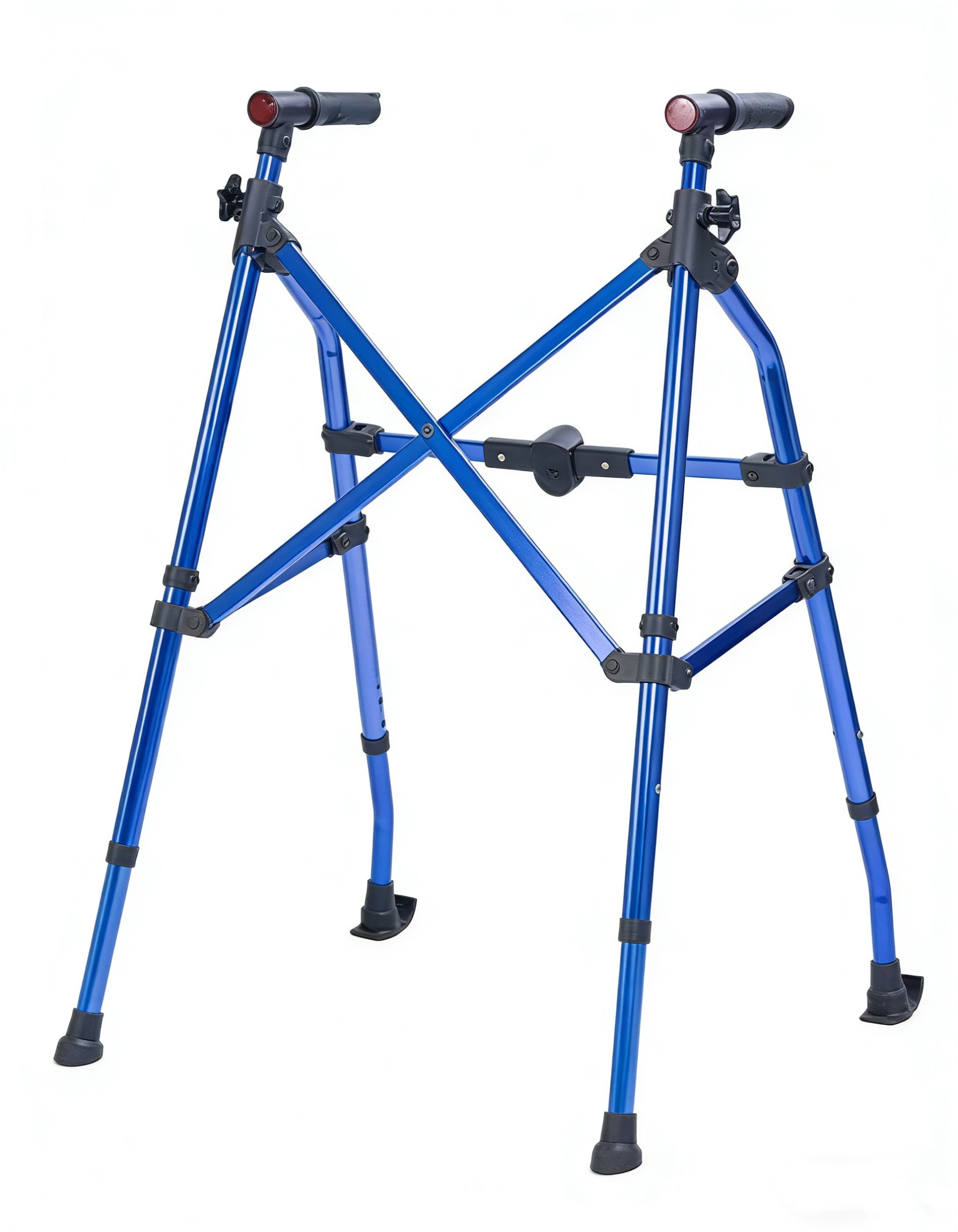
When you're moving around inside your home, the ground underfoot rarely changes. That predictability is exactly why a walker makes sense. Unlike a cane, which asks you to balance on one side while the other side stays unsupported, a walker gives you a wide, four-legged base that stays firmly planted no matter how slowly you shuffle from the kitchen to the living room. For anyone whose balance fades after a long day or who deals with weak hips and knees, that constant, unshifting contact with the floor removes the fear of tipping over.
Indoor spaces also tend to be cluttered in ways that outdoor paths aren't—think loose rugs, narrow doorways, furniture corners. A walker doesn't demand that you lift it high or swing it forward with each step. You simply roll or lift it a few inches, step into the frame, and let your weight settle onto the grips. This slow, deliberate rhythm works far better on hardwood, tile, or low-pile carpet than the quick, one-point tapping of a cane. The frame acts like a portable railing, something you can lean into fully when a wave of dizziness hits while you're reaching for a light switch.
Perhaps most importantly, a walker encourages you to stand up straighter and take smaller, safer steps. Because both hands rest at waist height, your shoulders stay level and your spine isn't forced to twist or hunch. That posture alone reduces the risk of a forward stumble. And for those who need to pause frequently—to catch their breath, adjust their glasses, or simply rest their legs—the walker's built-in seat or crossbar offers an instant place to stop without hunting for the nearest chair. In a quiet house where help might be a room away, that kind of steady, always-there support is hard to beat.
Rollator Perks: Built-In Seat, Wheels, and Brakes
The built-in seat isn't an afterthought—it's padded just enough to take the sting out of a longer stroll, and it flips up without a fight when you need the walking frame clear. Underneath, the wheels roll smoothly over pavement cracks and door thresholds, so you don't have to wrestle the frame through tight spots or lift it over every bump.
Braking feels less like a panic grab and more like a natural pause. The loop brakes sit right under the handles, letting you slow down before a curb or lock the wheels completely before you sit. That combination means you can trust the rollator to stay put while you rest, then move again with just a squeeze and a push.
How Your Daily Routine Shapes the Choice
The quiet patterns of your morning often decide more than you think. A person who habitually skips breakfast and checks emails before getting out of bed will likely lean toward choices that promise immediate feedback and low friction. On the other hand, someone who spares ten minutes for stretching or a short walk tends to prefer options that align with longer-term well-being, even if they require extra effort. These micro-habits, repeated until they feel automatic, quietly filter out what doesn't match your internal tempo.
Consider the hour before lunch. If your routine involves scrolling through social feeds or reacting to other people's updates, your decision-making muscle gets trained for comparison and competition. You start gravitating toward choices that boost short-term status or visibility. But if that same slot is used for reading a few pages, listening to a focused podcast, or writing down three priorities for the afternoon, your choices later in the day tend to reflect a deeper sense of direction rather than impulse. The routine doesn't just fill time—it tunes your attention.
Evening rituals matter just as much. Winding down with endless streaming or late-night snacking can make you more susceptible to choices that offer comfort but little growth, especially when faced with a big decision the next day. In contrast, a simple shutdown routine—like packing your bag, laying out clothes, or jotting a single sentence about tomorrow's intention—creates a mental boundary. That boundary helps you step back from autopilot and choose based on what you actually want, not just what the routine has trained you to accept.
Balance, Grip Strength, and Fatigue: The Real Deciders
Most people assume raw power or speed wins a match, but that's rarely the whole story. What separates a shaky performance from a confident one often comes down to three less glamorous factors: balance, grip strength, and how quickly fatigue sets in. You can have all the force in the world, but if your stance wobbles under pressure or your hands give out before the final exchange, that power becomes meaningless.
Balance isn't just about staying upright. It's the quiet foundation that lets you transfer force efficiently, recover from a missed strike, and keep your footwork sharp when your legs start burning. Grip strength, meanwhile, is the silent contract between you and whatever you're holding—a racket, a bar, an opponent's wrist. Lose it even slightly, and every subsequent movement becomes a negotiation with slippage. Fatigue is the slow thief that erodes both, turning crisp technique into sloppy desperation.
What makes these three the real deciders is how they compound. A slight dip in balance forces your grip to work harder to compensate. A tired grip forces your body to tense up, which throws off balance even more. By the time the decisive moment arrives, the athlete who managed these three variables hasn't just outlasted the opponent—they've made their own movement feel effortless while the other person fights their own body.
Navigating Doorways, Curbs, and Tight Spaces
Doorways often pose the first real test. A standard interior door leaves roughly 32 inches of clearance, but older buildings or retrofit frames can pinch that down to 28 or less. The trick is to approach at a slight angle rather than head-on, letting the widest part of your wheels or base clear the jamb without scraping. If the door swings toward you, keep your weight back and use a foot or front caster to nudge it open just enough to slip through—don't fight the hinge. For powered mobility, switch to the slowest speed setting well before the threshold.
Curbs demand a different kind of awareness. Anything over two inches is a real obstacle for most small wheels, and even a rolled curb with a shallow slope can hide a lip at the bottom. When going up, always approach square to the edge, never at a diagonal, because an angled climb can tip you sideways. For manual chairs, pop a small wheelie to get the front casters onto the curb first, then push through with a strong, steady stroke. Coming down is easier but scarier: face forward, lean back slightly, and let the rear wheels roll off first while you control the descent with your hands on the rims. If a curb cut is available, use it—but check for potholes or debris at the base before committing.
Tight spaces—hallways, cramped aisles, bathroom stalls—reward patience over speed. Your turning radius matters less than where you place your pivot point. In a narrow corridor, hug the outside wall and turn late rather than early, so your rear end doesn't clip the corner. If you're navigating with a rollator or walker, resist the urge to lift it over obstacles; instead, swing the front legs gently to the side and rotate in place. For tight doorways into small rooms, back in if you can, which often gives you a better angle for leaving. And always scan ahead for protruding objects like fire extinguishers or low shelves—they're the hidden saboteurs of any squeeze.
When to Switch: Signs Your Current Aid No Longer Fits
You might notice the aid that once felt invisible now demands constant attention. Maybe it slips, chafes, or needs readjusting more often than before. The small annoyances pile up: you hesitate before putting it on, or you leave it behind for short trips just to get a break. That hesitation is often the first sign the fit has changed.
Another clue shows up in your daily routines. You start avoiding situations where the aid used to help most—conversations in noisy rooms, uneven walking paths, whatever it is. Instead of feeling supported, you feel like you're managing the device as much as the underlying challenge. If you catch yourself planning around its limitations rather than your own preferences, it's time to ask whether the tool still serves you.
Physical or emotional discomfort shouldn't be ignored either. Red marks, pressure points, headaches, or a vague sense of fatigue after using the aid are not just part of the deal. A properly fitted aid should fade into the background. When it starts adding stress instead of removing it, that's a clear signal to explore a replacement or adjustment.
FAQ
A standard walker has four legs that stay in contact with the ground, so you lift it slightly or slide it forward with each step. A rollator has wheels on all four legs, hand brakes, and usually a built-in seat. That changes the rhythm: walkers force a slower, more deliberate pace, while rollators let you keep a more natural walking stride but require enough grip and coordination to manage the brakes.
People who need to bear weight through the frame, have significant balance problems, or tend to lose control when a device rolls ahead are better served by a walker. It's also a stronger choice if you'll mostly move short distances indoors on level floors and don't want to think about brake maintenance.
If you can walk fairly steadily but need occasional support, a rollator is usually more practical. The seat lets you rest during longer outings, the wheels smooth out trips over thresholds and pavement, and many models fold easily to fit in a car trunk. It's especially useful for shopping, park visits, or anyone who wants to stay active outside the house.
It can work indoors, but doorways, narrow hallways, and tight turns are the real test. A three-wheel rollator or a compact four-wheel model may handle small apartments better, while a full-size four-wheel rollator can feel bulky around furniture. Walkers often remain easier to maneuver in confined indoor spaces.
Look at the seat height, width, and weight capacity, and sit on it in a showroom if possible. The seat should allow your feet to rest flat on the floor and be deep enough to feel stable without cutting into the back of your knees. Also test the brakes: they should lock easily when you sit and release without requiring excessive hand strength.
A walker demands more lifting or repetitive sliding, which can tire arms and shoulders quickly, especially on uneven ground. A rollator requires less upper body effort while rolling, but your hands must be able to squeeze the brake levers confidently. If fatigue is a bigger concern than balance, a rollator often lets you go farther before needing a rest.
Yes. Brakes need regular adjustment, wheels can catch on rugs or uneven sidewalks, and the rolling frame can slip forward if you lean on it without braking. Some people also develop a habit of hunching over the handles. Walkers are simpler and more forgiving, but they don't offer a seat or smooth outdoor travel.
Conclusion
Choosing between a walker and a rollator often comes down to how your body actually moves through a typical day. If balance is shaky and you mostly need steady support indoors, a standard walker tends to win because it forces a slower, more deliberate gait and gives you something solid to lean on without worrying about wheels drifting. That said, a rollator's built-in seat, hand brakes, and swiveling front wheels can rescue you when fatigue hits halfway through a grocery run or when you need to pause and rest without hunting for a chair. Your daily routine matters just as much as your diagnosis: someone who cooks, does laundry, and moves around a small apartment may prefer the lighter, more predictable feel of a walker, while someone who enjoys longer outings or needs to carry items will likely lean toward a rollator. Grip strength is another quiet decider—if squeezing brake levers is painful or weak, a walker's simple handgrips may be safer than a rollator's brake-dependent design.
Doorways, curbs, and tight hallways often expose the practical limits of each aid. Walkers can be lifted over a threshold or turned in a narrow bathroom, but they demand more upper-body effort and can scrape against door frames if you rush. Rollators glide easily on smooth floors but become harder to manage on thick carpet, uneven sidewalks, or crowded aisles where the extra width and constantly moving wheels create new obstacles. Pay attention to early warning signs that your current aid no longer fits: if you find yourself leaning heavily to one side, needing to stop more often due to breathlessness or leg weakness, or avoiding certain rooms because the device won't fit, it's time to reassess. Switching from a walker to a rollator—or the other way around—is not a failure; it's a response to changing balance, stamina, and living spaces. The best choice is the one you'll actually use consistently, without dread, for the places you go every single day.
Contact Us
Contact Person: Frank Chan
Email: [email protected]
Tel/WhatsApp: 0086-13924529088
Website: https://www.suncare-medical.com