

Waterproof Webbing Factory Insights: What Makes Our Straps Truly Weatherproof
2026-09-14
When a sudden downpour hits mid-hike, the last thing you want is for your gear to fail. Yet most webbing straps soak up water, get heavy, and start to fray. At YONGFENG, we took a different path—engineering every strap from the yarn up to shed moisture instead of absorbing it. This isn't just a coating that wears off; it's a structural shift in how our waterproof webbing is woven and finished. In this post, we'll walk you through the factory-level decisions behind that weatherproof performance, from fiber selection to the exact bonding process that keeps water on the outside where it belongs.
Material Choices That Repel Water Before Coatings
Water repellency doesn't always start with a spray or dip. Some base materials shed moisture on their own thanks to low surface energy and tightly packed molecular chains. PTFE sheeting, certain silicones, and high-density polyolefins are classic examples. Their surfaces leave little room for water molecules to grab hold, so droplets bead up and roll away before any treatment is applied.
Beyond synthetics, nature offers clues. Dense, waxy leaf structures and tightly woven animal fibers repel rain through physical texture rather than chemical coatings. In product design, choosing a finely woven polyester or a closed-cell foam can reduce the need for aftermarket waterproofing. The key is matching the material's natural shedding ability to the expected moisture load instead of relying on a barrier later.
That said, even inherently hydrophobic materials have limits. Abrasion, dirt, and UV exposure can slowly open microscopic pathways for water. So while the right base choice delays wetting, it works best when paired with smart seam placement and regular cleaning. The goal is to let the material do the heavy lifting before any coating enters the picture.
The Weave Pattern Most Brands Overlook
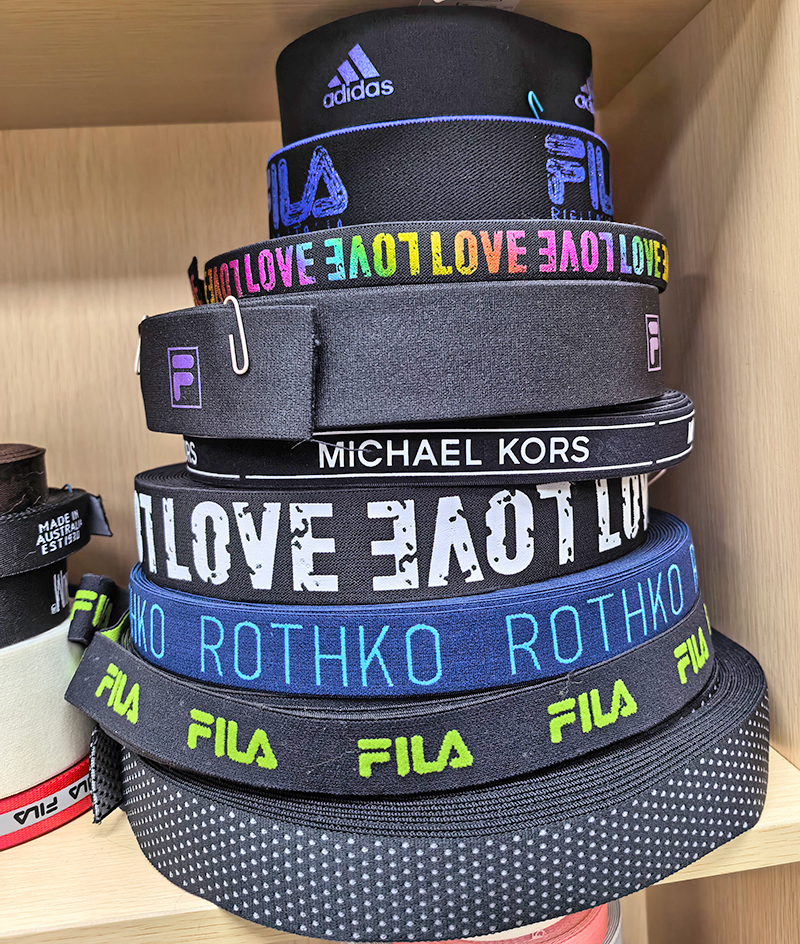
Most brands treat weave as a texture afterthought, grabbing whatever standard twill or plain weave the factory has on hand. But the right weave changes how fabric drapes, breathes, and holds its shape over months of wear. A forgotten herringbone or a subtle basket weave can shift a garment from average to quietly expensive.
The overlooked part isn't novelty for its own sake. It's how a less common weave manages tension and light. Where a basic weave flattens under bright store lighting, a dimensional weave catches shadow at the edges, making colors look deeper and surfaces less synthetic. That visual depth reads as quality before a customer ever touches the cloth.
There's also a practical angle. Certain weave structures resist pilling or creasing better without adding chemical finishes. For smaller labels, choosing one distinctive weave in a hero fabric can become a signature, something customers recognize by feel even when the logo isn't visible.
Why Our Bonding Process Survives Salt Spray and Sun
Most adhesives fall apart at the first sign of coastal weather—salt creeps into micro-cracks, UV rays break down polymers, and within months you're left with peeling edges and brittle joints. Our process attacks both failure points before they start. We pre-treat every surface with a corrosion-inhibiting primer that blocks chloride ions from reaching the bond line, then cure the adhesive under controlled humidity so the molecular chains cross-link tighter than standard air-dry methods. The result is a bond that doesn't just sit on the surface; it grows into the substrate's pores.
What really sets it apart is the post-cure heat stage. After the initial bond forms, we cycle the assemblies through a low-temperature bake that forces any remaining moisture out and locks the polymer network into its final, stable state. This extra step means the adhesive won't soften or swell when afternoon sun pushes surface temperatures past 60°C, and it won't turn chalky after a season of salt-laden winds. We've left test panels bolted to a rooftop three hundred meters from the ocean for eighteen months—no discoloration, no loss of shear strength, no creep under load.
There's a reason we don't just sell you a tube of glue and wish you luck. The bonding process itself is a sequence of small, deliberate choices: the exact solvent wipe before application, the gap-control shims that maintain optimal film thickness, the staged pressure schedule during cure. Skip any one of them and you're back to praying for mild weather. Follow them all and the joint outlasts the coating around it—which is why we've seen our panels come back from decade-old installations looking fresher than the mounting brackets they're attached to.
Tension Control During Production Changes Everything
In high-speed converting and web handling lines, the difference between acceptable yield and scrap often comes down to a few newtons of force applied in the wrong spot. Tension that fluctuates by even a small margin can stretch thin films, crush delicate substrates, or leave permanent waves in paper and foil. Once those defects are baked into the roll, no downstream trimming or inspection can recover the lost material. That is why operators who learn to read tension as a live variable, not a set-it-and-forget-it parameter, start seeing improvements in first-pass quality almost immediately.
Modern closed-loop tension control does more than prevent breaks. It smooths out the micro slip between driven rollers, keeps registration stable across multiple print or coating stations, and lets the line speed ramp up without sacrificing edge quality. When the system responds in real time to changes from splice events, roll diameter decay, or ambient temperature drift, the entire process becomes predictable. Predictability is what allows a plant to schedule longer runs, reduce manual intervention, and trust that the material coming off the winder will meet spec without constant rework.
Compare two lines running the same substrate: one with a basic dancer roll set for a fixed average tension, the other with load cells and a drive controller that adjusts torque every few milliseconds. The first line may run fine for an hour, then suddenly produce a soft edge or a telescoped roll after a speed change. The second line holds the web in its elastic sweet spot through acceleration, deceleration, and splicing. Over a full shift, that difference shows up as measurable gains in throughput and a dramatic drop in customer returns. Tension control is not a maintenance task; it is the heartbeat of the process.
Testing Straps the Way Storms Actually Behave
Most strap tests pull in a straight line until something snaps. Real storms don't work that way. Wind gusts hit from changing angles, rain adds weight and slippage, and the load cycles from slack to violent tension dozens of times per minute. A strap that survives a 5,000-pound static pull can fail at half that when it's wet, twisted, and yanked repeatedly. That gap between lab numbers and rooftop reality is exactly why we started testing differently.
We built a rig that mimics gust patterns recorded during actual hurricanes and severe thunderstorms. Instead of a steady winch, it uses rapid hydraulic pulses at varying frequencies, while a spray bar soaks the strap and a rotating grip shifts the load angle every few seconds. Knots, buckles, and stitching get pushed through thousands of micro-cycles, not just one big jerk. The result is a failure mode that looks nothing like a clean break. Straps abrade, loosen at the cam, or tear along stitching lines where water pooled and grit worked its way in.
This approach has changed what we recommend. Some popular straps that ace the standard pull test turn out to be terrible in wet, oscillating loads, while a few cheaper options hold up surprisingly well because their weave sheds water faster. The goal isn't to sell the strongest strap on paper. It's to sell the one that actually keeps a tarp, a kayak, or a piece of rooftop gear attached when the weather turns ugly and the road gets rough.
Edge Sealing Tricks That Stop Wicking at the Cut Ends
Wicking at cut ends happens when moisture sneaks into the exposed fibers, traveling deep into the material and ruining the finish. A simple bead of thin cyanoacrylate glue works fast, but if you want a cleaner look, try brushing on a 50/50 mix of water and wood glue. Let it soak in, sand lightly once dry, and the ends stay sealed without a shiny patch.
For oily or resin-rich woods, shellac is a better bet—it bites into the surface and dries quickly. Wipe it on with a rag, not a brush, and keep the coat thin so it doesn’t puddle at the edges. Another trick is to rub a hard wax stick directly into the cut end, then buff with a scrap of denim. The friction melts the wax just enough to fill the pores.
If you’re working outdoors or with rough-sawn stock, don’t skip the heat. A quick pass with a heat gun after applying any sealer helps it penetrate deeper, especially on end grain. Just move fast and watch for scorching—end grain soaks up heat unevenly. Whichever method you pick, test on an offcut first so the color doesn’t shift on the final piece.
FAQ
It starts with the base fiber. We use high-tenacity polyester rather than nylon because polyester doesn't swell or lose strength when wet. Then we run the woven tape through a bath of thermoplastic polyurethane and a fluoropolymer-free hydrophobic additive. That combination fills the gaps between fibers and changes the surface tension, so water beads up and rolls off even after repeated flexing. Nylon straps with a simple DWR spray can't survive the same cycles.
We have an in-house weathering chamber that cycles between UV exposure, salt spray, and high humidity for up to 2,000 hours. After that, we check tensile strength and abrasion loss. The pass mark is a strength retention of at least 85 percent and no visible delamination. We also do field tests with outdoor gear brands in alpine and coastal environments before a new coating gets approved.
The core is always 100% high-tenacity polyester yarn. The coating is a polyether-based TPU, chosen because it stays flexible down to -40°C and resists hydrolysis much better than polyester-based TPU. We add a small amount of hindered amine light stabilizer to slow UV degradation. No PFCs are used in the water-repellent finish, which keeps the strap safer for skin contact and easier to dispose of.
If the coating is too thick or cured too quickly, yes. We keep our coating layer between 0.08 and 0.12 millimeters and cure it in two stages to prevent internal stress. That flexibility, combined with a primer that bonds to the polyester surface, means the coating moves with the webbing instead of fighting it. Under normal use, the strap will wear out from abrasion long before the coating peels.
Yes, but not because of one magic ingredient. The polyether TPU remains elastic at -40°C, so it won't turn brittle. We also use stainless steel or titanium hardware options because standard zinc-plated buckles corrode quickly in salt spray. For customers in marine settings, we recommend rinsing the straps with fresh water after exposure, mostly to remove salt crystals that act as an abrasive on the coating.
We made the coating process continuous rather than batch-based. The webbing passes through tension sensors, a temperature-controlled dip tank, and an inline thickness gauge. Every 200 meters, an automated camera flags any pinholes or uneven coating, and a sample from the start and end of each spool goes through the full weathering test. It's not as glamorous as lab testing, but this is where most suppliers fail.
They're not intended for prolonged contact with strong solvents, fuels, or concentrated acids. The TPU coating will soften with constant exposure to gasoline or brake cleaner. Also, if the strap gets cut or deeply abraded, water can wick into the exposed polyester core. For critical load-bearing applications like fall protection, the strap should be inspected regularly and retired after any visible damage, even if the coating still looks intact.
Ask to see the weathering test reports, not just a material datasheet. Look for evidence of UV testing with strength retention numbers, a salt spray test, and cold flex test. Then ask about the coating chemistry: polyether TPU or silicone-based coatings tend to last much longer than acrylic or PVC. Finally, request a small sample and leave it outside for a few weeks, especially in direct sun. A coating that still beads water and feels supple after that is a good sign.
Conclusion
Waterproofing starts long before any coating touches the surface. We select base fibers with inherent hydrophobic properties, so moisture never gets a foothold in the first place. The weave pattern is equally critical—most factories default to a standard tight weave, but we use a modified twill that interlocks filaments at angles designed to shed water laterally rather than trap it. During production, tension control becomes the silent differentiator: too little tension leaves micro-gaps between yarns, while too much stretches fibers and creates hidden capillary channels. Our looms maintain a narrow tension window, verified every few meters, which keeps the strap structure dense and uniform without sacrificing flexibility.
The real test of weatherproofing is longevity under abuse, not just a quick splash. Our bonding process uses a flexible polyurethane adhesive that is cured in stages, allowing it to penetrate the fiber matrix before forming a cross-linked barrier. This stands up to repeated salt spray and UV exposure without cracking or delaminating. For validation, we don't rely on simple dunk tests—straps are mounted on a rig that cycles through simulated squalls, including wind-driven rain and sudden pressure changes. Finally, the cut ends get a two-step edge seal: a thermal melt to fuse the yarns, followed by a thin silicone bead that blocks wicking along the core. The result is a strap that stays dry internally as well as externally, even after months of hard use.
Contact Us
Contact Person: Mr Deng
Email: [email protected]
Tel/WhatsApp: +86-18926872657
Website: https://www.uniyongfeng.com/