

Wholesale Mesh Office Chair: Your Guide to Bulk Ergonomic Seating
2026-10-13
Looking to outfit a whole office without the usual bulk-buy headaches? Wholesale mesh office chairs can be a smart investment, but quality varies wildly—and your team's backs will notice. That's why OFCJNS focuses on bulk ergonomic seating that doesn't cut corners on breathability, adjustability, or long-term durability. In this guide, we'll walk through the key features to check before ordering, so you can skip the guesswork and fill your workspace with chairs people actually want to sit in.
Mesh vs. foam: what actually keeps teams comfortable through long shifts
Most long-shift comfort debates eventually land on one question: does the chair back breathe, or does it hold you? Mesh wins on airflow, especially in warmer buildings or when the same seat gets passed between three shifts without cooling down. Foam, on the other hand, spreads pressure more evenly across the back and thighs, which matters more when someone is stuck in a control room for ten hours straight. The real difference shows up where the body meets the chair, not on a spec sheet.
Teams that rotate desks tend to prefer mesh because it doesn't soak up heat from the previous person, and it bounces back quickly after heavy use. Foam has its loyalists too, especially in cooler environments or for people who want a more cushioned, traditional sit. Neither material is universally right; the better choice depends on the shift pattern, the room temperature, and how much the chair gets shared. What actually keeps people comfortable is a backrest that supports without making them notice it by hour six.
The hidden failure points in cheap bulk chairs (and how to spot them)
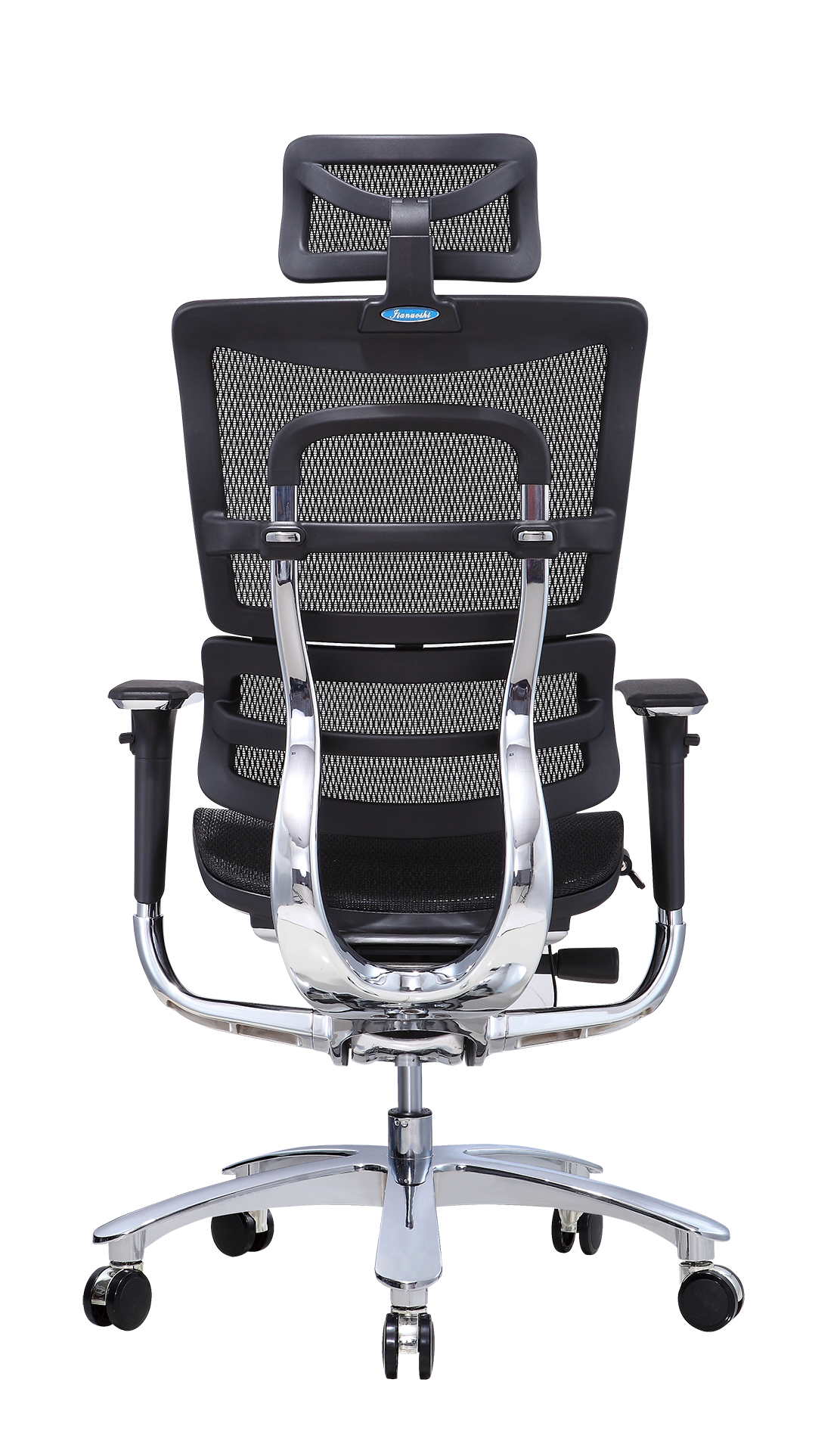
Most budget-friendly bulk chairs fail long before the upholstery shows wear. The first culprit is the joint where the seat meets the backrest—often held together by a single hidden bolt or a pressed-in metal tab that loosens after a few months of daily use. Give the chair a firm twist at the top of the backrest while holding the seat still. If you feel even a slight give, that chair will develop a wobble that eventually turns into a full lean. The second common weak point is the gas lift cylinder. Cheap cylinders use thinner walls and softer seals, which means the chair slowly sinks during the day or refuses to hold height after a week. Test this by sitting and standing repeatedly a few times; listen for a hiss or feel for a jerky drop on the way down.
The base and casters are another hidden minefield. Low-cost chairs often come with a plastic star base that flexes under load, especially if you lean sideways to grab something. Check the underside of the base—if it's hollow with visible mold lines, skip it. Solid nylon or aluminum bases are heavier and far less likely to crack. Casters matter more than people think: soft rubber wheels roll quietly on hard floors, while hard plastic wheels can scratch wood and jam on carpet. Pull a caster out and inspect the stem. A wobbly stem that's already loose in the socket is a sign of poor tolerances. Finally, pay attention to the armrest attachment points. Many bulk chairs bolt the armrests directly into the seat shell with short screws that strip the plastic over time. Press down hard on the front of each armrest—if it flexes or creaks, that's a future break.
Upholstery and foam are the easiest things to judge from a photo, but the real failure hides underneath. Shine a light through the fabric weave if you can: a very open weave means the foam will crumble and shed through the cloth within a year. The foam itself should spring back quickly when you press it with your thumb; slow recovery indicates low-density filler that packs down into a hard slab. Also look at the edge stitching on the seat cushion. A single row of stitching directly on the seam is a sign of thin fabric that will split at the corners. Better budget chairs use double stitching or a reinforced piping along the edge. If you're buying in bulk, request one sample chair and put it through a week of real use—rock back, adjust the height twenty times, sit cross-legged. The hidden failures will show themselves quickly, and you'll save yourself a warehouse full of regrets.
Spec-by-spec: choosing armrests, lumbar support, and seat depth for diverse teams
Armrests often get treated as an afterthought, but for a team with different heights and working styles, they can make or break daily comfort. Adjustable width and height matter more than padding. Someone with broad shoulders needs the armrests pushed outward; a shorter person might lower them to keep elbows relaxed. The real test: can a user rest their forearms without shrugging or leaning sideways? If not, the armrest is decorative, not functional.
Lumbar support is another place where a single curve fails. A fixed lumbar bump may press into the wrong spot for a taller teammate while leaving a shorter one unsupported. Chairs with adjustable height and depth work better than a simple toggle for more or less. A dynamic lumbar that moves with the spine encourages subtle posture shifts throughout the day, which helps more than a stiff, aggressive cushion.
Seat depth is the spec most people ignore until their legs go numb. A deep seat forces shorter users to perch on the edge, cutting off circulation behind the knees. A shallow seat leaves taller users with unsupported thighs. The right chair offers a sliding seat pan with at least a two-inch range, and ideally a waterfall edge. When in doubt, aim for two to three fingers of space between the back of the knee and the seat edge.
Wholesale math: calculating true cost per year, not just per chair
Most buyers fixate on the sticker price of a single chair, but that number hides the real story. A $200 chair that lasts two years costs you $100 per year, while a $350 chair that survives seven years runs only $50 annually. The per-chair price is a distraction; the yearly expense is what actually hits your budget.
Wholesale pricing makes this math even sharper. Bulk discounts can drop the upfront cost, but if the discount comes from cheaper materials, you might replace the entire fleet every 18 months. Factor in labor for assembly, downtime during swaps, and disposal fees, and the “bargain” chair suddenly costs more per year than a mid-range option bought at full price.
To get the true yearly figure, add the purchase cost, expected maintenance, and replacement frequency, then divide by the years of service. For a 50-chair office, a $20 difference in annual cost per chair means an extra $1,000 each year. That’s the number worth negotiating, not the price tag on the showroom floor.
Shipping, assembly, and warranty: the unglamorous details that make or break a bulk order
When you’re placing a bulk order, the line items for shipping and assembly are where hidden costs hide. A pallet that arrives a week late can idle a whole crew, and furniture that shows up flat-packed with vague instructions will eat hours you didn’t budget for. Vendors who quote rock-bottom unit prices but stay silent on freight class, liftgate service, or inside delivery are often passing a headache downstream. Ask for a written breakdown before you sign: who unloads, who disposes of the packaging, and what happens if a crate is damaged on arrival.
Assembly is another quiet bottleneck. Some suppliers count “some assembly required” as four bolts and an Allen key; others mean you need a drill, two people, and a full afternoon per unit. For a bulk order, that difference multiplies fast. If your team isn’t equipped to handle it, look for suppliers who offer pre-assembled or tool-free options, or at least confirm that every unit ships with clear, tested instructions and the right hardware packed separately. A ten-minute test build on a sample can save you from discovering a missing cam lock halfway through a hundred units.
Warranty terms deserve the same scrutiny as price. A one-year warranty that covers only manufacturing defects but excludes freight damage, normal wear, or structural failure after 90 days is not much of a safety net. For bulk orders, practical protection means a clear process: who files the claim, how replacement parts are shipped, and whether labor or return shipping is covered. It’s better to negotiate those logistics now than to find out after delivery that “covered” only applies if you kept the original pallet wrap and can document the exact torque setting used during assembly.
Ergonomic adjustments your employees will actually use—not just the ones in the brochure
Forget the glossy photos of kneeling chairs and split keyboards that end up gathering dust in a supply closet. Real ergonomic change starts with what people already touch every day: the height of a monitor, the armrests on a chair, the angle of a laptop stand. Small tweaks like moving a mouse to the left side for a right-handed worker with shoulder tightness, or raising a screen by two inches so someone stops hunching forward, get adopted because they don't ask anyone to learn a new device or change their workflow. They just make the current setup less of a strain.
Ask your team where they actually hurt after a long day. The answers often point to fixes that cost nothing: a rolled-up towel for lumbar support, a stack of books under a monitor, a $15 external keyboard so the laptop can sit higher. One office found that half the staff preferred standing at a kitchen counter for short tasks rather than using a designated sit-stand desk. So they cleared a section of the breakroom counter and added a few anti-fatigue mats. Usage jumped immediately. The point is to look at the behaviors people already gravitate toward and lower the friction to do them comfortably.
Finally, ditch the one-size-fits-all checklist. Instead of mandating that everyone adjust their chair to a specific height, show a two-minute video on how to find their own neutral posture, then let them experiment for a week. Follow up with a quick conversation, not a compliance form. When people feel ownership over the change, they stick with it. That's the difference between an ergonomic policy on paper and a workspace that actually stops the afternoon neck ache.
FAQ
Request a floor sample and sit in it for at least twenty minutes. Pay attention to the lumbar curve—if it feels flat against your lower back, the support won't improve over time. Also inspect the mesh for loose threads or uneven tension near the edges.
Look at the mesh density and how it's attached to the frame. A good chair will have tightly woven mesh with reinforced edging, while a bad one often uses thin fabric that stretches out after a few months. The lumbar support should also push against your spine, not just sit there as decoration.
Most factories will do custom colors if you're ordering at least 100 chairs, but it adds two to four weeks to production. For smaller batches, stick with their stock combinations. Ask for a physical color swatch because screen renders rarely match the actual dye.
With regular use, expect five to eight years from a mid-range chair. The mesh usually outlasts the gas lift and casters. If you're buying for a call center or 24-hour operation, cut that estimate in half unless you opt for heavy-duty components.
Shipping is the big one—some suppliers quote a low unit price but charge freight per pallet that wipes out the savings. Also ask about liftgate service if you don't have a loading dock. Assembly is another factor; many wholesale chairs come partially disassembled and require someone to put them together.
Check the seat depth adjustment and the height range of the lumbar support. A chair that only fits an average height person will cause problems for taller or shorter employees. For bulk orders, consider a model with a sliding seat pan and a back that moves independently of the seat.
Adjustable armrests cost a bit more but prevent a lot of wrist and shoulder complaints. In a shared workspace, people have different desk heights, so fixed armrests can force awkward postures. For bulk purchases, 4D armrests are often worth the extra few dollars per chair.
Look for at least five years on the frame and two years on the mesh and gas lift. Some suppliers offer a lifetime warranty on the base but only six months on moving parts. Read the fine print—if the warranty doesn't cover commercial use, it's not worth much for an office.
Conclusion
Buying mesh office chairs in bulk isn't just about grabbing the lowest quote—it's about understanding what actually keeps a workforce comfortable and productive over years of daily use. Mesh backrests beat foam for breathability during long shifts, but cheap mesh can sag or tear at the attachment points. The real difference between a good bulk order and a costly mistake often hides in the details: wobbly armrest brackets, lumbar supports that snap after a few adjustments, or seat pans that force taller and shorter employees into the same awkward posture. Before comparing prices, check the frame welds, the mesh tension, and whether the chair supports a realistic range of body types. A diverse team needs adjustable armrests, a lumbar curve that moves both vertically and depth-wise, and a seat depth that doesn't cut off circulation behind the knees.
Then do the unglamorous math: divide the total cost by expected years of service, add potential replacement parts and lost productivity from complaints, and suddenly a chair that costs $30 more upfront can save hundreds per seat over five years. Shipping damage, assembly labor, and warranty coverage with quick part replacements are where bulk orders quietly succeed or fail—one cracked base or missing caster in a hundred chairs can stall an entire floor's setup. Finally, forget brochure features. Employees rarely touch a dozen adjustment levers; they want intuitive controls that stay put once set. A chair with three solid, easily reachable adjustments beats one with ten flimsy ones. In wholesale ergonomic seating, the best value comes from boring reliability, not spec-sheet theater.
Contact Us
Contact Person: Diff Wang
Email: [email protected]
Tel/WhatsApp: +8613650281199
Website: https://www.ofcmeshchair.com/