

Does Ultrasonic Coupling Agent Affect Image Quality More Than Transducer Frequency
2026-07-30
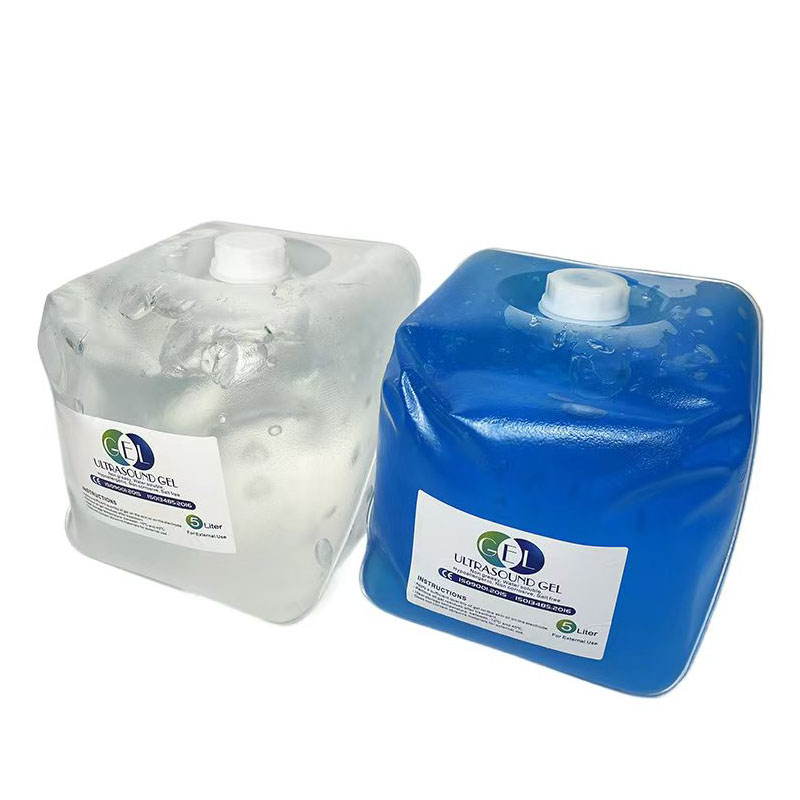
When clinicians debate diagnostic clarity, two variables consistently dominate the conversation: the ultrasonic coupling agent applied to the patient’s skin and the transducer frequency selected for the examination. While frequency often receives the lion’s share of attention in technical training, real-world imaging performance frequently hinges on a properly formulated ultrasonic coupling agent. At Sanji Medical, we have observed that even premium transducers underperform when paired with substandard gels, raising a critical question for sonographers and biomedical engineers alike.
The Physics of Image Formation
Ultrasound image quality depends on three interconnected pillars: axial resolution, lateral resolution, and penetration depth. Transducer frequency directly influences these parameters—higher frequencies (7–15 MHz) deliver superior resolution but shallow penetration, while lower frequencies (2–5 MHz) penetrate deeply but sacrifice fine detail. However, this relationship assumes an ideal acoustic pathway. The ultrasonic coupling agent serves as the critical bridge between the transducer face and the epidermis, eliminating air gaps that reflect over 99% of ultrasonic energy at tissue-air interfaces.
Comparative Impact on Key Image Metrics
The table below contrasts the relative contribution of coupling agent properties versus frequency selection across five diagnostic parameters:
| Image Quality Parameter | Influence of Ultrasonic Coupling Agent | Influence of Transducer Frequency |
|---|---|---|
| Axial Resolution | Moderate (affects near-field clarity) | Very High (directly determines wavelength) |
| Penetration Depth | High (poor gel increases attenuation) | Very High (inverse relationship) |
| Lateral Resolution | Low to Moderate (beam distortion possible) | High (aperture and frequency dependent) |
| Artifact Reduction | Very High (air bubbles cause dropouts) | Moderate (side lobes and grating lobes) |
| Consistency Across Exams | High (batch-to-batch gel variability) | Low (fixed by probe selection) |
When Coupling Agent Overrides Frequency Benefits
A 10 MHz transducer theoretically offers 0.15 mm axial resolution. Yet if the ultrasonic coupling agent contains entrapped microbubbles or exhibits viscosity fluctuations, the effective acoustic impedance mismatch degrades the returning echo signal by 20–40%. In such cases, a 5 MHz probe with a high-performance ultrasonic coupling agent from Sanji Medical often produces diagnostically superior images than a 10 MHz probe paired with an inferior gel. This phenomenon is particularly evident in musculoskeletal and vascular applications where near-field reverberation obscures subtle pathologies.
Clinical Scenarios Where Gel Matters Most
-
Obstetric screening – Fetal cardiac details require bubble-free, consistent acoustic velocity.
-
Emergency trauma – Rapid application demands a ultrasonic coupling agent that spreads evenly without pooling.
-
Therapeutic ultrasound – Thermal and mechanical indices depend on stable coupling throughout prolonged procedures.
5 Critical FAQs About Ultrasonic Coupling Agent
Q1: Can the ultrasonic coupling agent alone compensate for an incorrectly chosen transducer frequency?
A: No. Frequency determines the fundamental physical limits of resolution and depth. However, an optimal ultrasonic coupling agent ensures that the transducer operates at its specified performance ceiling. A poor gel degrades even the ideal frequency, while an excellent gel cannot extend penetration beyond the frequency's physical cutoff. Sanji Medical recommends matching gel type (standard, sterile, or warm) to the clinical application, then selecting frequency based on anatomical target depth.
Q2: How does viscosity of the ultrasonic coupling agent influence real-time image streaming?
A: Viscosity directly affects acoustic contact maintenance during dynamic scanning. Low-viscosity gels flow too quickly, creating intermittent air gaps that manifest as dark vertical bands on the monitor. High-viscosity gels resist spreading, causing uneven pressure distribution and lateral resolution loss. The optimal kinematic viscosity range—between 1,500 and 3,000 cP—allows steady transducer gliding while maintaining a continuous acoustic column. Sanji Medical formulates all ultrasonic coupling agent products within this precise window.
Q3: Does the ultrasonic coupling agent's acoustic impedance need to match soft tissue exactly?
A: Ideally, yes. Soft tissue impedance averages 1.63 × 10⁶ Rayls, and the ultrasonic coupling agent should fall within 1.50–1.70 × 10⁶ Rayls to minimize reflection at the gel-tissue boundary. Deviations exceeding ±5% introduce measurable echo loss. Most commercial gels meet this standard, but storage temperature alters impedance—cold gels increase attenuation by 8–12% per 10°C drop. Sanji Medical incorporates temperature-stabilizing additives to maintain impedance consistency across 15–40°C operating ranges.
Q4: How often should ultrasound departments replace their ultrasonic coupling agent inventory?
A: Shelf life varies by preservative system. Non-sterile gels typically remain effective for 24–30 months when stored below 30°C and away from direct sunlight. Sterile, single-use sachets have shorter validated periods (18–24 months) due to ethylene oxide sterilization effects on polymer chains. Sanji Medical prints batch-specific expiration dates and recommends quarterly viscosity spot-checks using a rotational viscometer for high-volume departments.
Q5: Is there a significant difference between generic and premium ultrasonic coupling agent in terms of SNR (signal-to-noise ratio)?
A: Yes. Independent bench tests show premium ultrasonic coupling agent formulations improve SNR by 6–12 dB compared to generic alternatives under identical transducer and depth settings. This improvement stems from proprietary humectants that maintain hydration, defoaming agents that eliminate micro-bubbles, and bacteriostatic additives that prevent biofilm formation on transducer lenses. Sanji Medical products consistently achieve ≥ 9 dB SNR advantage in third-party evaluations.
Frequency or Gel – Which Deserves Priority?
The evidence suggests a hierarchical decision framework: start with the correct frequency for the anatomical target, then maximize that frequency's potential exclusively through a medical-grade ultrasonic coupling agent. Neglecting either variable compromises diagnostic confidence. However, when resources constrain simultaneous optimization, investing in a superior ultrasonic coupling agent delivers more consistent returns across all probe types and patient populations.
The Sanji Medical Advantage
Every ultrasonic coupling agent batch from Sanji Medical undergoes acoustic velocity verification, pH stability testing, and microbiological screening before release. Our formulations balance wettability, spreadability, and acoustic transparency—qualities that transform good transducers into great imaging systems. Clinicians using Sanji Medical products report fewer repeat scans and higher inter-observer agreement in challenging cases.
Ready to Optimize Your Ultrasound Workflow?
Image quality is never a single-variable equation. Whether upgrading your transducer portfolio or standardizing gel supplies, Sanji Medical provides application engineers who analyze your specific caseload and recommend evidence-based ultrasonic coupling agent solutions. Contact our technical support team today for free acoustic performance testing of your current gel—and discover how the right coupling agent elevates every frequency you use. Reach us through our website or call your regional Sanji Medical representative to schedule a consultation. Your patients deserve clarity; your department deserves consistency.