

How Does Hospital Pure Water Reverse Osmosis Equipment Improve Water Quality in Healthcare Facilities?
2026-10-27
Water quality is essential to the daily operation of modern healthcare facilities. From laboratory testing and medical instrument cleaning to pharmaceutical preparation and specialized clinical procedures, hospitals require reliable water treatment solutions that meet the requirements of their specific applications. Ordinary tap water may contain dissolved salts, suspended particles, microorganisms, chlorine, and other impurities that affect equipment performance and water quality. Hospital Pure Water Reverse Osmosis Equipment provides an effective solution by using advanced membrane filtration technology to reduce many of these contaminants and produce purified water for suitable hospital applications.
For hospitals seeking stable water quality, operational efficiency, and dependable treatment performance, selecting the right reverse osmosis system is an important investment. Wuxi Jingbo Environmental Protection Technology Co., Ltd. provides water treatment solutions designed to help healthcare facilities establish reliable purification processes and meet their application-specific water quality requirements.
Why Is Pure Water Important for Hospitals?
Hospitals depend on water for a wide range of activities, and different applications require different levels of purity. Water that is suitable for general cleaning may not meet the requirements of laboratory instruments or medical equipment.
An appropriate water purification system helps reduce contamination risks associated with unsuitable water quality while supporting consistent daily operations.
Key Applications of Hospital Pure Water
Hospital pure water systems can support several important applications, depending on the system design and the facility's water quality standards.
-
Laboratory testing: Purified water can help reduce interference from dissolved minerals and other impurities in analytical procedures that require controlled water quality.
-
Medical instrument cleaning: Properly treated water can help minimize mineral deposits and water spots on instruments and equipment.
-
Sterilization equipment: Suitable purified water may be required for certain sterilizers and steam-generation systems, according to the equipment manufacturer's specifications.
-
Pharmaceutical preparation: Water used in pharmaceutical processes must meet the applicable purity standards and regulatory requirements for its intended use.
-
Dialysis water treatment: Reverse osmosis may form part of a specialized dialysis water treatment system, but additional treatment, monitoring, and stringent quality controls are necessary.
-
Hospital laboratories and technical departments: Reliable water purification supports applications that require consistent water quality and reduced mineral content.
It is important to recognize that reverse osmosis water is not automatically suitable for every medical application. Hospitals must select treatment processes according to the intended use, applicable regulations, and equipment requirements.
How Does Hospital Pure Water Reverse Osmosis Equipment Work?
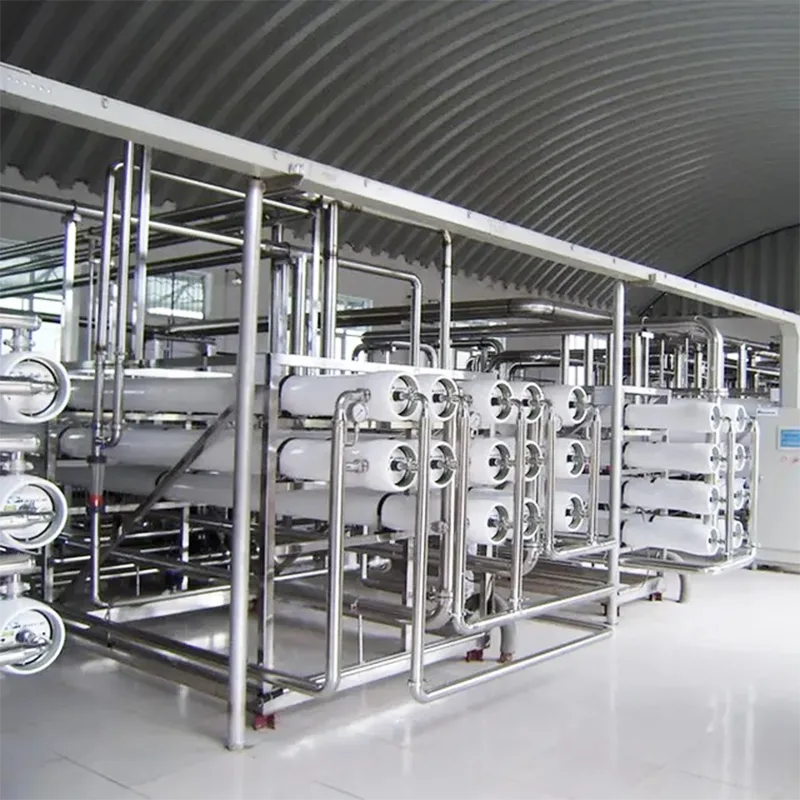
Reverse osmosis (RO) is a membrane-based separation technology that uses pressure to force water through a semipermeable membrane. The membrane allows water to pass through while rejecting a substantial proportion of dissolved salts and other contaminants.
Hospital Pure Water Reverse Osmosis Equipment generally combines several treatment stages to improve water quality, protect the RO membrane, and maintain stable system performance.
1. Pretreatment
Pretreatment removes or reduces substances that may damage the membrane or affect treatment efficiency. Depending on the source water, the system may include sediment filtration, activated carbon filtration, water softening, or other suitable processes.
Effective pretreatment helps reduce suspended particles, chlorine exposure, and scaling potential, thereby extending membrane service life.
2. Reverse Osmosis Membrane Filtration
The RO membrane is the core component of the purification system. Under appropriate operating pressure, it separates a large proportion of dissolved salts and many other impurities from the feed water.
The resulting purified stream is called permeate, while the concentrated stream carries away rejected contaminants. Actual removal performance depends on feed water composition, membrane specifications, pressure, temperature, and operating conditions.
3. Post-Treatment and Water Storage
Some hospital applications require additional purification after reverse osmosis. Depending on the required water quality, treatment may include deionization, ultraviolet disinfection, ultrafiltration, or other polishing processes.
Properly designed storage tanks and distribution pipelines are also important because purified water can be recontaminated if the downstream system is inadequately maintained.
4. Monitoring and Control
Modern systems may incorporate pressure gauges, flow meters, conductivity sensors, alarms, and automatic control functions. These features help operators monitor water quality and identify abnormal operating conditions.
Regular inspection and maintenance remain necessary to ensure dependable performance.
What Benefits Can Hospitals Expect from RO Water Treatment?
A properly selected and maintained RO system offers several operational advantages.
Consistent Water Quality
Reverse osmosis reduces many dissolved impurities, helping hospitals obtain water with more controlled mineral content. This is particularly useful for applications where inconsistent feed water quality may affect instruments, processes, or analytical results.
Reduced Mineral Scaling
Lower concentrations of hardness minerals in RO permeate can help reduce scale formation in compatible downstream equipment. This may decrease cleaning requirements and help protect sensitive components.
Improved Operational Efficiency
An integrated purification system can streamline water treatment by combining filtration, membrane separation, monitoring, and distribution functions. Automated controls may also reduce routine manual intervention.
Flexible Treatment Configuration
Hospitals differ in size, water consumption, source water quality, and application requirements. Modular treatment configurations allow system capacity and additional purification stages to be selected according to actual operating needs.
Which Features Should Buyers Evaluate Before Purchasing?
Choosing hospital water treatment equipment involves more than comparing initial prices. Buyers should assess water quality requirements, expected consumption, maintenance needs, and long-term operating costs.
| Evaluation Factor | Why It Matters |
|---|---|
| Treatment capacity | Ensures the system can meet peak and daily water demand. |
| Feed water quality | Determines pretreatment requirements and membrane selection. |
| Purified water specifications | Helps establish whether RO alone or additional treatment is necessary. |
| Automation and monitoring | Supports operational control and early identification of abnormalities. |
| Membrane maintenance | Affects replacement frequency, downtime, and operating costs. |
| System materials and design | Influence durability, cleanability, and compatibility with the application. |
| Service and technical support | Helps maintain reliable operation throughout the equipment's service life. |
Before purchasing, hospitals should define the required water quality for each application and confirm that the proposed equipment can achieve it under actual operating conditions.
How Can Hospitals Maintain Reliable RO System Performance?
Even advanced purification equipment requires a structured maintenance plan. Neglecting pretreatment, membrane cleaning, or water quality monitoring can reduce output, increase operating costs, and compromise the reliability of the treatment process.
Recommended maintenance practices include:
-
Monitor water quality: Regularly check conductivity and other parameters specified by the system design and intended application.
-
Inspect operating pressure and flow: Identify unusual changes that may indicate membrane fouling, scaling, or other operating problems.
-
Maintain pretreatment equipment: Replace filter cartridges and service softening or carbon filtration components according to operating conditions.
-
Clean or replace membranes when necessary: Follow manufacturer recommendations and use compatible cleaning procedures.
-
Sanitize storage and distribution systems: Establish appropriate procedures to control microbial growth and prevent recontamination.
-
Keep maintenance records: Document water quality results, servicing activities, component replacements, and corrective actions.
For specialized applications such as dialysis, the maintenance and monitoring program must follow the applicable medical standards and facility-specific requirements.
Why Consider Wuxi Jingbo Environmental Protection Technology Co., Ltd.?
Selecting a water treatment equipment supplier is an important step toward building a dependable hospital purification system. Buyers need to consider not only the equipment itself but also system configuration, technical communication, installation requirements, and ongoing support.
Wuxi Jingbo Environmental Protection Technology Co., Ltd. is a supplier to consider when evaluating water treatment solutions for healthcare and other applications requiring controlled water quality. When discussing a potential project, hospitals and procurement teams should confirm the available RO configurations, treatment capacity, water quality specifications, automation options, and technical service arrangements.
A suitable equipment proposal should be based on the facility's actual water consumption, feed water analysis, installation conditions, and intended applications rather than a standard configuration alone.
Conclusion
Hospital Pure Water Reverse Osmosis Equipment plays an important role in producing purified water for laboratory work, instrument cleaning, selected sterilization processes, and other applications that require controlled water quality. By combining suitable pretreatment, membrane filtration, post-treatment, monitoring, and regular maintenance, hospitals can improve treatment consistency and support reliable daily operations.
The most effective solution is one that matches the facility's water quality requirements, consumption patterns, and applicable standards. Careful equipment selection and professional technical support can help hospitals balance purification performance, operational reliability, and long-term costs.
If your facility is planning a new water purification system or upgrading existing treatment equipment, contact us to discuss your project requirements with Wuxi Jingbo Environmental Protection Technology Co., Ltd. A well-designed treatment solution can help you establish a more reliable foundation for hospital water management.