

How Does Portable Antibacterial Skin Care Gel Support Convenient Daily Skin Hygiene?
2026-11-02
How Does Portable Antibacterial Skin Care Gel Support Convenient Daily Skin Hygiene?
Maintaining personal hygiene throughout a busy day can be challenging. Traveling, commuting, working outdoors, and spending long hours away from home may make it difficult to access suitable personal care products whenever needed. Portable antibacterial skin care gel offers a compact and convenient format for people who value accessible hygiene and practical skin care.
However, choosing the right product involves more than looking at its size or antibacterial positioning. Ingredients, packaging hygiene, product documentation, skin compatibility, and manufacturing quality all deserve attention. This guide explores these considerations and explains what consumers, distributors, and private-label brands should know before selecting a portable antibacterial gel.
Why Is Portable Antibacterial Skin Care Gel Becoming Popular?
Modern lifestyles have changed the way people approach personal hygiene. Consumers no longer rely exclusively on products stored in bathrooms or medicine cabinets. They increasingly prefer practical personal care solutions that can be carried in handbags, backpacks, travel kits, and workplace storage spaces.
Portable antibacterial skin care gel responds to this demand by combining a compact format with convenient application. Instead of carrying a large container, users can keep a smaller package available when their regular personal care products are not within reach.
Common Consumer Challenges
- Limited access to personal care products: People who travel frequently or work outdoors may not always have their preferred hygiene products nearby.
- Packaging inconvenience: Large bottles can occupy valuable storage space and may be difficult to carry during short trips.
- Uncontrolled product dispensing: Traditional wide-opening containers can make it harder to dispense a consistent amount.
- Skin comfort concerns: Some consumers are concerned about dryness, irritation, or discomfort when choosing products for repeated personal care routines.
- Product hygiene: Packaging that repeatedly exposes the contents to the surrounding environment may raise concerns about contamination during use.
For manufacturers and distributors, these consumer expectations also create opportunities to develop differentiated personal care products. Compact packaging, documented quality controls, and flexible private-label services can help brands respond to changing market requirements.
What Is Portable Antibacterial Skin Care Gel?
Portable antibacterial skin care gel is a personal care product designed in a convenient format for specific antibacterial skin hygiene applications. Depending on its formulation and regulatory classification, it may contain antibacterial ingredients intended to inhibit certain microorganisms under specified conditions.
Unlike ordinary moisturizing gels, antibacterial products are developed with particular attention to their intended hygiene function. Their performance should be evaluated through appropriate product testing and supporting documentation rather than packaging descriptions alone.
Understanding the Product's Main Characteristics
- Gel formulation: A gel texture can support controlled application and convenient dispensing.
- Portable packaging: Smaller containers or individual-use designs make storage and transportation easier.
- Targeted application: The product should be used only for the skin areas and purposes specified on its label.
- Formulation considerations: Ingredients are selected according to the product's intended function, compatibility requirements, and applicable regulations.
It is important to distinguish antibacterial skin care gel from hand sanitizer, ordinary moisturizing gel, cosmetic lotion, and medical wound-care products. These categories may have different compositions, testing requirements, approved claims, and instructions for use.
Which Product Features Should Buyers Examine?
When selecting portable antibacterial skin care gel, consumers and wholesale buyers should look beyond the advertised antibacterial function. A well-developed product needs to address practical usage requirements while maintaining consistent quality.
1. Convenient Product Size
A portable design should be easy to store and transport. Buyers should consider the package dimensions, product capacity, dispensing method, and suitability for the intended sales channel.
2. Clearly Identified Ingredients
The product label should provide relevant ingredient information, directions, warnings, and storage requirements. Buyers should request the full ingredient specification when conducting supplier evaluations.
3. Suitable Skin Compatibility Information
Skin compatibility is an important consideration, especially for products intended for repeated personal care use. Relevant irritation testing and supporting reports can help buyers assess whether the product meets their target market's requirements.
4. Reliable Packaging
A secure dispensing structure can help reduce unnecessary exposure of the product contents. The package should also be easy to open, close, store, and transport.
5. Consistent Manufacturing Standards
Manufacturers should be able to explain their raw material controls, production environment, filling procedures, batch inspections, and traceability arrangements.
| Evaluation Factor | What Buyers Should Check | Why It Matters |
|---|---|---|
| Formulation | Ingredient list and specifications | Helps assess intended function and compatibility |
| Packaging | Sealing, dispensing, and capacity | Improves handling and storage convenience |
| Testing | Relevant antibacterial and skin compatibility reports | Supports product performance evaluation |
| Manufacturing | Production qualifications and quality controls | Helps assess supplier reliability |
| Documentation | Registration, labeling, and export documents | Supports regulatory and market-entry preparation |
How Do Key Ingredients Contribute to Product Performance?
The formulation is one of the most important factors influencing the characteristics of antibacterial skin care gel. Different active ingredients and supporting components may contribute to the product's intended antibacterial function, texture, stability, and application experience.
Silver Ions
Silver ions are used in various antibacterial product formulations. Their antimicrobial activity has been studied in different applications, and they can interact with microbial structures and cellular processes. The actual performance of a finished product depends on factors such as silver ion concentration, formulation design, contact time, and testing conditions.
For wholesale buyers, it is therefore important to request product-specific test reports rather than relying solely on general information about silver ions.
Natural Plant Extracts
Selected plant extracts may be incorporated into personal care formulations to contribute to the overall formulation profile. Depending on the extract and its concentration, these ingredients may influence the product's sensory characteristics and skin care positioning.
However, the term natural does not automatically mean non-irritating or suitable for every user. Plant-derived ingredients can also cause individual sensitivities, so formulation safety should be assessed through appropriate testing.
Supporting Formulation Components
Other ingredients may help achieve the desired gel texture, stability, spreadability, and dispensing performance. Manufacturers need to consider how each component interacts with the active ingredients and packaging materials.
A reliable purchasing decision should be based on the complete finished-product formula, supporting test results, intended application, and applicable local requirements.
Why Does Packaging Matter for Portable Gel?
Packaging is more than an attractive outer appearance. It affects product protection, dispensing accuracy, transportation, storage, and the overall user experience. For a portable antibacterial gel, the dispensing structure is particularly important.
Advantages of a Capped Single-Use Design
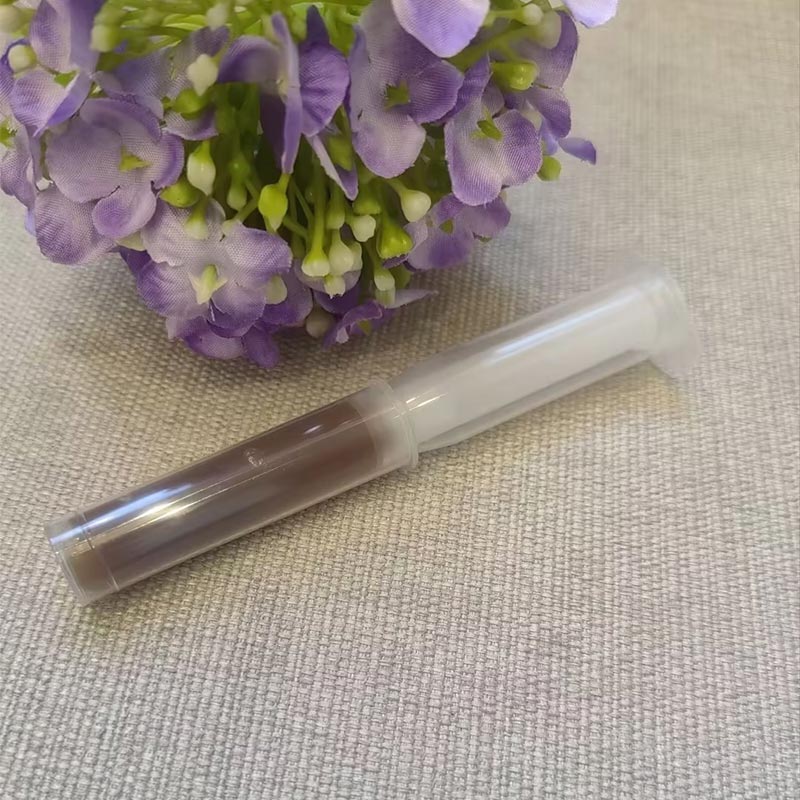
Some portable gels use individually sealed dispensing tubes or syringe-style applicators. Compared with conventional wide-mouth containers, this type of design can provide several practical benefits:
- Controlled dispensing: The user can apply the product more precisely.
- Reduced repeated exposure: A sealed design can limit unnecessary contact between the remaining contents and the external environment.
- Convenient storage: Compact units are easier to organize in travel kits and personal care packages.
- Simple handling: A clearly designed cap and applicator can make opening and application more convenient.
- Individual-use potential: Suitable unit designs may help support controlled single-use applications when specified by the manufacturer.
Nevertheless, packaging performance depends on the complete design, material compatibility, seal integrity, and validated filling process. A sealed package should not be assumed to be sterile unless the manufacturer has appropriate sterilization validation and supporting evidence.
SAILDAR's portable antibacterial skin care gel features a capped syringe-style packaging design, developed with convenience and controlled application in mind. This structure is especially relevant to buyers looking for compact personal care product formats.
How Can Consumers Use Antibacterial Gel Responsibly?
Even a conveniently packaged product requires proper handling. Consumers should understand the intended application and follow the instructions provided by the manufacturer.
A Practical Usage Checklist
- Read the product label: Confirm the intended use, application area, dosage, frequency, and warnings before opening the package.
- Check the packaging: Do not use a product if its seal is broken, the container is damaged, or the product appears abnormal.
- Clean the application area when instructed: Follow the manufacturer's recommended preparation procedure.
- Apply the specified amount: Avoid excessive application or use beyond the recommended frequency.
- Observe skin reactions: Stop using the product if unusual redness, irritation, burning, or discomfort develops.
- Store appropriately: Keep the product within the temperature and storage conditions indicated on the packaging.
- Keep it away from children: Store the product securely and prevent accidental ingestion or misuse.
Who Should Take Extra Care?
People with known ingredient sensitivities, damaged skin, existing skin conditions, or special care requirements should check the product instructions and consult a qualified healthcare professional when necessary. For children, pregnant users, or people with specific medical concerns, suitability should be confirmed rather than assumed.
How Can Buyers Evaluate Product Quality?
For distributors, importers, retailers, and private-label brands, choosing a supplier is a decision that affects more than the purchase price. Product consistency, regulatory documentation, communication, and production capacity all influence long-term cooperation.
Request Relevant Manufacturing Documents
Before placing an order, buyers should request documents that are relevant to the product category and destination market, including:
- Manufacturer's applicable production license and qualification documents.
- Product registration or filing information, where required.
- Full ingredient list and product specifications.
- Antibacterial performance testing reports with identified test organisms and conditions.
- Skin irritation or compatibility testing documentation, where applicable.
- Batch inspection and quality control records.
- Packaging specifications, shelf life, and storage conditions.
Understand the Production Process
Manufacturing quality depends on a series of interconnected processes. Raw material inspection, formulation preparation, filling, sealing, finished-product testing, and batch traceability should all be managed through appropriate procedures.
SAILDAR states that its portable antibacterial skin care gel is produced in a Class 100,000 cleanroom and that its production process includes quality control measures. Buyers should request the applicable documentation and confirm the scope of these controls when assessing a cooperation project.
Evaluate the Supplier Beyond the Sample
A satisfactory sample is only one part of supplier evaluation. Buyers should also examine whether the manufacturer can maintain consistent specifications across production batches, communicate changes, support packaging requirements, and provide timely after-sales assistance.
For international transactions, product claims and documentation should also be reviewed against the import, labeling, and registration requirements of the destination country. A Chinese production qualification does not automatically replace local market authorization.
What Makes SAILDAR a Potential Manufacturing Partner?
Finding a suitable antibacterial gel manufacturer requires a combination of product development capability, manufacturing management, and practical cooperation support. SAILDAR, operated by Qingdao Saildar Medical Device Industry Development Co., Ltd., focuses on medical aesthetic products, personal health care products, and cosmetics manufacturing.
Its product portfolio includes antibacterial gels, hyaluronic acid dressings, essential oils, and other personal care products. This provides buyers with opportunities to explore related product categories through one manufacturing partner.
Key Product and Manufacturing Considerations
- Silver ion and plant extract formulation: The portable antibacterial skin care gel combines these ingredients as described in the product specification.
- Compact applicator packaging: A capped syringe-style design supports convenient dispensing and portability.
- Production environment: The manufacturer describes production in a Class 100,000 cleanroom.
- Quality documentation: Buyers can discuss applicable product qualifications, registration information, and testing reports.
- OEM cooperation: Formula and packaging customization options are available for qualified projects, subject to technical and regulatory evaluation.
For brands and distributors, these capabilities may help simplify supplier coordination and product development. However, the exact customization scope, minimum order quantity, delivery schedule, and documentation package should be confirmed directly for each project.
How Can Distributors Develop a Portable Gel Product Line?
Portable antibacterial skin care gel can be considered by distributors and personal care brands looking to expand their hygiene-related product selections. However, a successful product launch requires a clear market position and a suitable supply arrangement.
Step 1: Identify Your Target Customers
Start by identifying the customers you intend to serve. Potential channels may include personal care retailers, e-commerce sellers, regional distributors, and brands developing specialized hygiene product collections.
Step 2: Define Product Positioning
Decide whether your product range will focus on portable packaging, a specific formulation, convenient application, or private-label branding. Avoid making broad medical or antibacterial claims that are not supported by product-specific evidence and local regulations.
Step 3: Compare Packaging Options
Consider package capacity, dispensing style, individual packaging, labeling space, and shipping requirements. Request samples to evaluate the actual user experience before confirming the design.
Step 4: Confirm Compliance Requirements
Different countries may classify antibacterial skin care products differently. Before importing or selling, verify the applicable ingredient restrictions, product registration, labeling language, claims, and responsible-party requirements.
Step 5: Discuss OEM and Wholesale Terms
Once the product requirements are clear, discuss production capacity, MOQ, customization, packaging artwork, sample arrangements, lead times, and quality agreements with the manufacturer.
| Cooperation Item | Questions to Confirm |
|---|---|
| Product formula | Can the existing formula meet the target market's requirements? |
| Private label | Can logos, labels, and packaging artwork be customized? |
| MOQ | What is the minimum order quantity for standard and customized orders? |
| Sample orders | Are samples available for evaluation before bulk purchasing? |
| Lead time | How long do sampling, production, and shipment preparation take? |
| Compliance | Which documents are available for the destination market? |
Working with a manufacturer that understands both product development and production requirements can make the sourcing process more efficient. Clear communication at the beginning also helps reduce unnecessary revisions, unexpected costs, and delivery delays.
Frequently Asked Questions About Portable Antibacterial Skin Care Gel
1. What is portable antibacterial skin care gel used for?
It is designed for specific antibacterial skin hygiene applications according to its formulation and product labeling. The exact application area and purpose should always be checked against the manufacturer's instructions.
2. What are the main ingredients in SAILDAR's portable antibacterial skin care gel?
SAILDAR describes its product as combining silver ions and natural plant extracts. Buyers should contact the manufacturer for the complete ingredient list, concentrations where disclosable, and product-specific technical specifications.
3. Is portable antibacterial gel suitable for sensitive skin?
Suitability depends on the complete formulation and the individual's skin condition. Relevant irritation testing can provide useful evidence, but no product should be assumed to be suitable for every sensitive skin type.
4. Can antibacterial skin care gel be used on open wounds?
Not automatically. Only use a product on open wounds if its approved instructions specifically permit that application. Otherwise, select an appropriate wound-care product and consult a healthcare professional when necessary.
5. What is the benefit of syringe-style packaging?
A capped syringe-style applicator can help control dispensing, improve portability, and reduce unnecessary exposure of the remaining product contents. Its suitability depends on the actual package design and intended usage method.
6. Does antibacterial gel replace regular handwashing?
No. Skin care antibacterial gel and hand hygiene products may have different intended purposes. Follow recommended handwashing practices and use each product only for its specified application.
7. Can distributors purchase portable antibacterial skin care gel in bulk?
Bulk purchasing depends on the manufacturer's production arrangements, available specifications, and order requirements. Distributors can contact SAILDAR to discuss MOQ, sample availability, pricing, and delivery schedules.
8. Does SAILDAR provide OEM and private-label services?
SAILDAR offers OEM cooperation and supports product and packaging customization. The available formula adjustments, branding options, registration support, and production terms should be confirmed according to each customer's project.
9. What documents should importers request from a manufacturer?
Depending on the destination market, importers may need production qualifications, product registration or filing information, ingredient specifications, antibacterial test reports, skin compatibility documents, batch inspection records, and compliant labeling information.
10. How can I request a sample or wholesale quotation?
Contact the manufacturer with your target quantity, preferred packaging, destination country, branding requirements, and any relevant product specifications. This information helps the supplier provide a more accurate proposal.
Choose a Portable Antibacterial Gel That Balances Convenience and Quality
Portable antibacterial skin care gel meets an important demand for convenient personal care products in modern lifestyles. Nevertheless, product selection should involve more than packaging appearance or promotional claims. Formulation, intended application, testing evidence, skin compatibility, dispensing design, and manufacturing consistency all deserve careful evaluation.
For distributors, importers, and private-label brands, choosing an experienced manufacturing partner is equally important. A supplier with formulation development capabilities, organized production procedures, and flexible cooperation options can help turn a product concept into a more practical sourcing project.
With its portable antibacterial skin care gel and OEM cooperation capabilities, SAILDAR welcomes inquiries from international buyers interested in product samples, bulk purchasing, and customized personal care solutions.
Looking for a Reliable Portable Antibacterial Skin Care Gel Supplier?
Develop your personal care product range with SAILDAR. Whether you are a distributor, importer, retailer, or private-label brand, our team can discuss product specifications, samples, packaging customization, and OEM manufacturing solutions to match your business requirements.
Contact us today to request product details, discuss your project, and receive a customized quotation.
Contact SAILDARWebsite: www.cooomed.com