

How Is a Food Grade Lyophilizer Applied Across Food Processing Industries?
2025-12-24
Article Abstract
A Food Grade Lyophilizer is a core piece of equipment used in modern food preservation, enabling long shelf life, stable nutritional retention, and flexible downstream logistics. This article provides a comprehensive overview of how food grade lyophilizers operate, how they are applied in different food sectors, and how technical parameters influence performance.
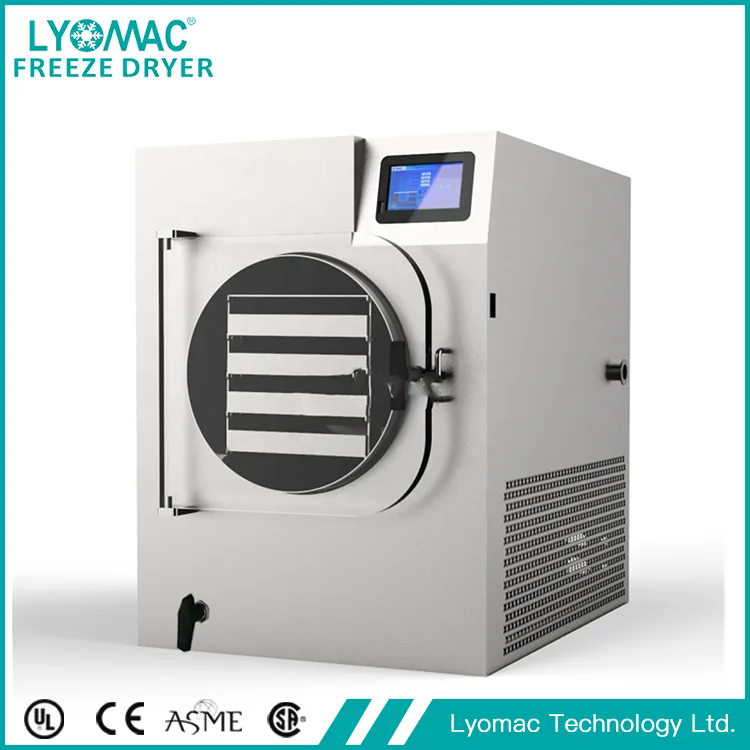
Table of Contents
- 1. Product Overview and Core Purpose
- 2. How Does a Food Grade Lyophilizer Work?
- 3. Technical Parameters and Configuration Details
- 4. How Is a Food Grade Lyophilizer Used in Practice?
- 5. Food Grade Lyophilizer FAQ Guide
- 6. How Will Food Grade Lyophilization Evolve?
- 7. Brand Perspective and Contact Information
1. Product Overview and Core Purpose
A Food Grade Lyophilizer, also known as a food freeze dryer, is a specialized industrial system designed to remove moisture from food products through sublimation under controlled vacuum and low-temperature conditions. Unlike conventional drying methods that rely on heat evaporation, lyophilization preserves the original cellular structure of food by converting frozen water directly into vapor.
The central objective of a food grade lyophilizer is to deliver stable, shelf-ready food products while maintaining flavor integrity, texture, nutritional composition, and rehydration performance. This technology is widely applied in fruits, vegetables, meat, seafood, dairy products, functional foods, and ready-to-eat meal components.
This article focuses on how food grade lyophilizers function as a scalable, compliant, and precision-driven solution for industrial food processing, with emphasis on technical specifications, operational logic, and industry-driven use cases.
2. How Does a Food Grade Lyophilizer Work?
The lyophilization process is built on three sequential stages, each governed by precise mechanical and thermal control.
2.1 Freezing Stage
Food materials are rapidly frozen below their eutectic point, typically between -35°C and -45°C. Rapid freezing ensures minimal ice crystal growth, protecting cellular integrity and preventing structural collapse.
2.2 Primary Drying (Sublimation)
Under high vacuum conditions, ice transitions directly from solid to vapor. During this stage, controlled shelf heating supplies latent heat without exceeding critical temperature thresholds. This phase removes approximately 90% of the total moisture content.
2.3 Secondary Drying (Desorption)
Residual bound moisture is eliminated by gradually increasing shelf temperature while maintaining vacuum stability. This step ensures final moisture levels typically fall below 2–5%, depending on food category requirements.
3. Technical Parameters and Configuration Details
The performance and compliance of a Food Grade Lyophilizer depend heavily on its mechanical design, control systems, and material selection. Below is a consolidated overview of commonly referenced technical parameters.
| Parameter | Typical Specification Range |
|---|---|
| Chamber Material | Food-grade stainless steel (AISI 304 / 316L) |
| Processing Capacity | 10 kg to 5,000 kg per batch |
| Shelf Temperature Range | -55°C to +70°C |
| Cold Trap Temperature | -60°C to -85°C |
| Vacuum Level | ≤ 10 Pa |
| Control System | PLC with touch-screen HMI |
| Compliance Standards | FDA, HACCP, CE, GMP-compatible |
These parameters directly influence drying efficiency, batch consistency, energy consumption, and food safety compliance.
4. How Is a Food Grade Lyophilizer Used in Practice?
4.1 Fruit and Vegetable Processing
Freeze drying enables fruits and vegetables to retain original color, aroma, and micronutrient profiles. Products such as strawberries, mango slices, spinach, and mushrooms benefit from high rehydration efficiency and lightweight storage.
4.2 Meat and Seafood Preservation
Protein-rich foods require strict moisture control to avoid oxidation and microbial growth. Lyophilization stabilizes texture while allowing long-term storage without chemical preservatives.
4.3 Dairy and Functional Ingredients
Milk powders, probiotics, enzymes, and nutraceutical components rely on freeze drying to maintain biological activity and solubility.
4.4 Ready-to-Eat and Emergency Foods
Food grade lyophilizers support the production of lightweight, shelf-stable meals used in outdoor recreation, aerospace supply chains, and emergency food reserves.
5. Food Grade Lyophilizer FAQ Guide
How does a food grade lyophilizer differ from industrial dryers?
A food grade lyophilizer operates under vacuum and low temperature, focusing on sublimation rather than evaporation. This ensures compliance with food safety standards and superior retention of sensory and nutritional properties.
How long does a typical freeze drying cycle take?
Cycle duration varies by product type, thickness, and moisture content. Most food applications range from 18 to 48 hours, including freezing, primary drying, and secondary drying phases.
How is food safety ensured during lyophilization?
Food safety is ensured through closed-system operation, food-grade materials, programmable sterilization cycles, and full traceability via PLC-controlled process data logging.
6. How Will Food Grade Lyophilization Evolve?
Future development of food grade lyophilizers is driven by automation, energy efficiency, and digital integration. Advanced sensor feedback, AI-assisted process optimization, and modular scalability are shaping next-generation freeze drying systems.
Sustainability considerations are also influencing equipment design, with improved heat recovery, reduced vacuum pump energy consumption, and environmentally responsible refrigerants becoming industry benchmarks.
7. Brand Perspective and Contact Information
Within the global freeze drying equipment market, LYOMAC has established itself as a solution-oriented provider of food grade lyophilizers designed to meet diverse industrial processing requirements. Its systems emphasize process stability, material compliance, and long-term operational reliability.
For organizations seeking to evaluate food grade lyophilization solutions based on specific production goals, technical consultations and customized configurations are available.
Contact Us
To explore how a Food Grade Lyophilizer can be aligned with your processing requirements, reach out to LYOMAC for detailed technical discussions and project-based support.