

What Is an Endotracheal Tube and How Does It Secure Critical Airways?
2026-09-01
Before you evaluate any endotracheal tube supplier, clarify your clinical requirements first. The right tube for a neonatal ICU is not the same as the right tube for an adult surgical ward. This guide is written for procurement professionals who need to assess Endotracheal Tube products based on design consistency, material integrity, and total cost of ownership—not just the unit price.
1. What Clinical Functions Must an Endotracheal Tube Perform?
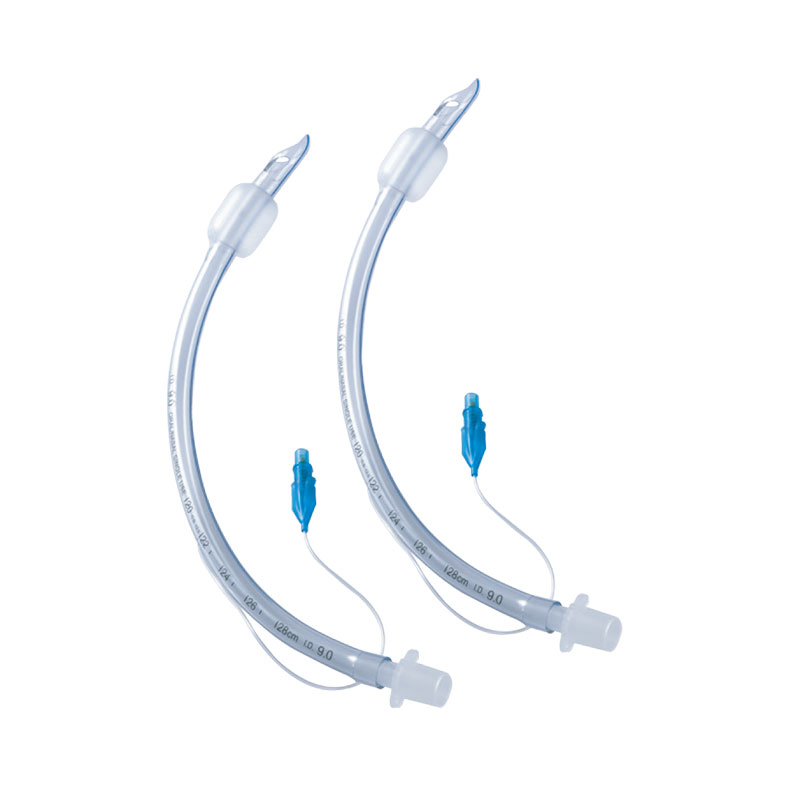
An Endotracheal Tube is a curved, flexible conduit inserted through the mouth or nose into the trachea. It serves three essential functions: maintaining a patent airway, enabling mechanical ventilation, and protecting against aspiration. However, the clinical effectiveness depends entirely on design details: cuff shape, material hardness, and depth marking clarity. When evaluating suppliers, ask for the durometer specification of the tube material. A tube that is too rigid increases the risk of mucosal injury; one that is too soft may kink during insertion. Our factory uses a medical grade PVC formulation with a Shore hardness of 85A, which balances flexibility and kink resistance. In our facility, we test every batch of Endotracheal Tube units for kink resistance and cuff inflation uniformity before they are packaged for shipment.
Procurement check: Request the kink resistance test data (ASTM or ISO standard) from each supplier. A tube should maintain 90 percent of its internal diameter when bent to a radius of 50 mm. If a supplier cannot provide this data, that is a red flag.
One of the key procurement challenges is ensuring that the tube dimensions match the clinical requirements without variability between batches. At Tianjin Hanteng Shengye Technology Co., Ltd., we maintain a statistical process control system that monitors the inner diameter, outer diameter, and cuff inflation volume of every Endotracheal Tube produced. This data is available to procurement teams upon request.
2. What Sizing and Cuff Specifications Actually Matter for Your Facility?
Sizing is not a one size fits all decision. The internal diameter of the tube determines the airflow resistance and the ability to suction secretions. The external diameter affects the ease of insertion and the risk of trauma. For most adult patients, an internal diameter of 7.5 to 8.0 mm is standard. For pediatric patients, the formula is (age in years / 4) + 4.0 mm. The cuff is equally critical: high volume, low pressure cuffs are preferred because they seal the airway with minimal mucosal pressure, reducing the risk of post extubation stridor.
| Patient category | Recommended tube size (ID, mm) | Cuff type | Typical cuff pressure range (cm H₂O) |
| Neonate (< 3 kg) | 2.5 – 3.0 | Uncuffed or low pressure | N/A or 15 – 20 |
| Infant (3 – 10 kg) | 3.5 – 4.5 | Low pressure cuffed | 15 – 25 |
| Child (10 – 40 kg) | 5.0 – 6.5 | Low pressure cuffed | 15 – 25 |
| Adult female | 7.0 – 7.5 | High volume low pressure | 20 – 30 |
| Adult male | 8.0 – 8.5 | High volume low pressure | 20 – 30 |
When evaluating an Endotracheal Tube, request the cuff leak test data from the supplier. A properly sealed cuff should maintain pressure within ±2 cm H₂O over a 24 hour period when tested in a simulated trachea model. In our factory, we test cuff integrity using an automated inflation decay tester. This ensures that our Endotracheal Tube products maintain a consistent seal, reducing the risk of micro aspiration and ventilator associated pneumonia.
3. How Do You Compare Quality and Consistency Across Suppliers?
Unit price is the easiest number to compare. It is also the least informative. The real cost of an Endotracheal Tube is determined by the failure rate, the rework rate, and the liability exposure. A tube that leaks or kinks in the OR creates a clinical event that can cost thousands of dollars in extended hospital stay and legal risk. The table below compares the key quality indicators that procurement teams should request from every supplier.
| Quality indicator | Minimum acceptable level | How to verify |
| Kink resistance (internal diameter retention) | ≥ 90% at 50 mm bend radius | Request ASTM F2052 test report |
| Cuff inflation stability (pressure drop over 24h) | ≤ ±2 cm H₂O | Request inflation decay test data |
| Murphy eye patency (flow resistance) | ≤ 10% increase over straight tube | Flow bench test documentation |
| Radiopaque line continuity | Continuous, no gaps | X ray image verification |
| Batch to batch dimensional variation | ≤ ±0.1 mm (ID) | Review process control charts |
Tianjin Hanteng Shengye Technology Co., Ltd. provides a quality dossier with every shipment. This dossier includes the lot specific test results for kink resistance, cuff stability, and dimensional accuracy. We believe that procurement decisions should be based on objective data, not marketing claims. Our factory maintains a 99.7 percent first pass yield on Endotracheal Tube production, which is verified by our independent quality assurance team.
4. What Are the Hidden Costs You Need to Factor Into Your Budget?
The unit price of an Endotracheal Tube is typically a small fraction of the total cost of ownership. The larger costs come from three areas: the frequency of cuff leaks requiring tube replacement, the time spent on repositioning poorly designed tubes, and the inventory carrying cost of maintaining multiple sizes and types. A tube with a reliable cuff seal and accurate depth markings reduces the need for repeated intubation attempts. In our factory, we have designed our Endotracheal Tube with a depth marking system that is printed in 1 cm intervals and is visible under low light conditions. This reduces the time required for placement confirmation and adjustment.
When building your total cost model, include the following: the cost of training staff on tube handling, the cost of reprocessing (if reusable), and the cost of managing returns and replacements. A supplier that offers a consistent product with clear documentation can reduce these hidden costs. Tianjin Hanteng Shengye Technology Co., Ltd. provides on site training materials and a dedicated account manager to help you optimize your inventory levels.
Frequently Asked Questions About Endotracheal Tube Procurement
Summary for Procurement Decision Makers
The selection of an Endotracheal Tube should be based on clinical requirements, quality consistency, and total cost of ownership, not unit price alone. The device must be matched to the patient population, the clinical setting, and the skill level of the clinicians. A reliable supplier will provide test data, process control documentation, and inventory management support. Tianjin Hanteng Shengye Technology Co., Ltd. manufactures Endotracheal Tube products that are designed for consistent performance in critical care and surgical settings. We provide full quality documentation and batch traceability for all products.