

What Really Makes a Cleanroom Wiper Reliable in Critical Environments?
2025-12-31
When I first started working with contamination-controlled environments, I quickly realized that not all wiping materials perform the same. In daily operations, a single poor choice can introduce fibers, residues, or static risks that undermine the entire cleanroom process. Over time, I’ve learned that selecting the right Cleanroom Wiper is not just about price or appearance, but about consistency, validation, and trust in the manufacturer. That was how I gradually became familiar with Xinlida, not through aggressive branding, but through real-world performance that aligned with cleanroom demands.
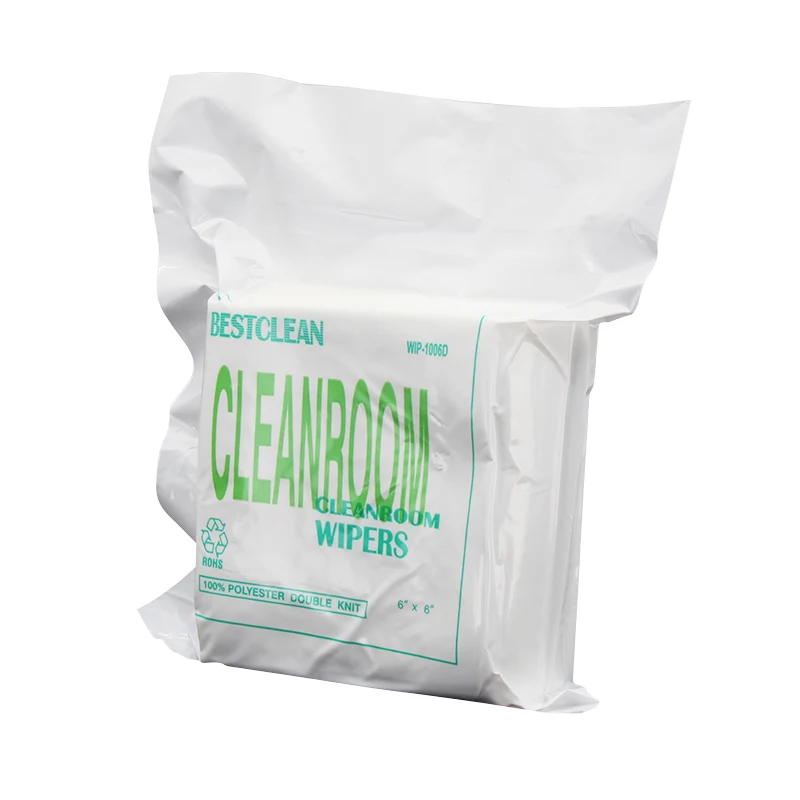
Why Do Cleanrooms Demand Specialized Cleaning Materials?
From my experience, cleanrooms are unforgiving environments. Whether in semiconductor fabrication, pharmaceutical production, or precision optics, even microscopic contamination can lead to costly defects. A standard cloth simply cannot meet these expectations. A professional Cleanroom Wiper must be engineered to minimize particle generation, control absorbency, and remain stable under chemical exposure.
- Low lint and fiber release during dry or wet wiping
- High compatibility with solvents such as IPA and DI water
- Controlled electrostatic behavior for sensitive components
- Consistent quality across batches
How Does a Cleanroom Wiper Reduce Operational Risk?
I often see buyers focus on unit cost, but in practice, the real cost comes from rework, downtime, or product rejection. A well-designed Cleanroom Wiper helps reduce these hidden risks by delivering predictable performance during surface cleaning, equipment maintenance, and spill control. When wipes perform consistently, operators can focus on process accuracy instead of compensating for material flaws.
| Operational Challenge | Impact on Production | How a Cleanroom Wiper Helps |
|---|---|---|
| Particle contamination | Yield loss and rework | Low-lint structure reduces airborne particles |
| Chemical residue | Surface defects | High absorbency supports effective solvent wiping |
| Static discharge | Component damage | Controlled ESD properties protect sensitive devices |
What Should I Look for When Evaluating a Cleanroom Wiper?
Over multiple sourcing projects, I’ve built a simple evaluation framework. Instead of relying on marketing terms, I focus on measurable attributes and application fit. A dependable Cleanroom Wiper should support both routine cleaning and precision tasks without introducing variability.
- Material composition and fiber bonding method
- Cleanroom class compatibility and washing process
- Absorption rate and solvent release control
- Packaging designed to prevent secondary contamination
How Does Xinlida Approach Cleanroom Wiper Manufacturing?
What stands out to me about Xinlida is the emphasis on controlled manufacturing rather than generic textile production. Instead of adapting consumer materials, their Cleanroom Wiper solutions are developed specifically for cleanroom workflows. This approach helps ensure stability in particle control, size uniformity, and repeatability, which are critical for long-term procurement planning.
In practical use, this means fewer surprises during audits and smoother integration into existing SOPs. For facilities that must maintain strict compliance, that reliability matters more than short-term savings.
Can the Right Cleanroom Wiper Improve Efficiency Over Time?
Based on what I’ve observed, the answer is yes. When operators trust their Cleanroom Wiper, cleaning procedures become faster and more standardized. There is less need for double wiping, fewer interruptions due to contamination concerns, and more confidence during inspections. Over months of operation, these small efficiencies accumulate into measurable productivity gains.
- Reduced material waste
- More stable cleaning outcomes
- Lower risk of process deviation
Are You Ready to Optimize Your Cleanroom Cleaning Process?
Choosing a Cleanroom Wiper is ultimately about protecting your process, your product, and your reputation. If you are reviewing your current wiping materials or planning to upgrade for higher cleanroom standards, it may be time to reassess what you are using today.
I recommend reaching out to experienced manufacturers who understand cleanroom realities rather than generic consumables. If you want to explore suitable solutions or discuss application-specific requirements, don’t hesitate to contact us. A well-informed inquiry can be the first step toward a cleaner, more reliable production environment.