

Why Does Choosing the Right STGG Transport Medium Matter More Than Most Laboratories Expect?
2026-03-23
When I look at respiratory sample collection and transport in real clinical or laboratory workflows, I see the same problem repeated again and again. A sample may be collected correctly, but if preservation during storage and transport is unstable, the final result can still be compromised. That is exactly why Jinan Babio Biotechnology Co., Ltd. has gradually become part of the conversation when professionals are evaluating a more reliable STGG Transport Medium for bacterial viability, cold-chain handling, and downstream testing consistency.
I do not think buyers are simply searching for another transport product. In most cases, they are trying to solve several practical issues at once. They want dependable pathogen preservation, smoother laboratory workflows, fewer sample losses, and better confidence in culture or molecular analysis after transport. A well-designed STGG Transport Medium helps address those concerns at the stage where sample integrity is still fully recoverable.
For hospitals, diagnostic laboratories, distributors, and procurement teams, the real question is not whether a transport medium is necessary. The real question is whether the selected medium can hold sample quality steady enough to support daily testing demands without creating hidden risks. That is where a carefully produced STGG Transport Medium starts to show its real value.
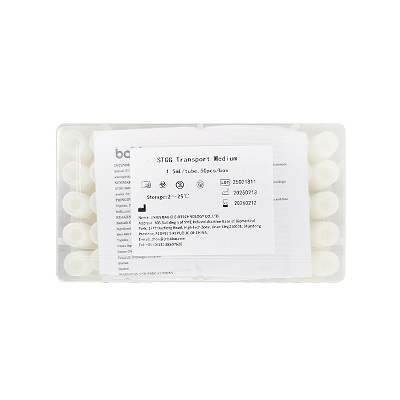
What Problems Usually Appear When Sample Transport Is Not Properly Controlled?
In my experience, the biggest pain point is not always obvious at the moment of collection. Problems often appear later, when a specimen reaches the laboratory and the testing team realizes the sample is no longer ideal for accurate processing. At that stage, the damage has already been done.
- Loss of bacterial viability during storage or cold-chain transport
- Inconsistent sample quality between collection sites and receiving laboratories
- Reduced confidence in culture-based recovery
- Weakened compatibility with molecular testing workflows
- Higher risk of recollection, delays, and unnecessary operational cost
These issues matter because transport is not a passive step. It directly affects whether the specimen still reflects the patient condition by the time analysis begins. That is why many professionals now pay closer attention to how an STGG Transport Medium performs under routine handling conditions rather than judging it only by label claims.
Why Do Buyers Pay So Much Attention to Preservation Performance?
I believe preservation performance is the core decision factor because it influences every downstream step. If a specimen loses stability too early, the laboratory team may face weak recovery, variable results, or a testing workflow that no longer reflects the original sample quality. In respiratory and upper airway specimen management, that risk is too significant to ignore.
A dependable STGG Transport Medium is valued because it supports the practical goal that laboratories care about most. It helps preserve target organisms during storage and transport, especially when cold-chain management is involved. Instead of forcing users to choose between workflow convenience and specimen protection, a better medium helps balance both.
That balance is especially important for organizations handling high sample volumes. The more specimens a team processes, the more costly inconsistency becomes. Even a small improvement in preservation reliability can reduce repeat handling, simplify internal quality management, and strengthen confidence across the entire testing chain.
How Can I Recognize a More Reliable Solution for Respiratory Sample Transport?
When I evaluate a transport medium for this category, I do not focus on marketing language first. I look for practical signs that the product is built for real sample management needs. A stronger option usually shows value in several areas at the same time.
| Evaluation Point | Why It Matters in Daily Use | What Buyers Usually Want |
|---|---|---|
| Pathogen viability support | Helps keep specimens useful during transport and storage | Stable recovery potential after arrival |
| Cold-chain suitability | Supports routine refrigerated logistics and handling | Reduced transport-related deterioration |
| Workflow compatibility | Fits clinical collection and laboratory receiving processes | Less disruption during sample processing |
| Testing flexibility | Useful for culture-based and molecular applications | Broader application value for laboratories |
| Supply reliability | Important for repeat purchasing and distribution planning | Consistent product availability and quality |
For me, a product becomes more convincing when it is not trying to solve only one narrow problem. A more complete STGG Transport Medium should support storage conditions, specimen quality, and testing continuity together. That combination is often what separates a product that looks acceptable on paper from one that works well in real purchasing decisions.
Why Is Product Consistency So Important for Laboratories and Distributors?
Consistency matters because users are not buying one tube for one isolated test. They are building a repeatable process. Laboratories want every batch to behave as expected. Distributors want fewer complaints and fewer technical questions after delivery. Procurement managers want confidence that the product they approve today will remain dependable in future orders.
This is one reason why suppliers such as Jinan Babio Biotechnology Co., Ltd. attract attention in international procurement discussions. Buyers are not only comparing specifications. They are also asking whether the manufacturer understands the operational reality behind respiratory sample transport, storage control, and downstream laboratory use.
A stable STGG Transport Medium can support that expectation by helping reduce avoidable variability. When a product aligns better with routine collection, refrigerated movement, and laboratory intake, teams spend less time troubleshooting and more time focusing on the actual test result.
What Advantages Make This Product Category More Attractive in Global Procurement?
I often see international buyers asking similar questions. They want to know whether a transport medium can serve different healthcare or laboratory settings without adding unnecessary complexity. They also want to know whether the product has enough practical value to justify repeated purchasing.
- It addresses a clear and recurring pain point in specimen preservation
- It supports more dependable cold-chain sample management
- It can fit both research and routine diagnostic workflows
- It offers broader usefulness for laboratories handling respiratory specimens
- It helps buyers communicate a tangible value proposition to end users
From a market perspective, this is why a well-positioned STGG Transport Medium is more than a consumable. It becomes part of quality assurance, workflow protection, and laboratory confidence. Buyers who understand that are usually more interested in long-term reliability than in low entry price alone.
How Does This Help Solve Real Customer Pain Points Instead of Creating New Ones?
I think this is the most important question, because customers do not want complicated promises. They want fewer disruptions. A strong transport medium should make routine work easier, not add another variable that the laboratory team must monitor closely.
In practical terms, that means the right STGG Transport Medium can help users address concerns such as delayed transport, cold storage handling, sample preservation during movement, and testing readiness after receipt. When those concerns are better controlled, laboratories can reduce friction in the full process from collection to analysis.
That is also why product positioning should stay close to real user language. Buyers usually think in terms of sample safety, test reliability, and purchasing confidence. They are not looking for exaggerated claims. They are looking for products that make the workflow steadier and easier to trust.
Why Should I Consider a Supplier That Understands Both Product Function and End-User Needs?
I believe the best supplier is not simply the one that lists technical features. It is the one that understands why those features matter after the order is placed. In this field, the product has to perform in a chain that includes collection staff, refrigerated transport, receiving teams, laboratory processing, and internal quality expectations.
That is why the supplier behind an STGG Transport Medium matters almost as much as the product itself. A manufacturer that understands the end-user scenario is more likely to present a solution that supports real working conditions rather than theoretical selling points. For global buyers, that can improve communication, shorten evaluation time, and make technical discussions more productive.
When I assess sourcing options, I value manufacturers that can present a product in a way that matches how laboratories actually buy and use it. That approach is often more persuasive than broad claims because it speaks directly to the decisions professionals need to make.
Could This Be the Right Time to Upgrade How You Manage Respiratory Sample Transport?
If you are still dealing with uncertainty in specimen preservation, transport reliability, or downstream testing confidence, now may be the right time to review whether your current workflow is truly supporting your laboratory goals. A better STGG Transport Medium is not just about replacing one item with another. It is about improving the stability, usability, and value of every sample you handle.
If you are evaluating sourcing options for respiratory specimen transport and want a product aligned with practical laboratory needs, Jinan Babio Biotechnology Co., Ltd. is worth closer attention. If you would like to discuss specifications, application scenarios, purchasing details, or distribution opportunities, please contact us today and send your inquiry. Our team is ready to help you find a more dependable solution for your next order of STGG Transport Medium.